Loretańska Street in Kraków: the Blessing of the Sabres
- The Uprising begins.
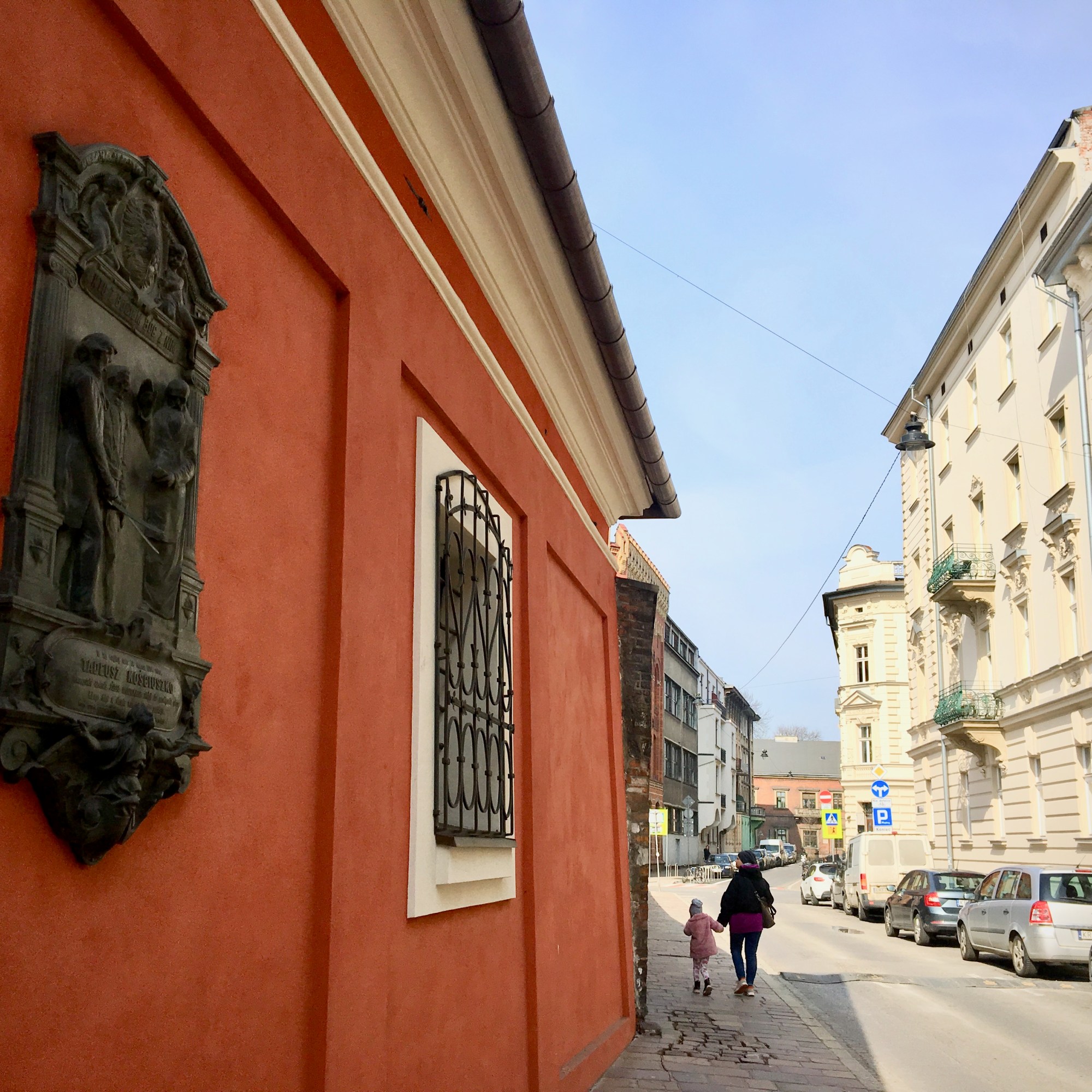
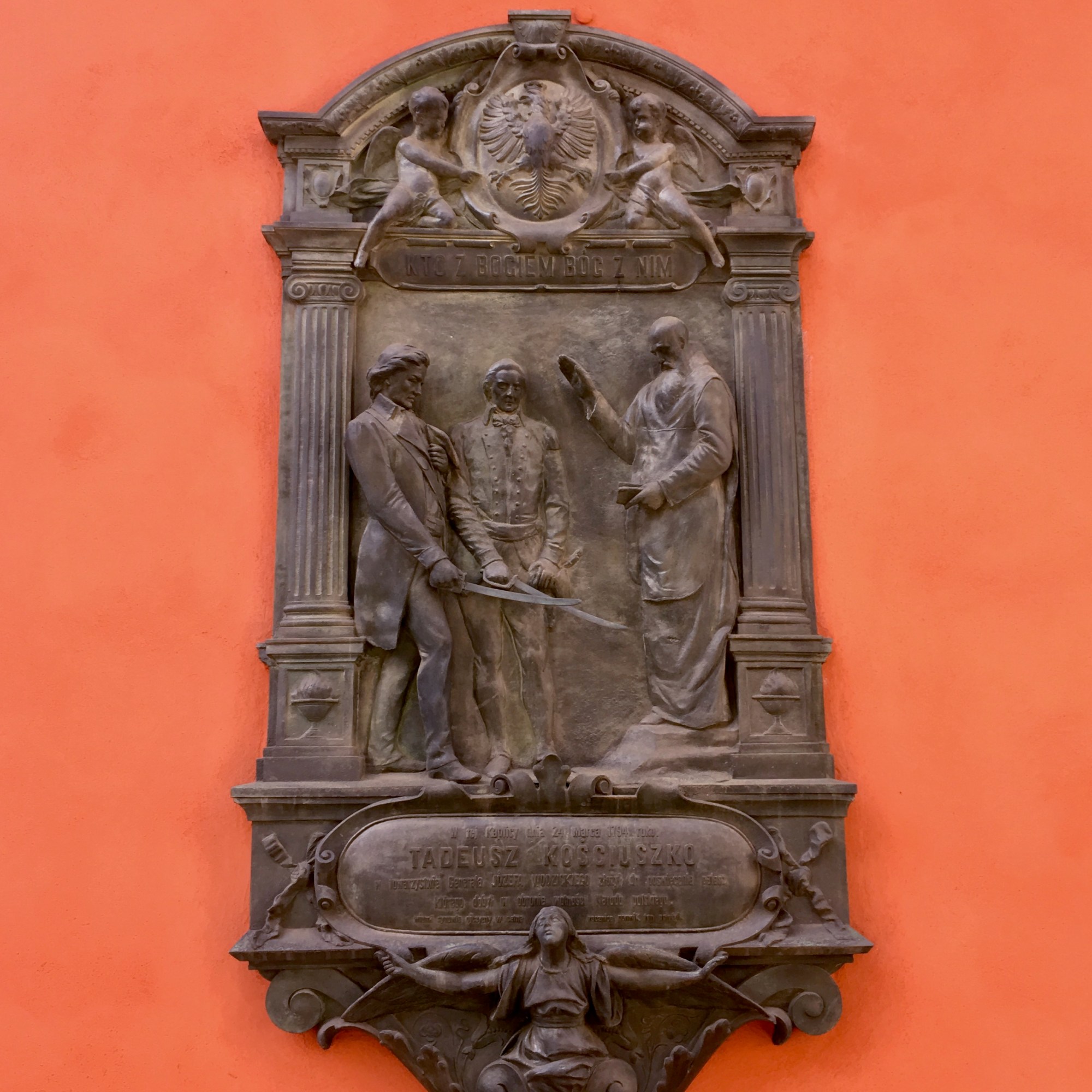
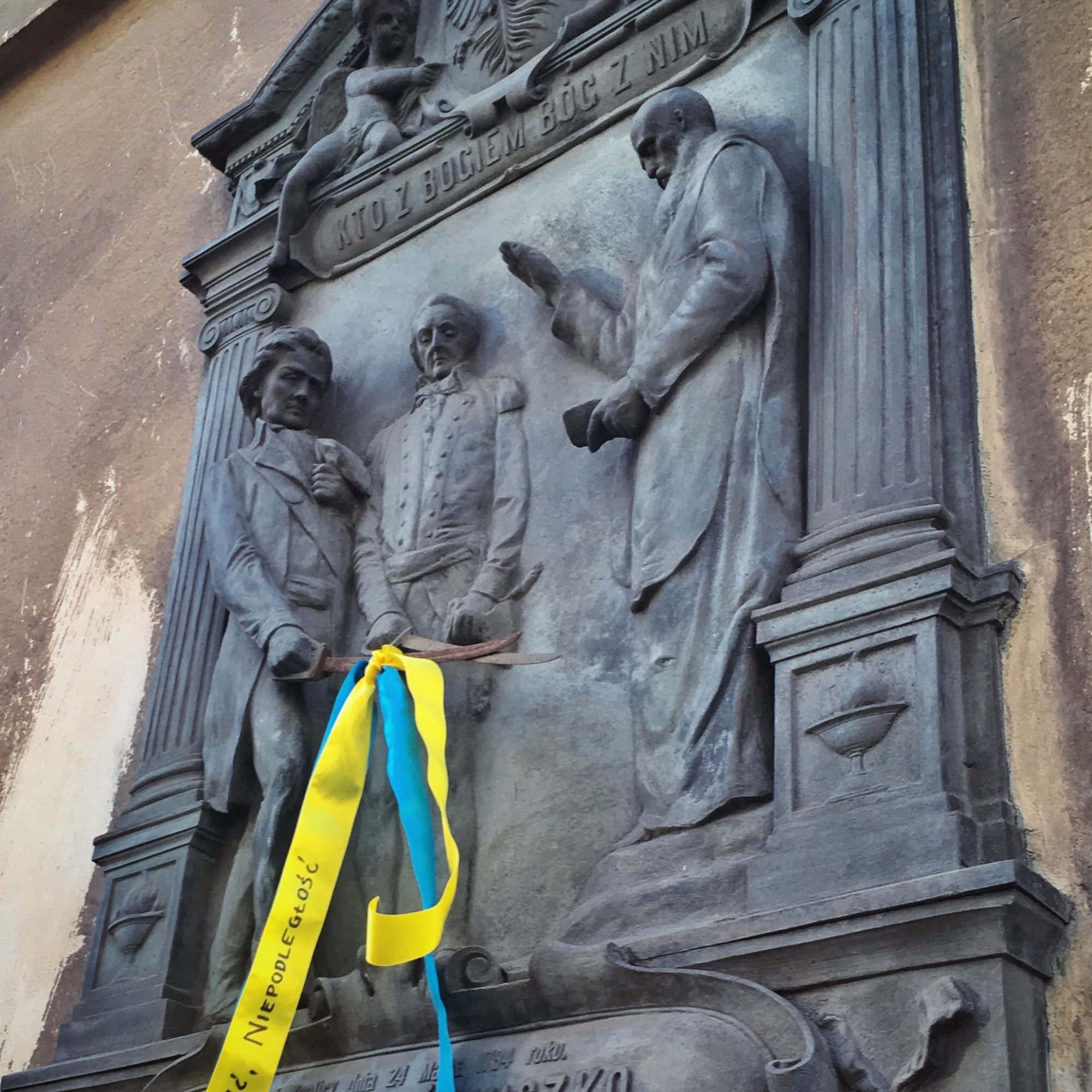
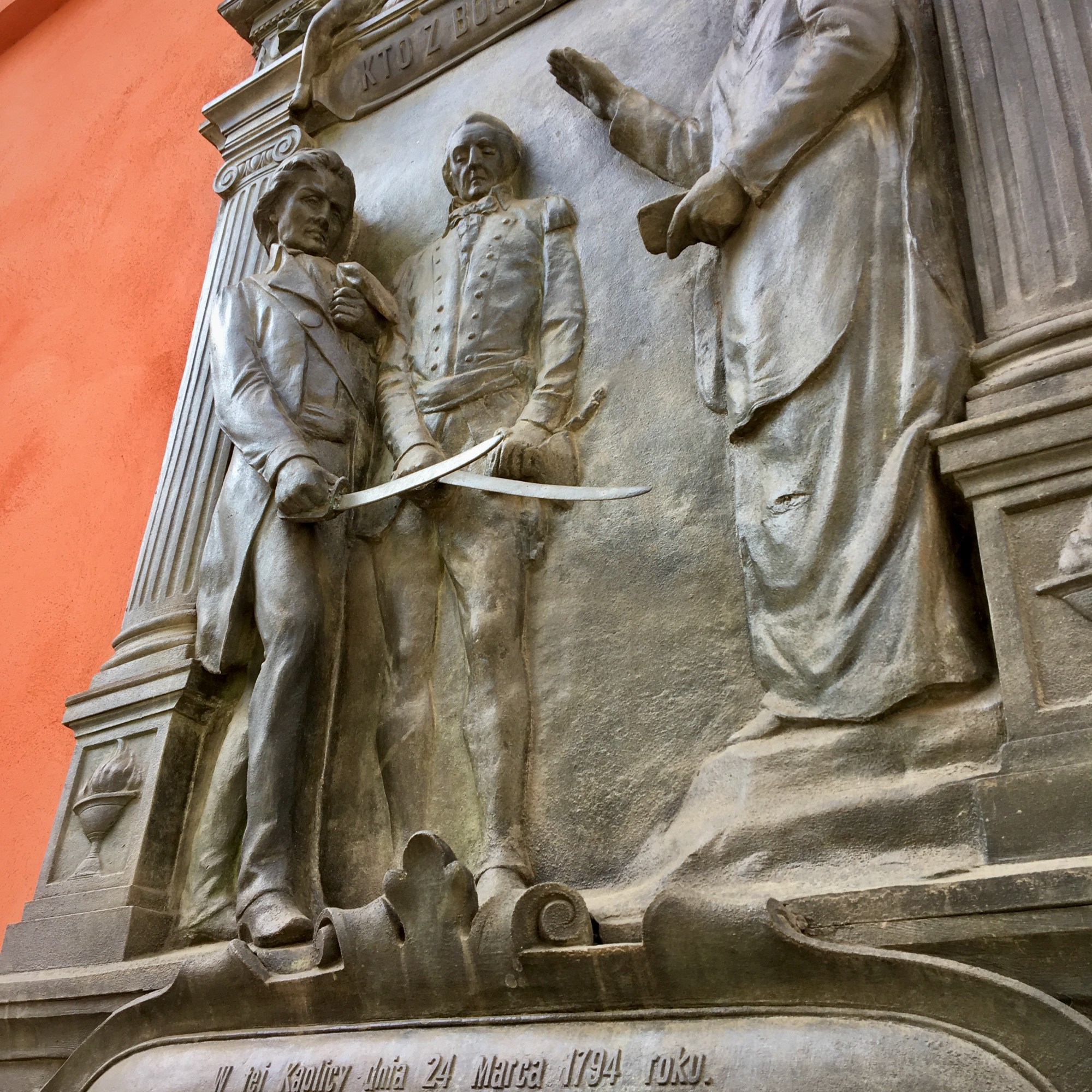
- The blessing of the sabres. The commemorative plaque at 11 Loretańska Str.
- Within the monastery walls
- References
- Gallery
The Uprising begins.
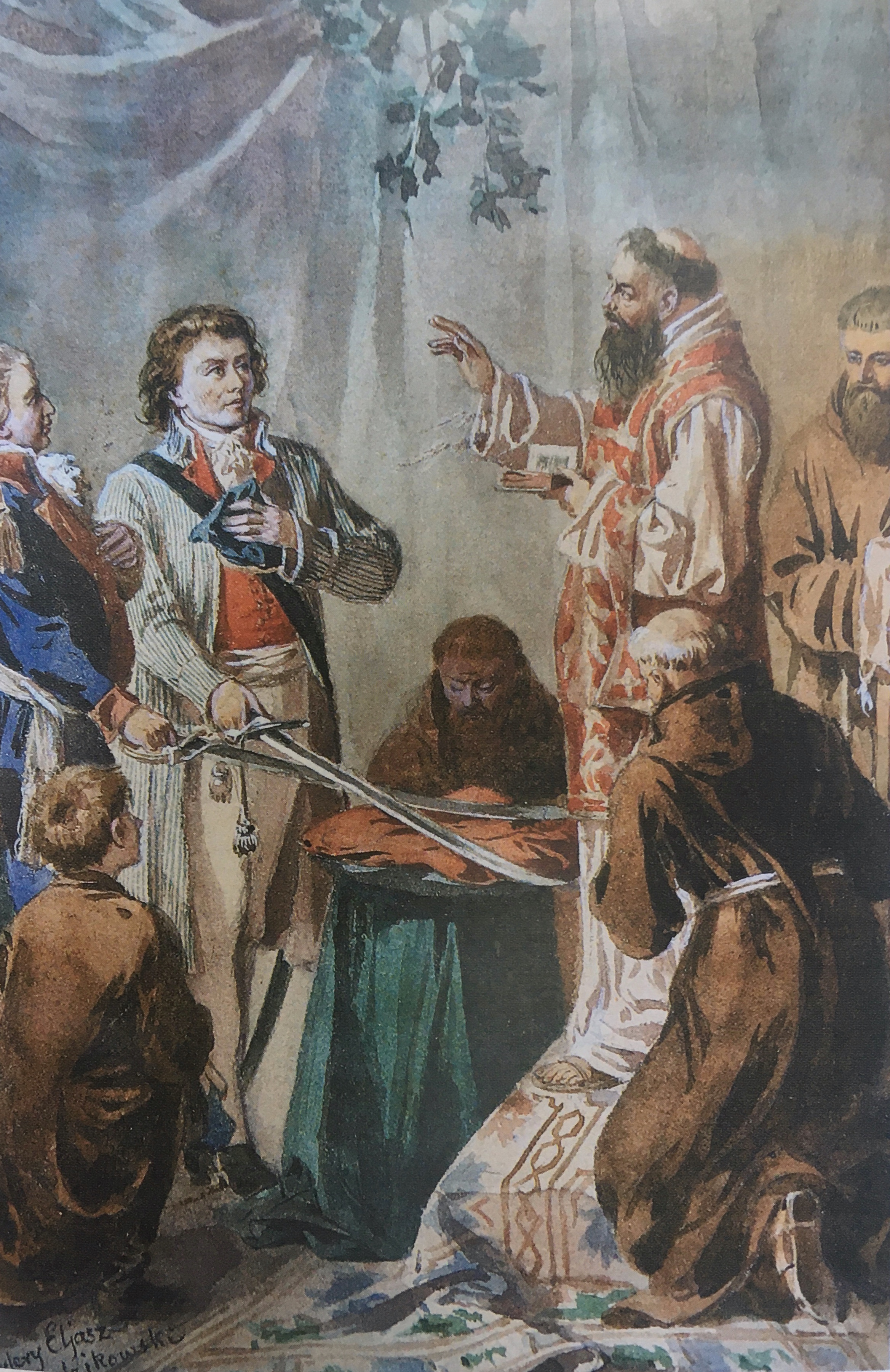
On the night of March 23rd, under the cover of darkness,1 Thaddeus Kosciuszko arrived in Kraków after a week-long journey from Dresden. He had spent the last year and a half as an emigré in Germany and Italy, only occasionally making an appearance in Poland under a false name so as to gain intelligence on the state of preparations for the planned military endeavour. Now, the time had finally come. Thaddeus had reservations; the army seemed only half-ready, but things had already been set in motion. The people in cities, especially Warsaw, were eager for battle and ever harder to contain, and General Antoni Madaliński had just rebelled against the new laws introduced by the Russian occupation, which required him to dissolve his division.2 There was no other option: the Uprising had to begin now – or never.
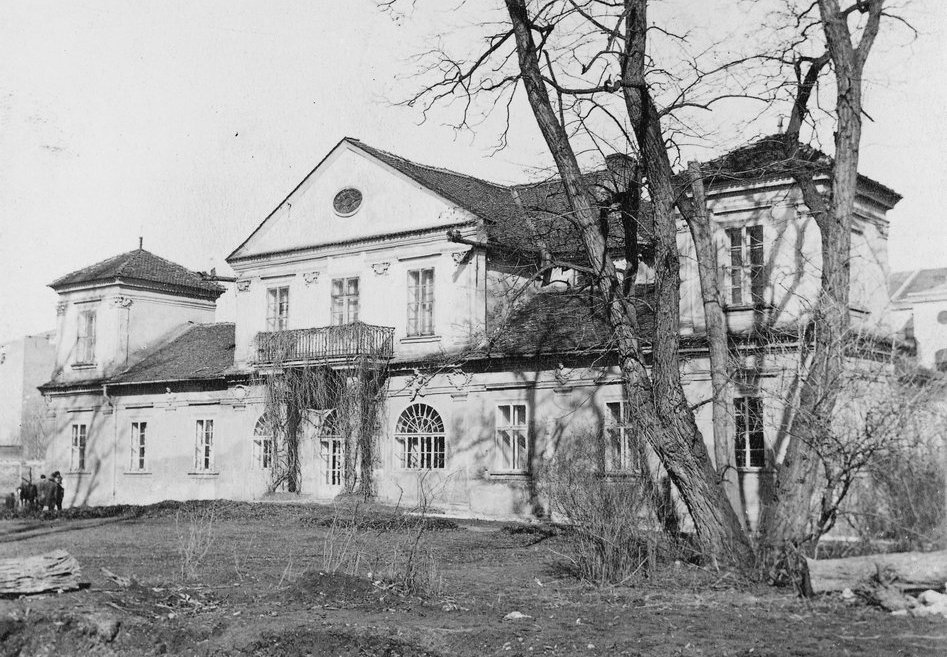
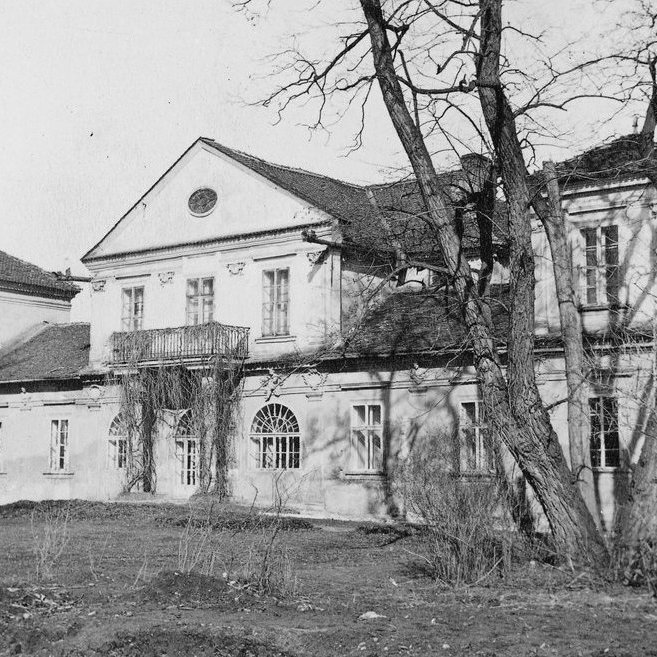
Around 11PM on Sunday, March 23th, Thaddeus clandestinely arrived at the outskirts of Kraków, the city which had been selected as the ignition point of the Uprising. He spent that night in the manor of General Józef Wodzicki (one of his commanders) just outside the city walls, the gates of which had been closed until the dawn. An emergency war council (which saw the participation of Tadeusz Czacki, among others)3 ate up another couple hours before the weary traveller could rest his head. The next morning, the work resumed. After issuing orders, setting up guards at each city gate and holding a military briefing with the officers from the city’s garrison,4 at 9AM, Thaddeus and his staff made their way to the monastery of the Capuchin order, just opposite the Wodzicki manor. There, they participated in a holy mass, after which Kościuszko and Wodzicki received a blessing for their sabres – the first symbolic gesture of the day, which would go down in history as the beginning of the first Uprising of the nations of the Polish-Lithuanian Commonwealth.
The blessing of the sabres. The commemorative plaque at 11 Loretańska Str.
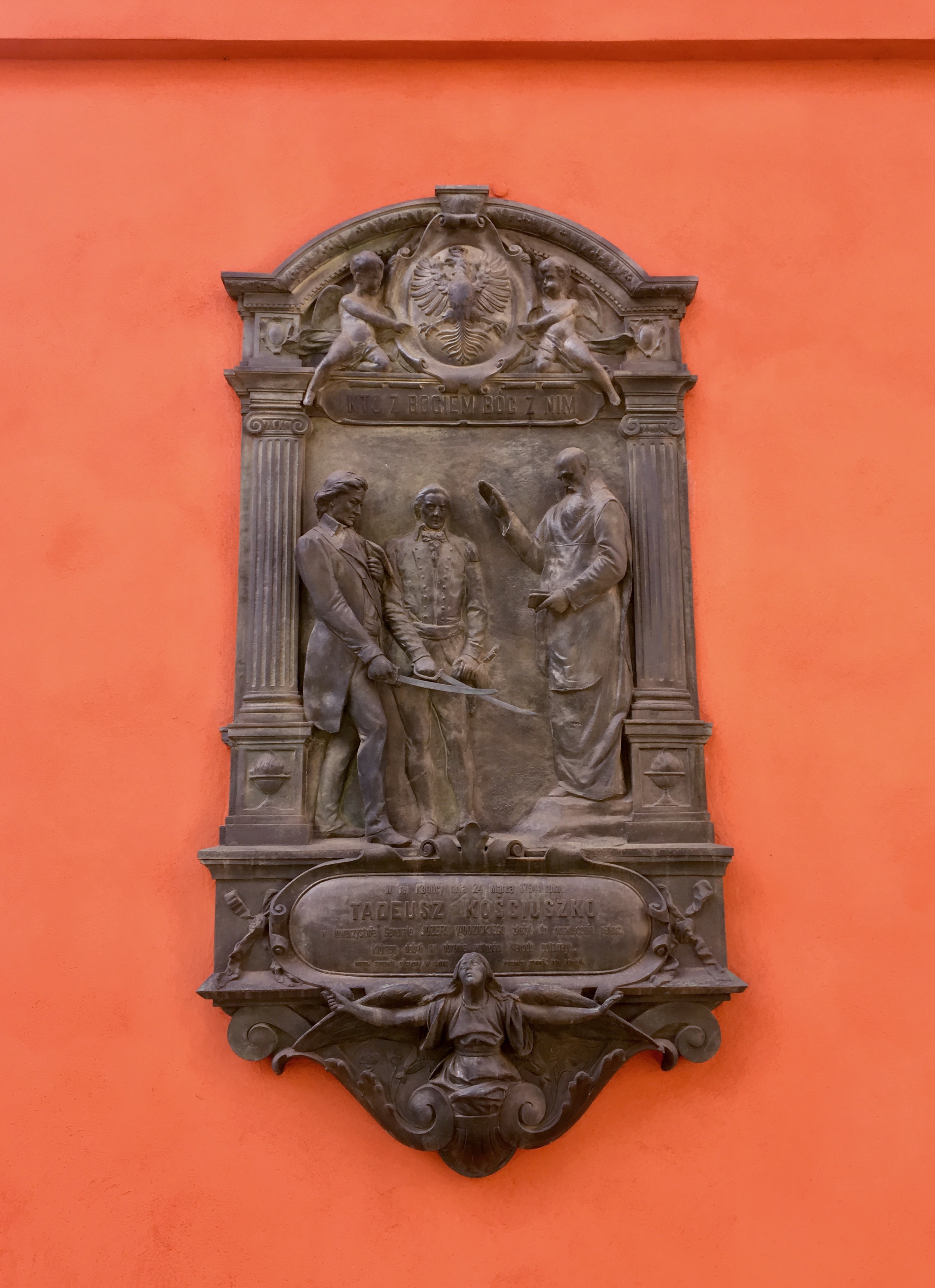
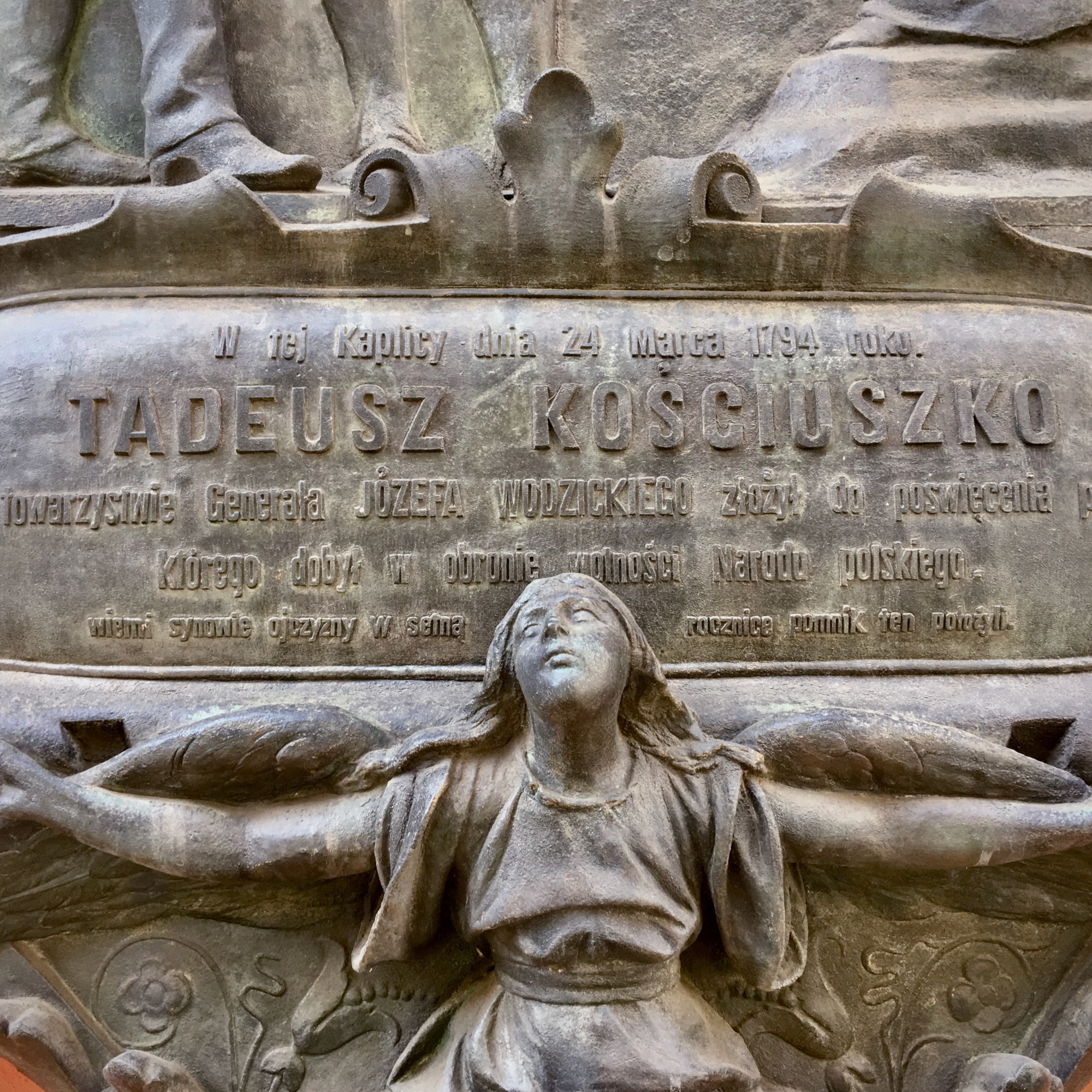
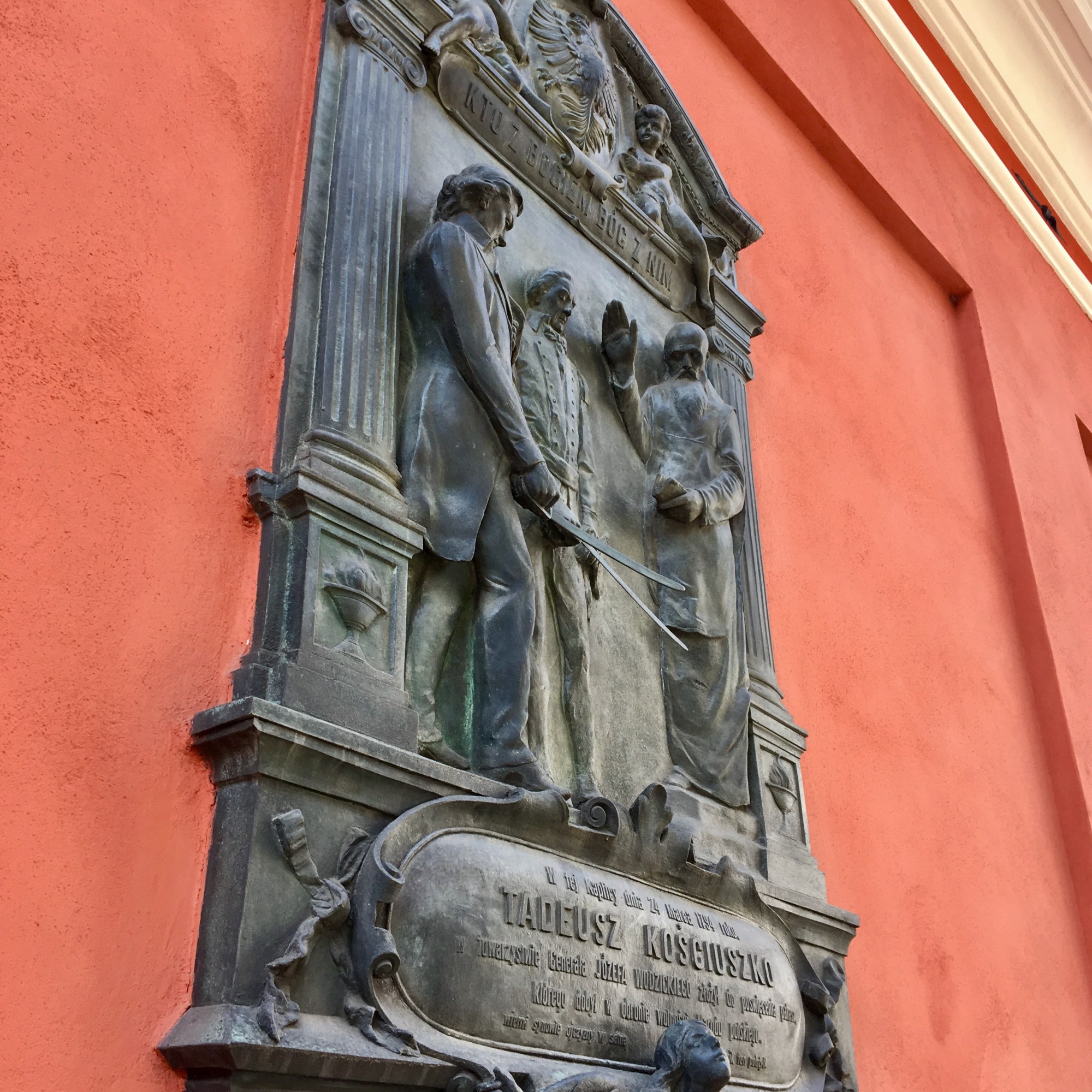
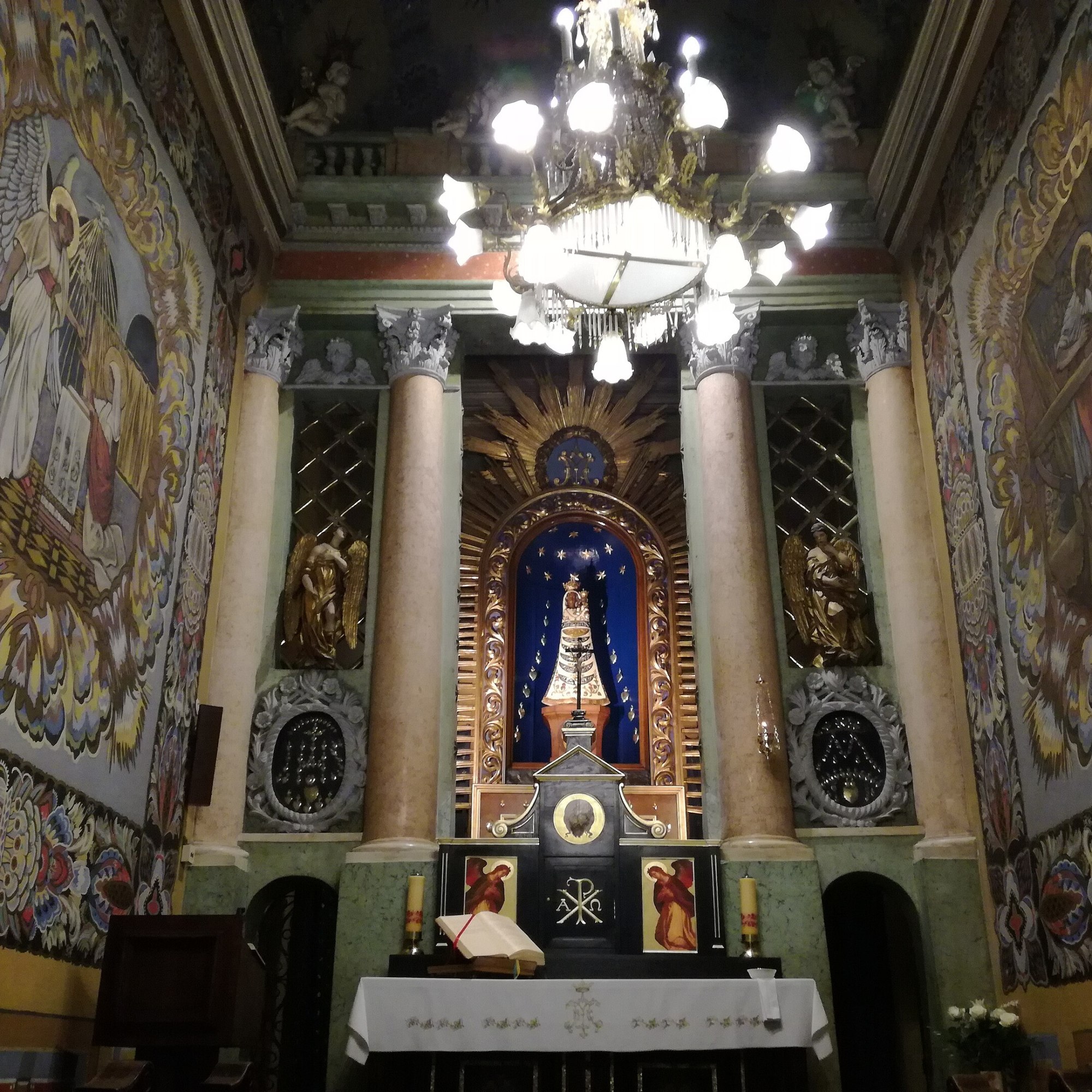
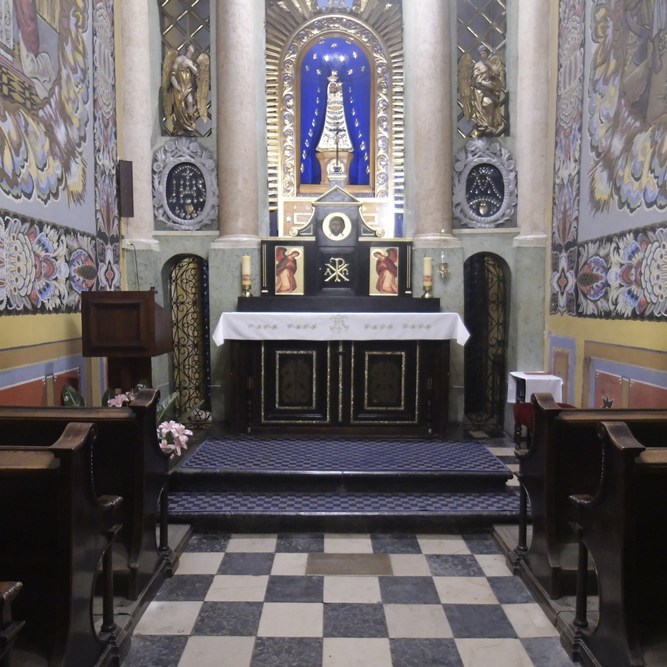
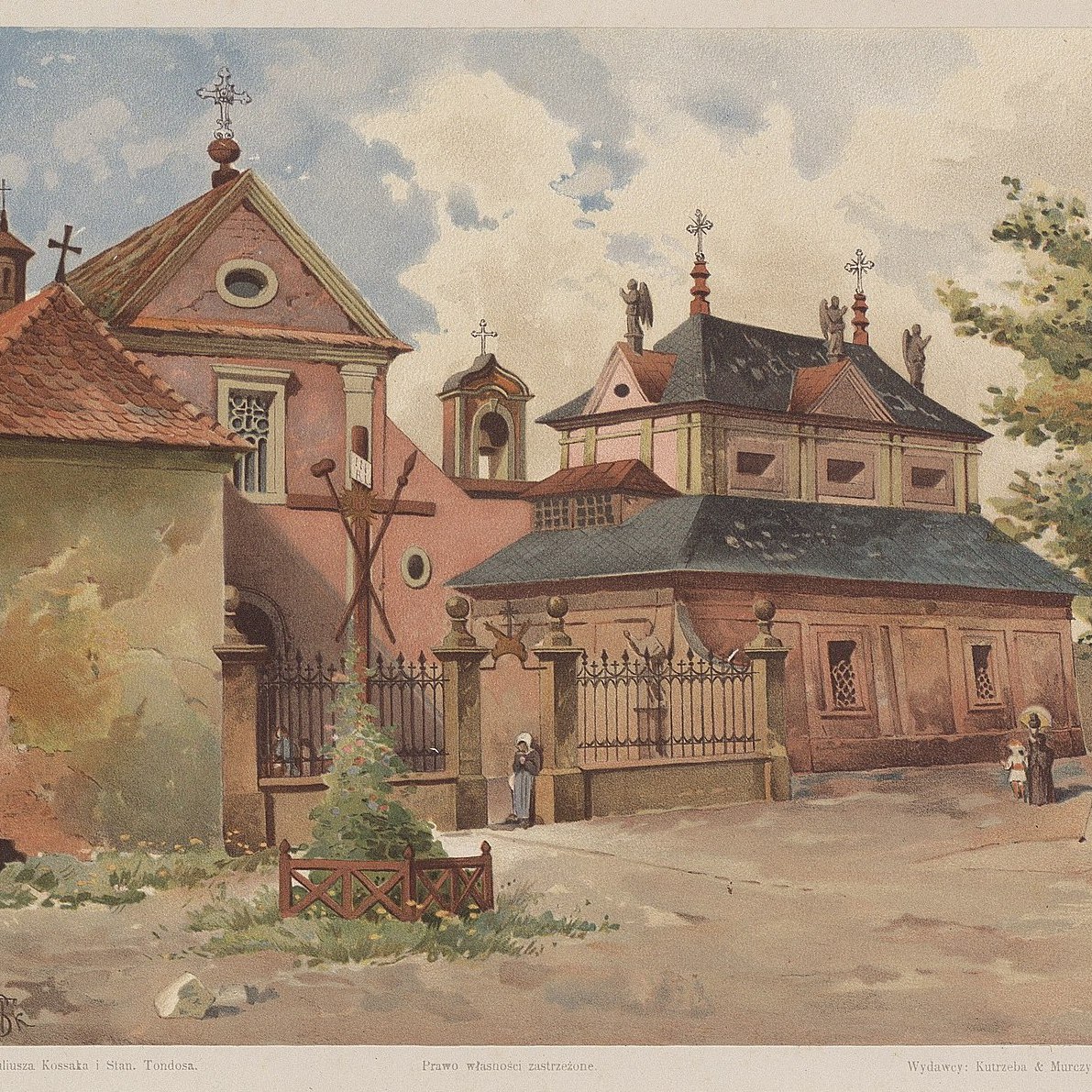
The ritual took place not in the main church, but in the so-called Loreto House, which lent the name to the street (Loreto Houses were a type of sacral buildings inspired by the Santa Casa from the Italian sanctuary of Loreto, particularly popular in Poland of the 17th and 18th centuries).5 It was performed by Father Tadeusz né Stanisław Krawczyński. The scene is represented at the impressive, bronze commemorative plaque, which contemporarily adorns the wall of the Loreto House at 11 Loretańska Str. The central part of the plaque is occupied by the beautifully executed relief depicting Thaddeus Kosciuszko, Józef Wodzicki and Father Tadeusz. Above their heads, an inscription reads: God is with those who are with God (Pol. Kto z Bogiem, Bóg z nim). In the topmost part, we see two putti holding Poland’s coat of arms, the White Eagle. The blessing scene in flanked by two Ionian pilasters, and below, the main inscription reads as follows:
”
In this chapel, on March 24th 1794, Thaddeus Kosciuszko, accompanied by General Józef Wodzicki, offered his sabre to be blessed, the same one he would later use to defend the freedom of the Polish Nation.
The fatherland’s faithful sons placed this monument here to mark the 100th anniversary.
The plaque was designed by Alfred Daun (1854–1922) and although it was commissioned to mark the 100th anniversary of the Uprising in 1894, it wasn’t put in place until two years later. Another project, submitted by Walery Eliasz Radziszewski, a painter and photographer renowned for his depictions of the Tatra mountains and the author of the only known painting representing the blessing scene, was also considered.6
Within the monastery walls
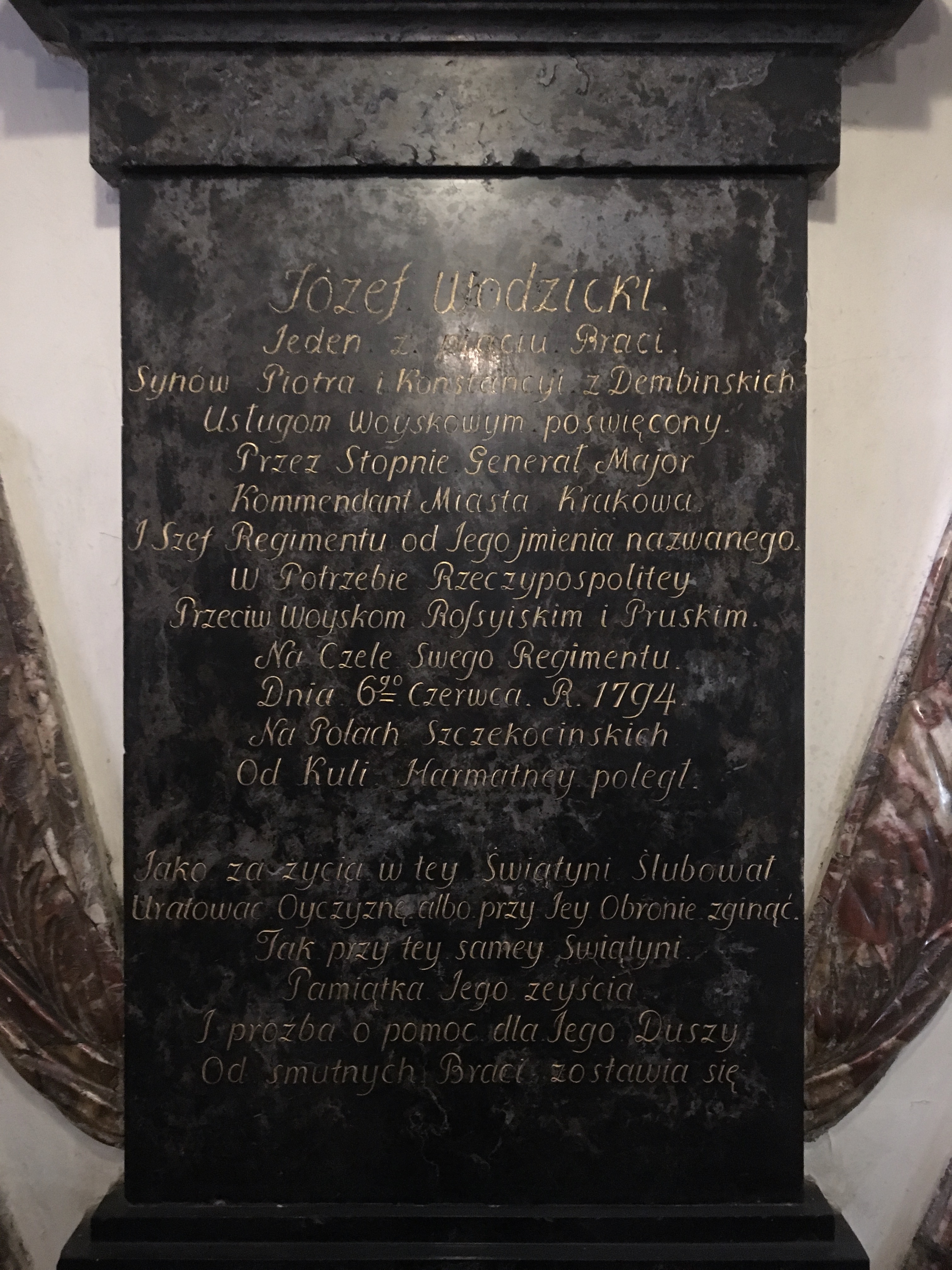
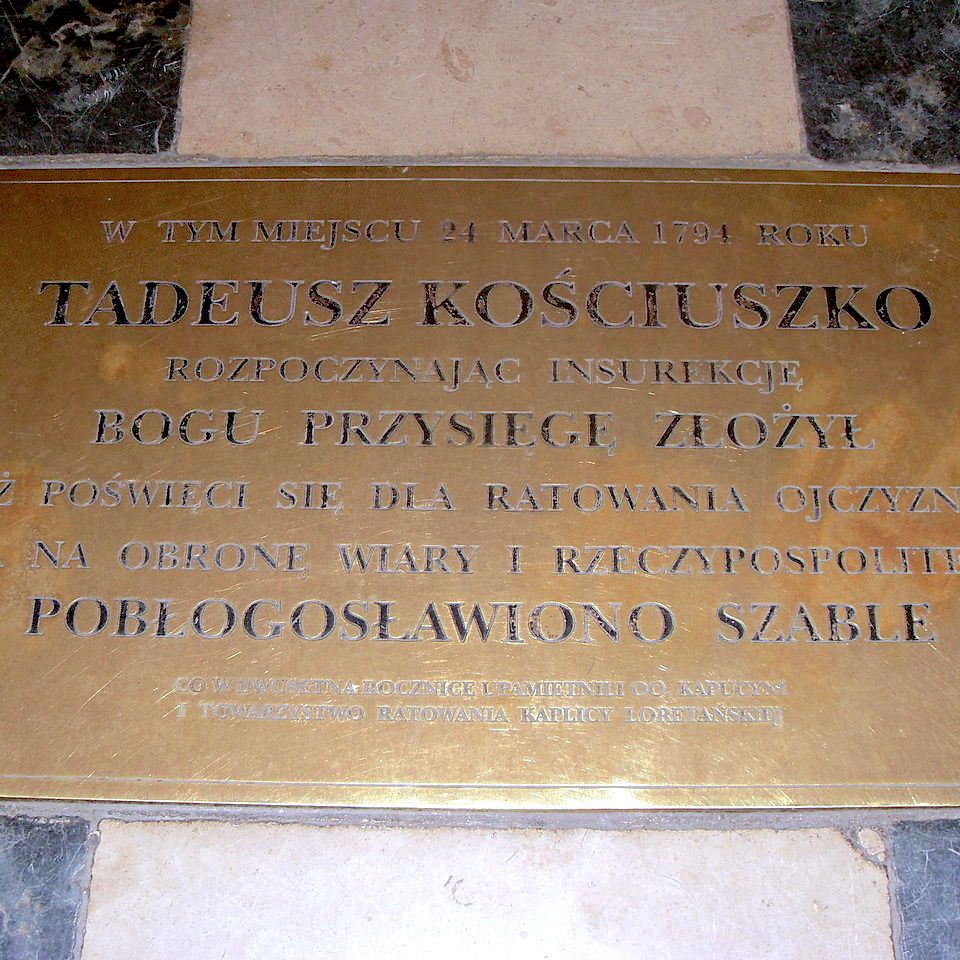
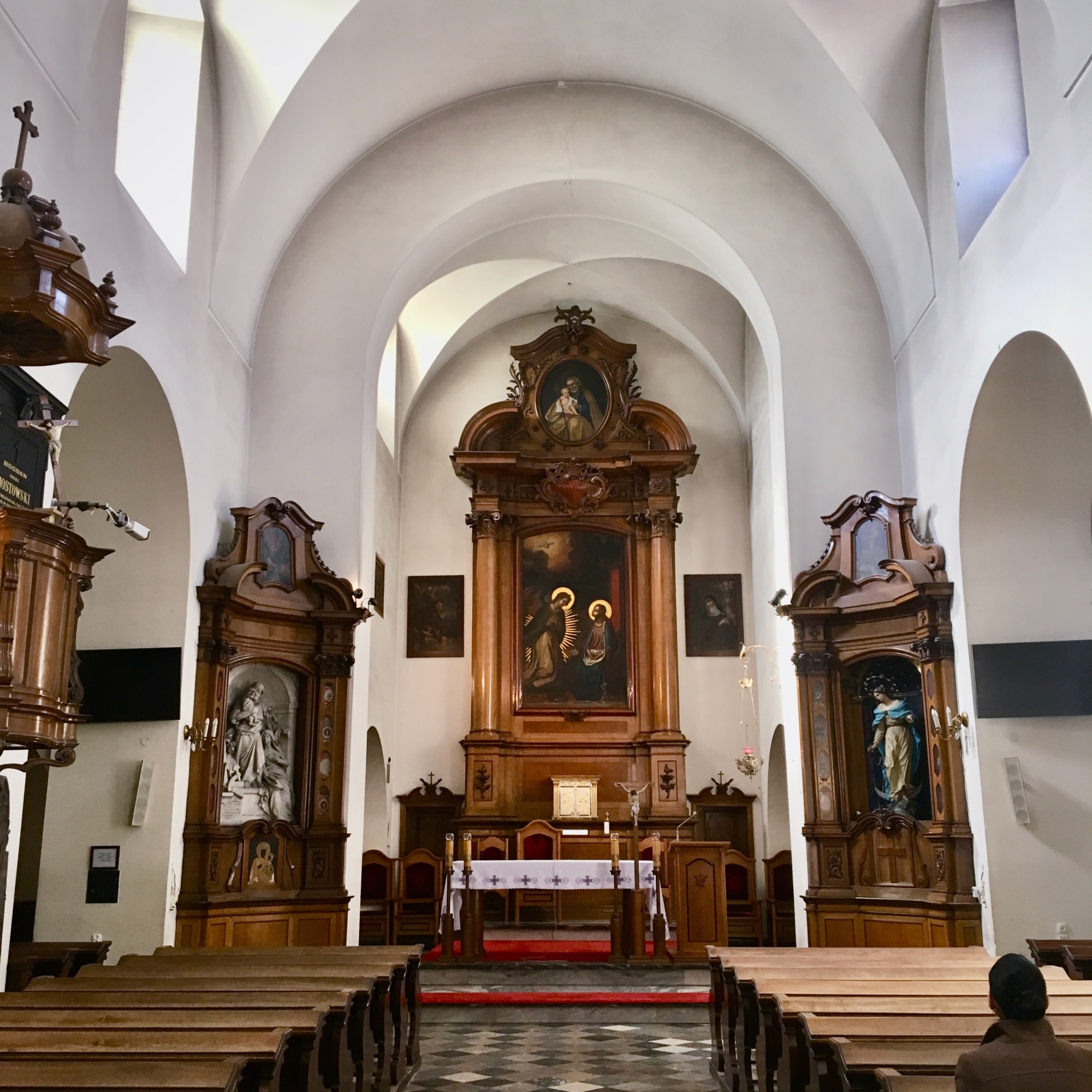
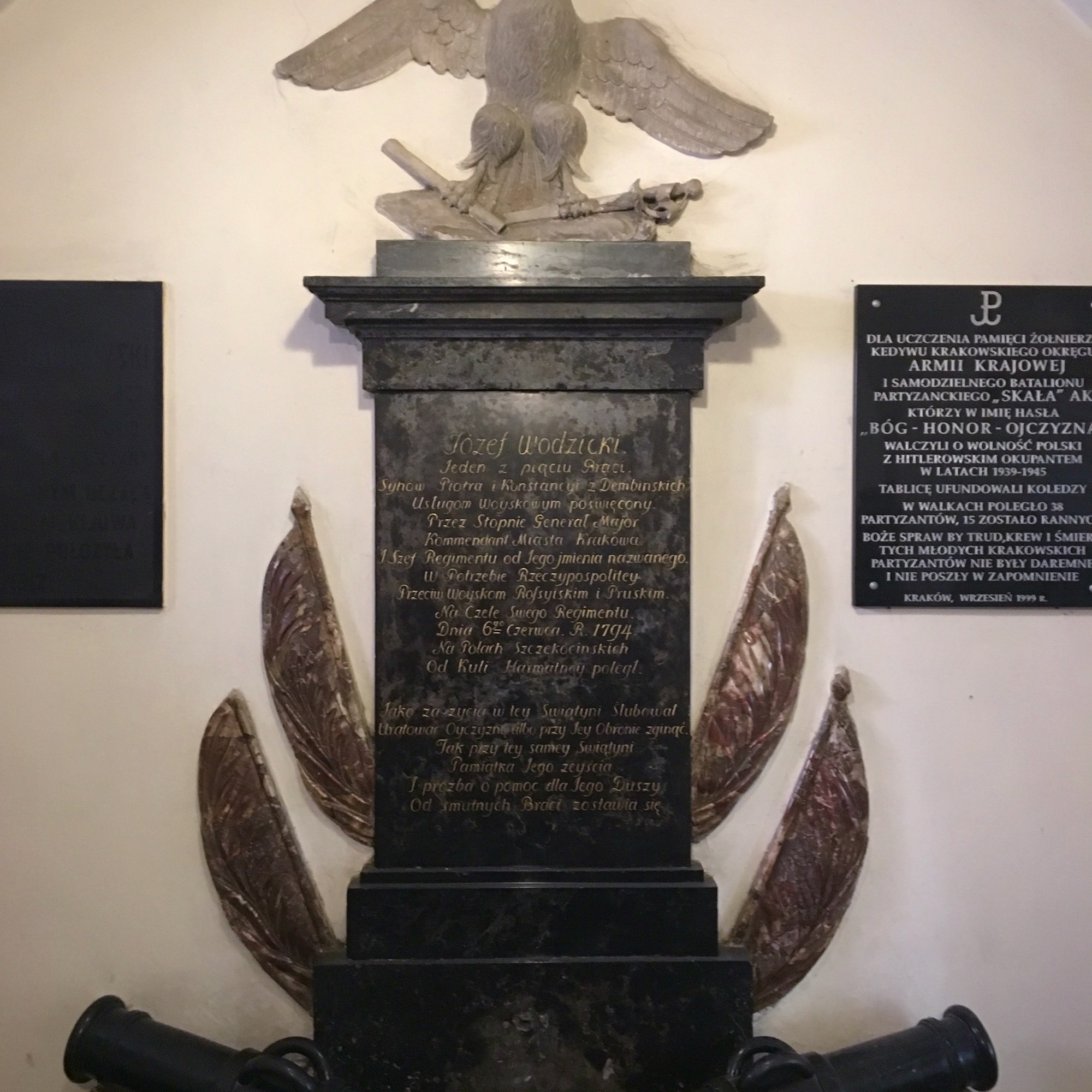
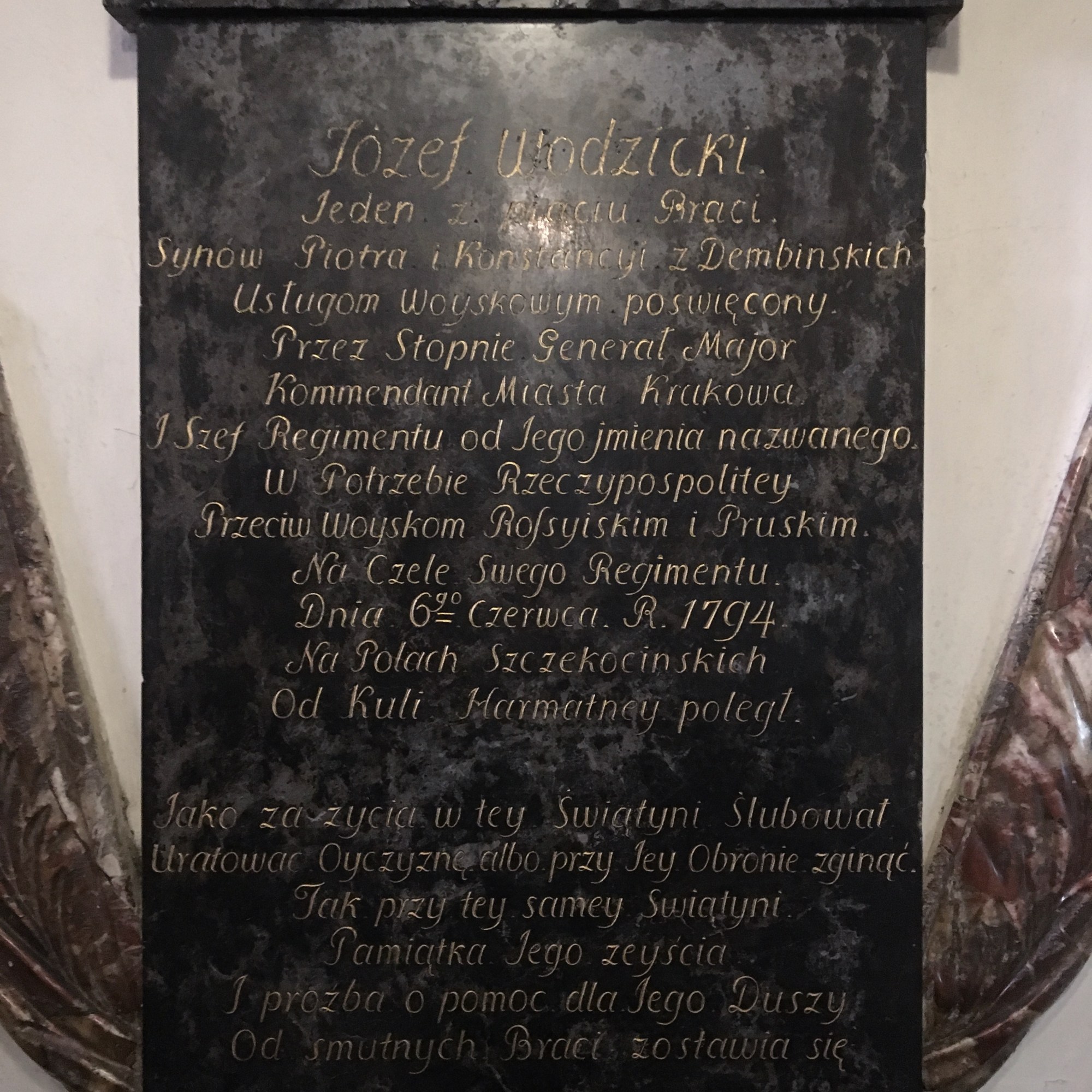
Another plaque, albeit smaller, is embedded in the floor inside the Loreto House, just in front of the altar, marking the exact spot where Kościuszko and Wodzicki stood throughout the ritual. The plaque was commissioned by the Capuchin Order and the Society for for the Preservation of the Loreto Chapel; the date if its installation, however, is unknown. While at Loretańska 11, it is also worth stepping into the church of the Annunciation, which is the main temple of the monastery. As we enter its porch and look to the left, we will notice a sizeable, decorative epitaph of black marble, crowned with a representation of the White Eagle. It is dedicated to General Józef Wodzicki – the same who offered shelter to Kościuszko on the night of March 23rd and who accompanied him in the ritual. He was killed only two and a half months later in the tragic battle of Szczekociny on June 6th. His epitaph, inscribed in Polish, reads as follows:
”
Józef Wodzicki, one of five brothers, sons of Piotr and Konstancja née Dembinska, ordained for military service. By rank, [he was a] General Mayor, the Commander of the city of Kraków, the Chief of the division named after him. With the Commonwealth in need, [he led] his division against the Russian and Prussian armies. On June 6th 1794, he fell, struck by a cannonball, on the fields of Szczekociny.
Just as he had sworn in this very temple to save the Fatherland or die defending Her, now, in the same temple, his heartbroken brothers [offer] this memento of his passing, asking for succour for his soul.
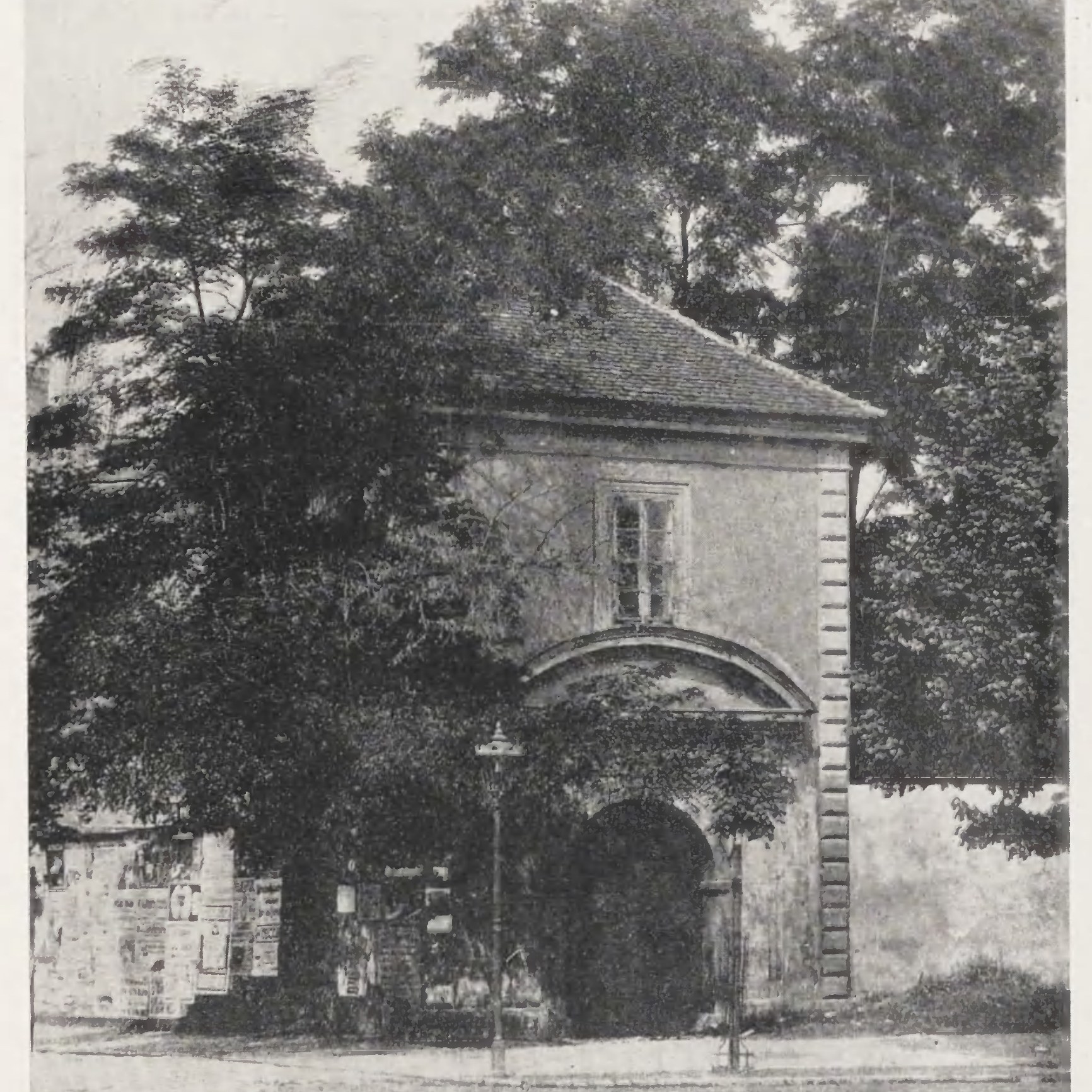
In the closest neighbourhood of the monastery, there are two further objects that might catch the eye of a history-minded wanderer. On the town house on the opposite side of the street, at the corner of Loretańska and Kapucyńska, there is yet another plaque, slightly peculiar, as it commemorates, specifically, the gate in wall surrounding the Wodzicki manor, through which Kosciuszko once walked. Another intriguing object, although not directly connected to the 1794 Uprising, is the wooden cross in front of the entrance to the monastery. At first, it might look like a simple mission cross one sees next to almost every Polish church, but it is, in fact, a grave marker of the Bar Confederates who died not far from there, fighting against the Moscovites between 1768 and 1771. The grave was there in Kosciuszko’s times, thus, it is not unlikely that he paid his respects there on his way to the monastery. Now, as we continue retracing his steps from March 24th 1794, our path will take us to Kraków’s Main Square, where he swore his oath to the people of the Commonwealth. Let’s saunter on!
References
- Piotr Hapanowicz, Krakowskim Szlakiem Tadeusza Kościuszki (Kraków: Komitet Kopca Kościuszki, 2010), p. 14. ↩︎
- Stanisław Herbst, Tadeusz Rawski, „Wybuch Powstania. Marsz Madalińskiego” [in:] Rawski T. (ed.), Powstanie Kościuszkowskie 1794. Dzieje militarne, Vol. I (Warszawa: Agencja Wydawnicza „Ergos”; Wojskowy Instytut Historyczny, 1996), pp. 166–168. ↩︎
- Hapanowicz, p. 16. ↩︎
- Loc. cit., p.17. ↩︎
- Józef Marecki OFM Cap., Kult Matki Bożej Loretańskiej w Polsce, Vol. II (Kraków: Folia Historica Cracoviensia, 1994), pp. 61-74 ↩︎
- Hapanowicz, p. 18. ↩︎
Gallery
The commemorative plaque from 1896 at 11 Loretańska Str.
Inside the monastery
From the archives
 TADEUSZ KOŚCIUSZKO – nasz współczesny