Kościuszko Monument at the Liberty Square in Łódź
- And yet, here he stands.
- Stories inscribed in bronze – the Monument’s allegorical narrative
- Daunting beginnings – the interwar period
- The catastrophe unfolds – World War II
- Picking up the pieces – Kosciuszko returns to the Liberty Square
- The comparison of the 1930 and 1960 versions – what changed?
- References
- Gallery
And yet, here he stands.
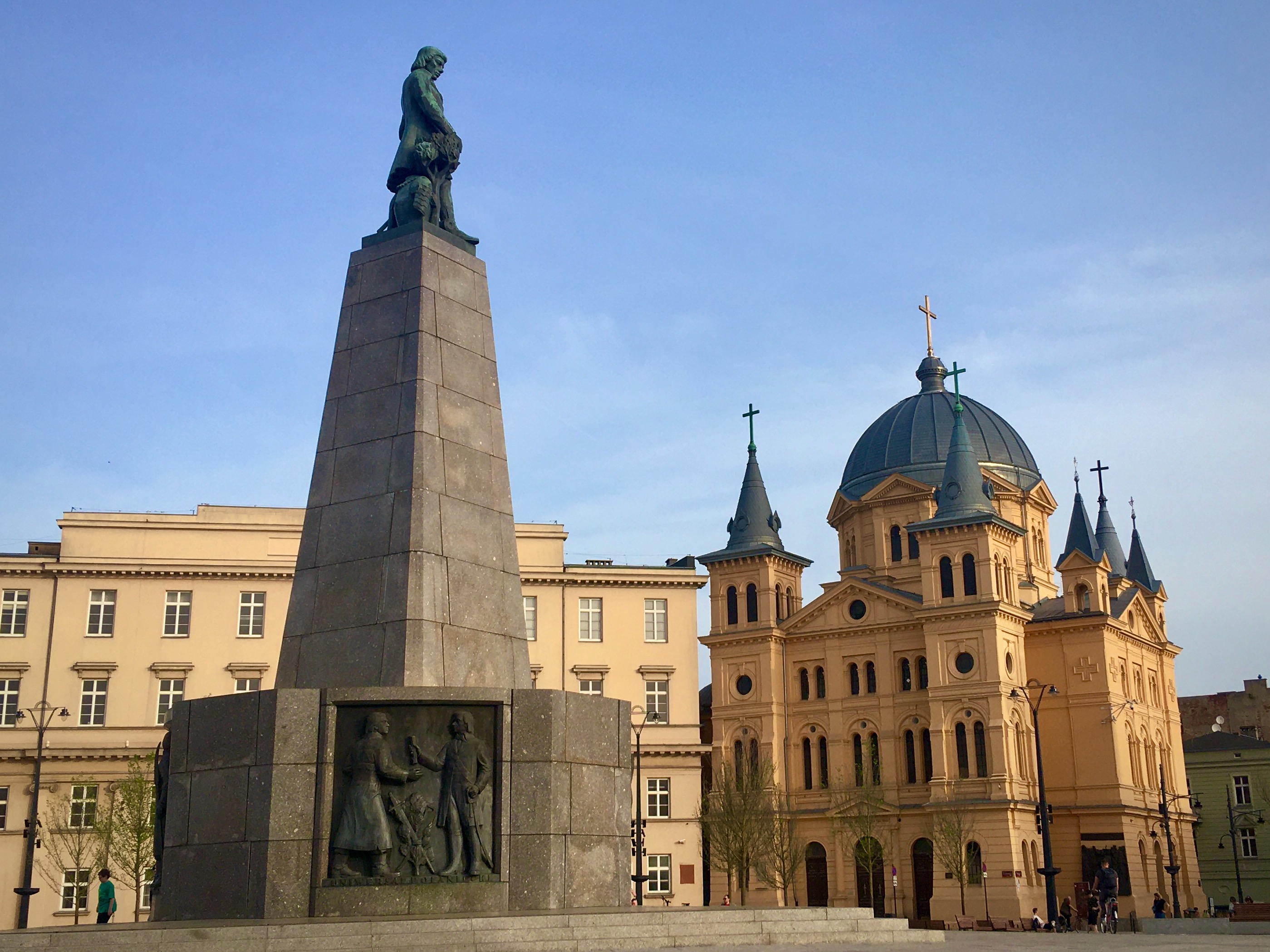
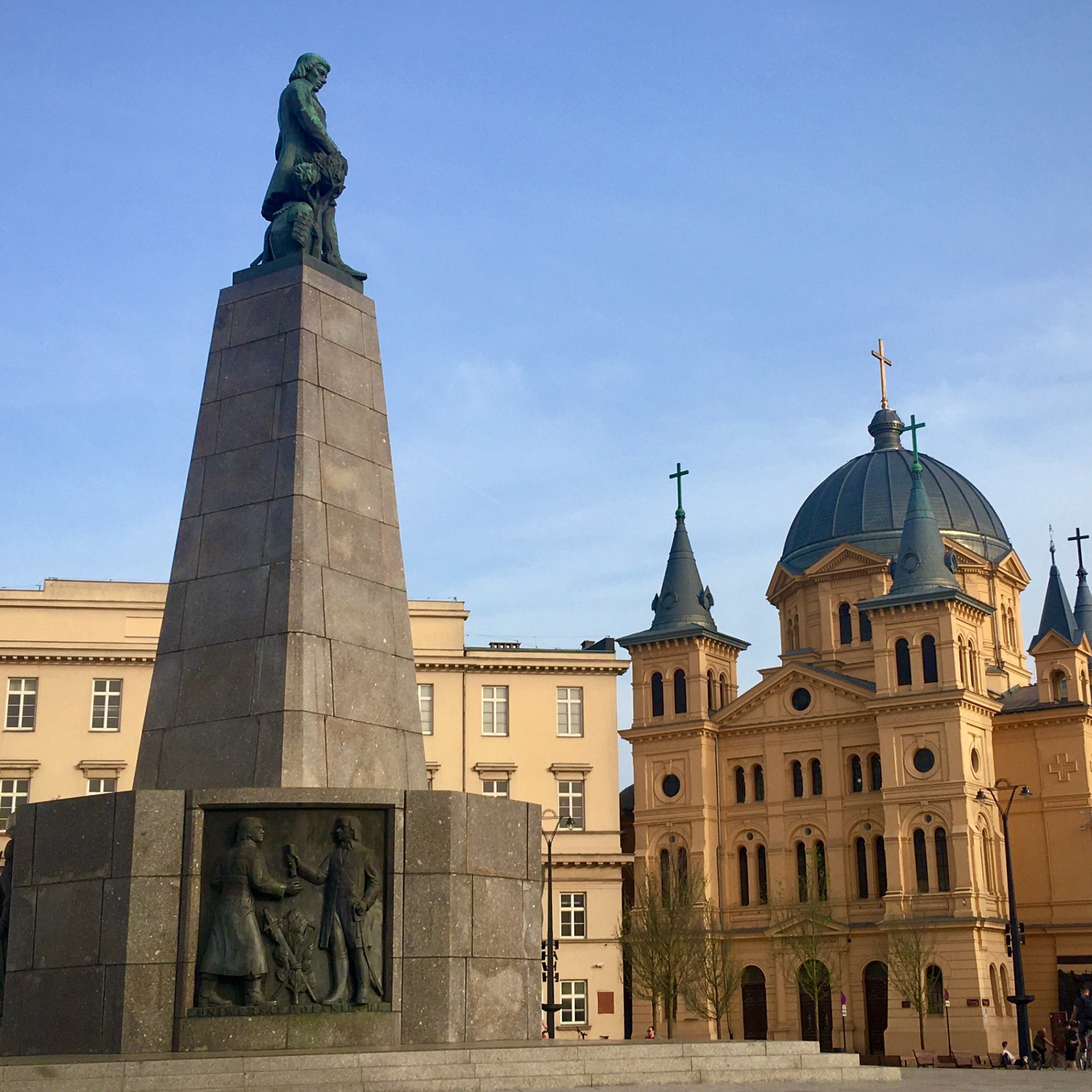
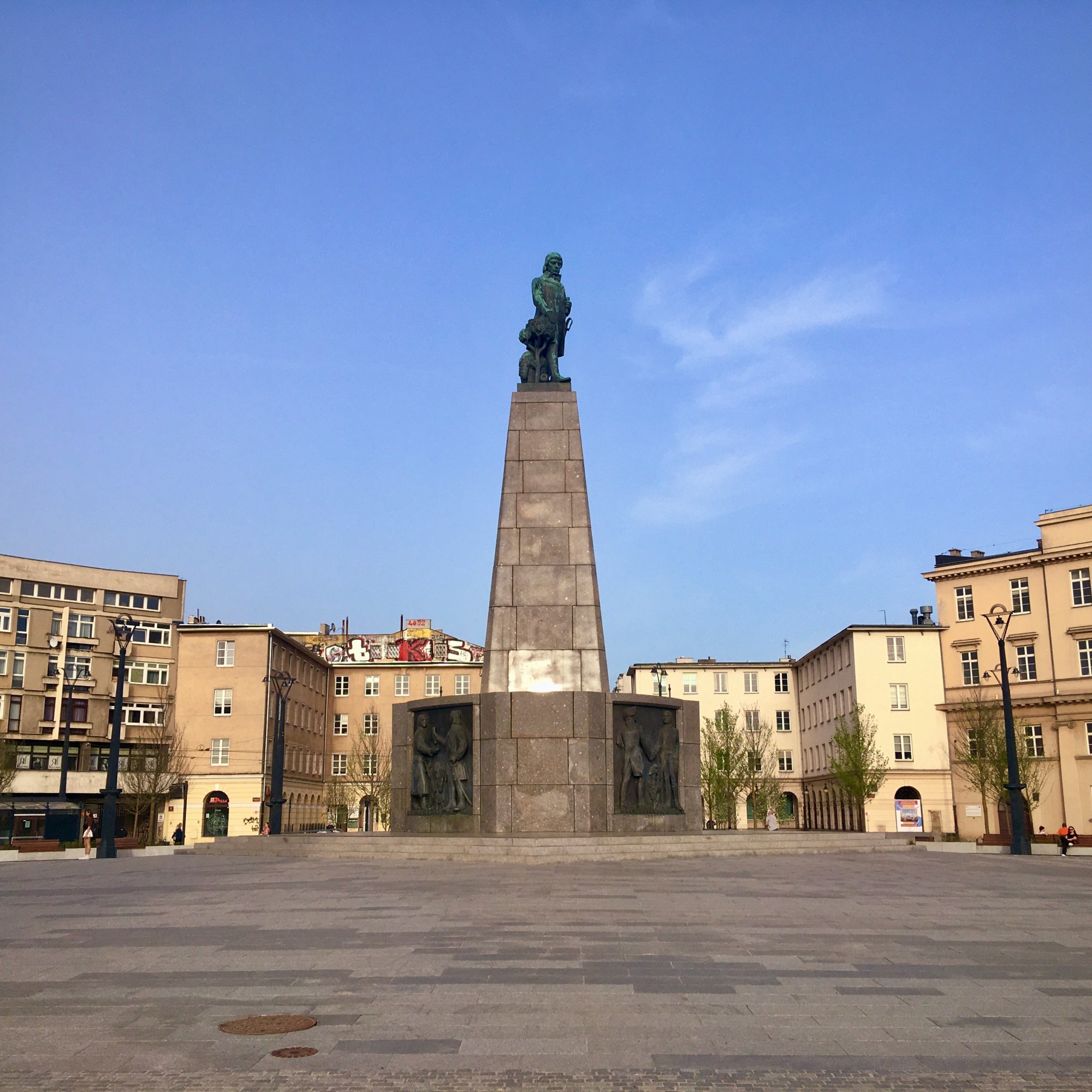
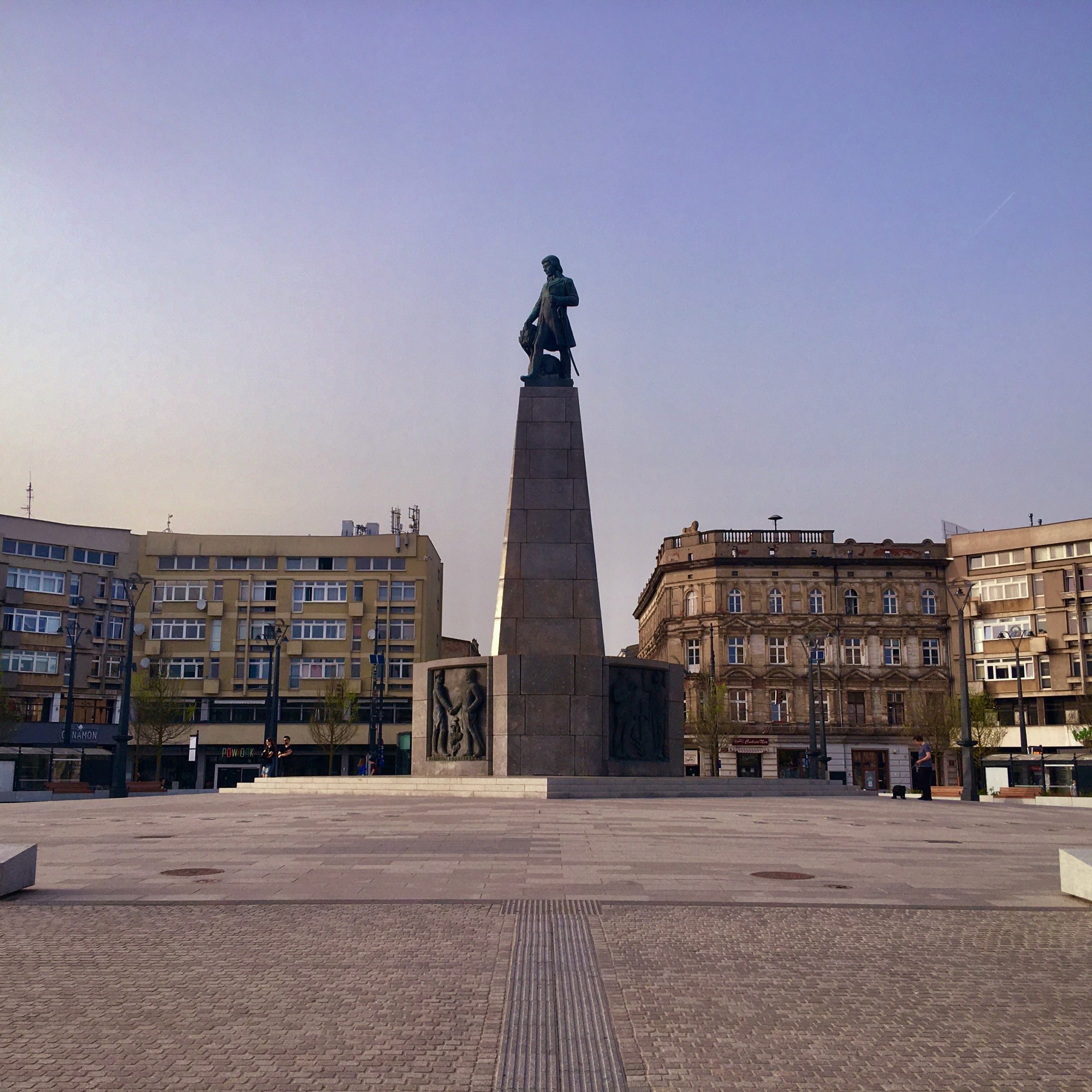
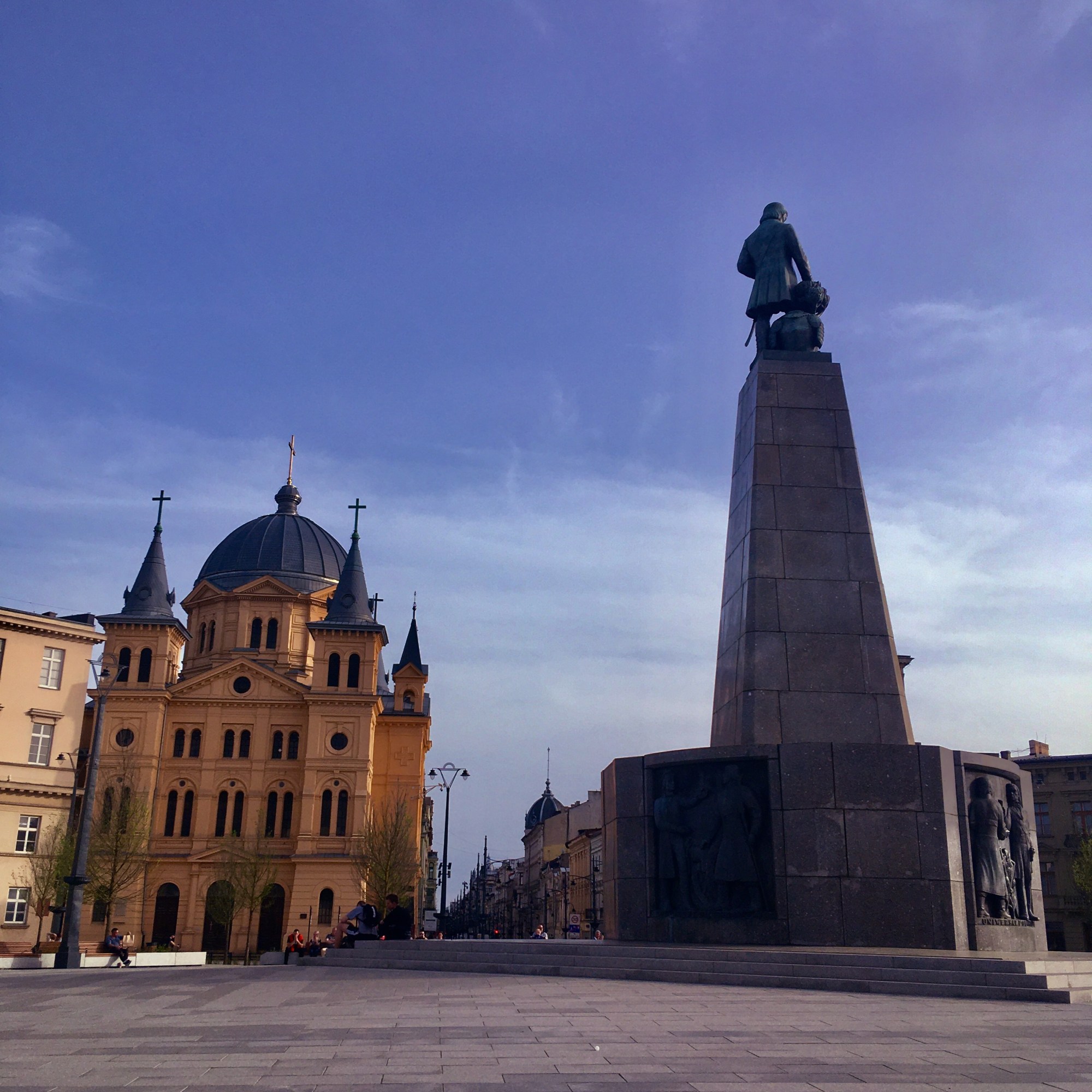
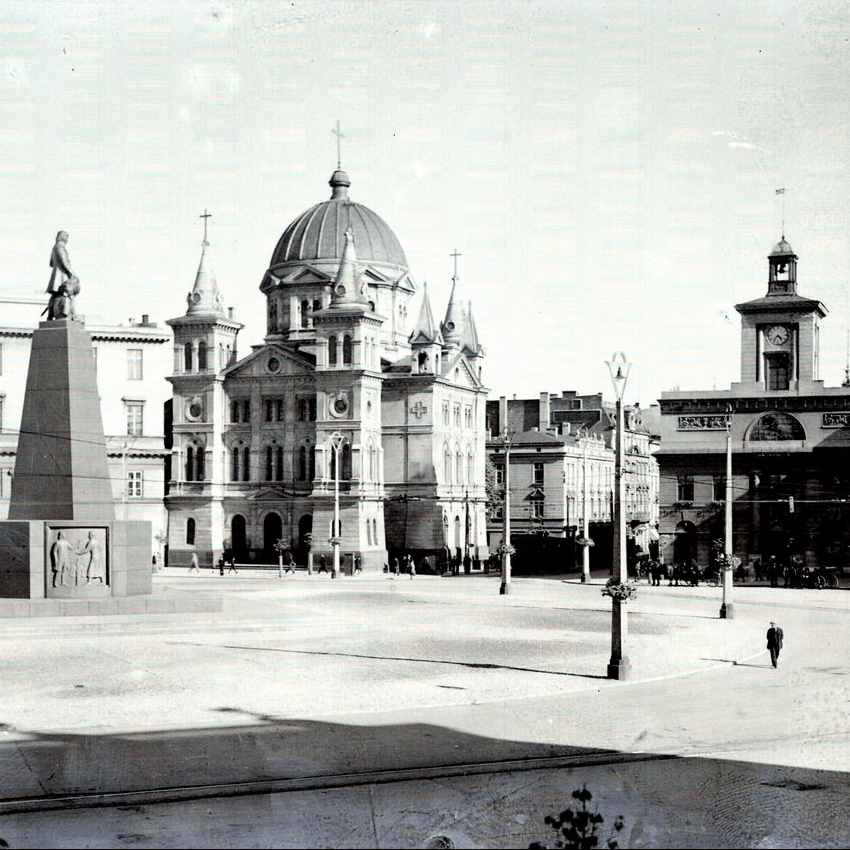
Nothing could be more natural than to see tributes to Thaddeus Kosciuszko in Warsaw, Kraków or the Brest region of Belarus – all of which are deeply connected to his personal history and the Uprising of 1794. However, to see his statue towering over the city of Łódź – which he never visited and which, in fact, in his time, was no more than a tiny village that wouldn hardly even make it onto the map – might be quite confusing. And yet, here he stands – right in the heart of the city, marking the centre of the Liberty Square (Pol. Plac Wolności) and concluding the famous promenade of the Piotrkowska Street.
Stories inscribed in bronze – the Monument’s allegorical narrative
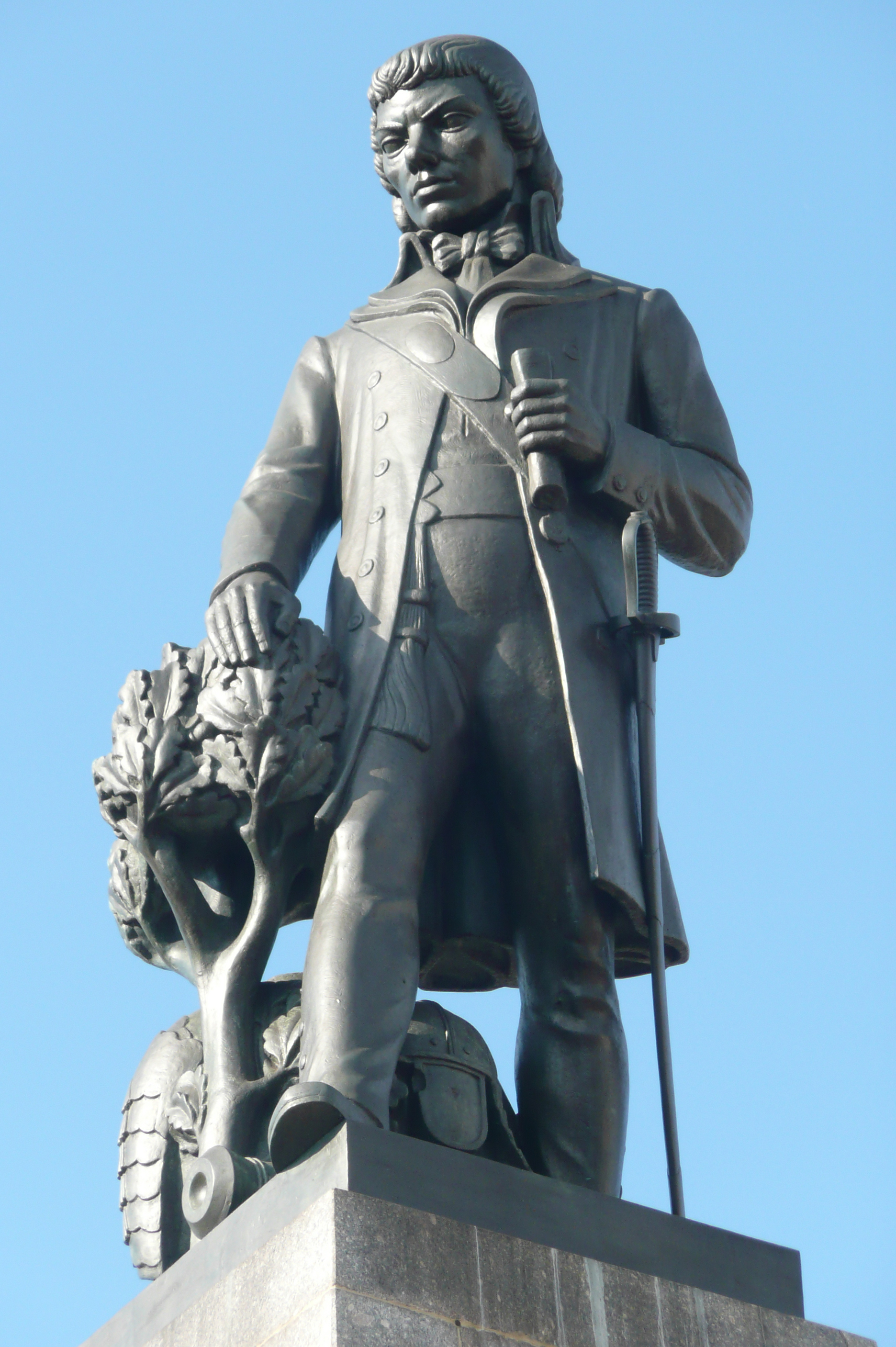
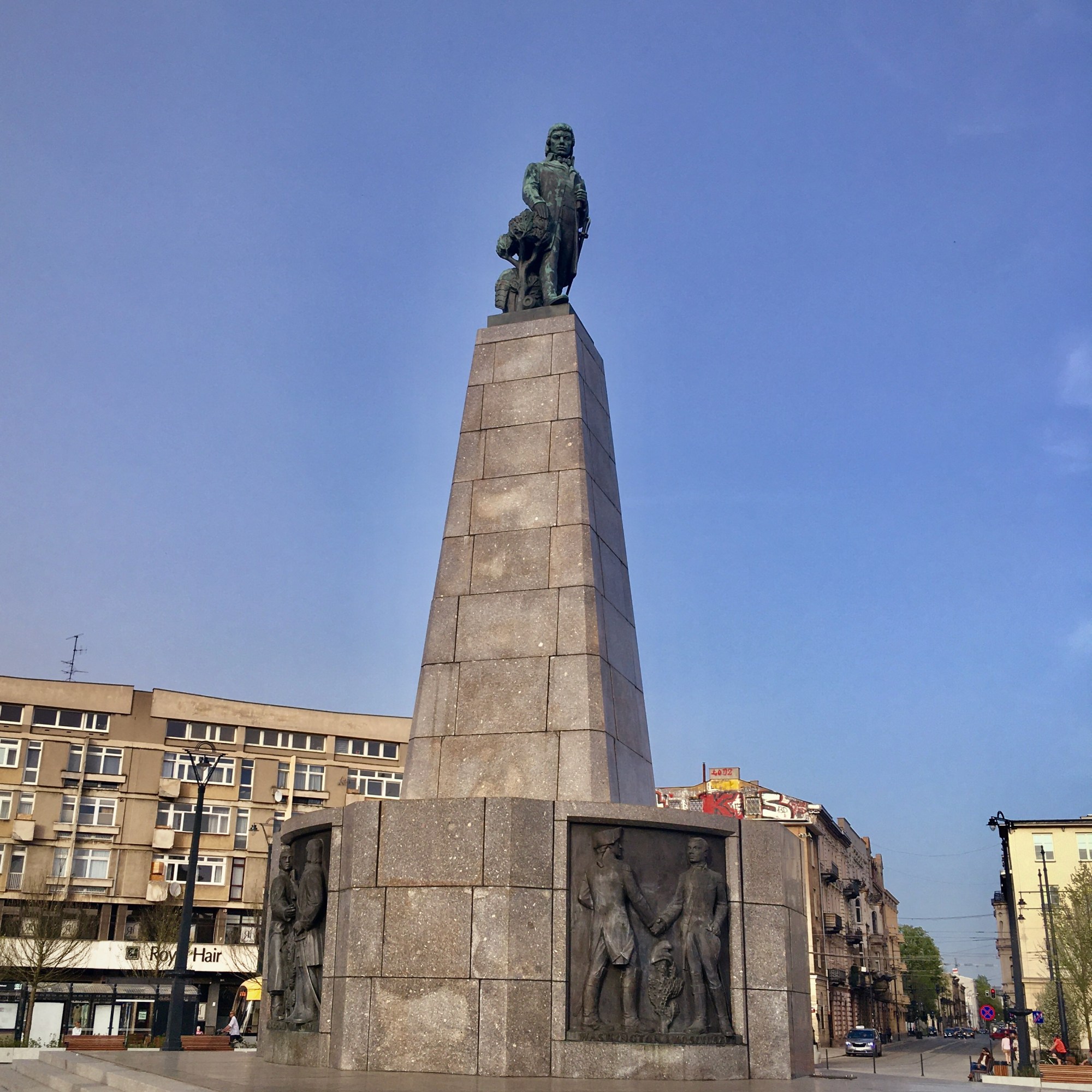
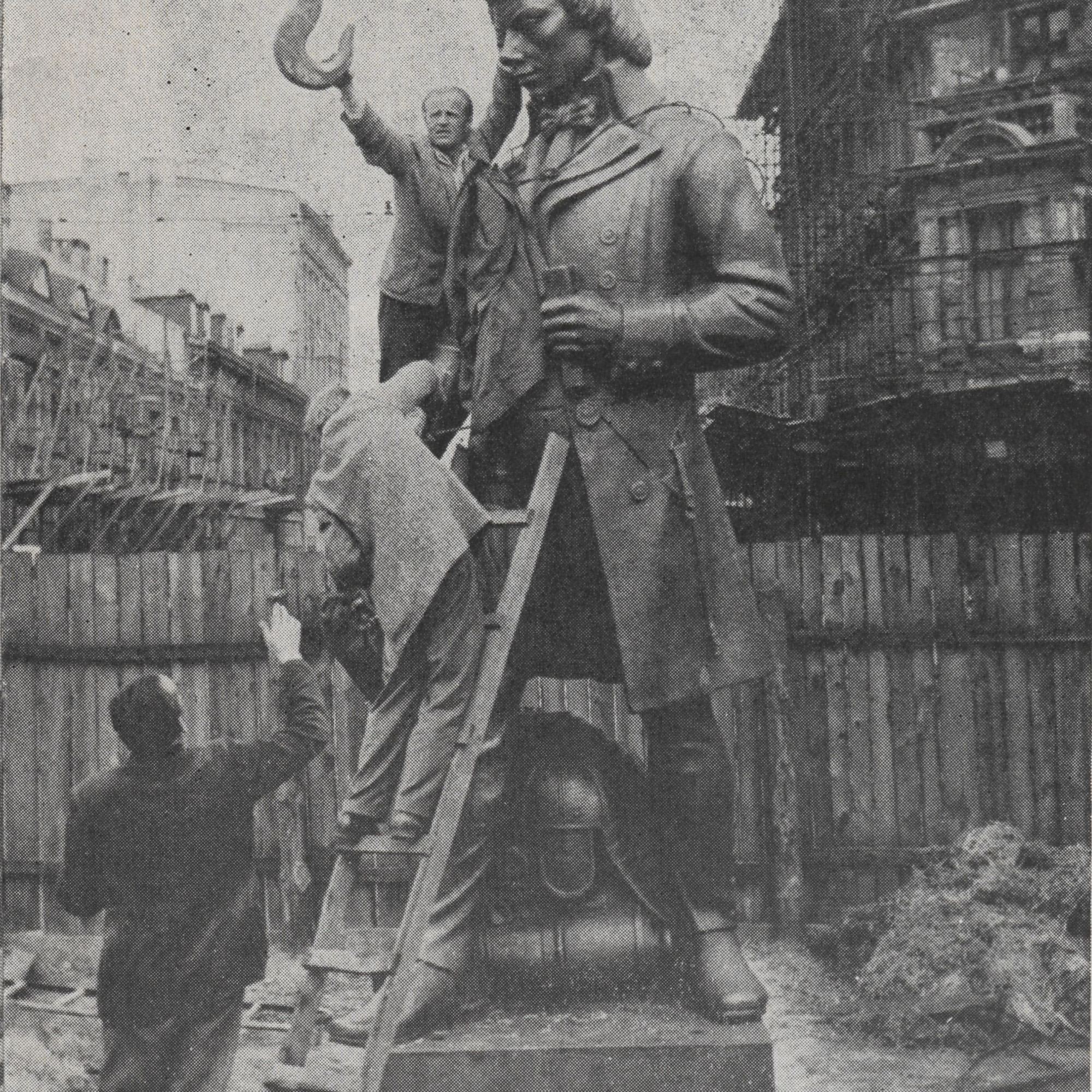
Passersby who cast a quick glance at the statue are met with its stern gaze. Seen from below, the modernist figure hardly appears as colossal as in reality – that is, 4.35 metres (14.3 feet) tall. Those who take a longer look will notice a set of objects surrounding the figure – each of those bears a symbolic meaning.1 With his right hand, Kosciuszko is shielding a little oak tree – an allegory of freedom; in his left hand, he holds a scroll with the Proclamation of Połaniec, a groundbreaking law introduced on May 7th 1794, which practically abolished serfdom in the Polish-Lithuanian Commonwealth. At his feet lie an armour, helmet and cannon – symbols of knighthood.
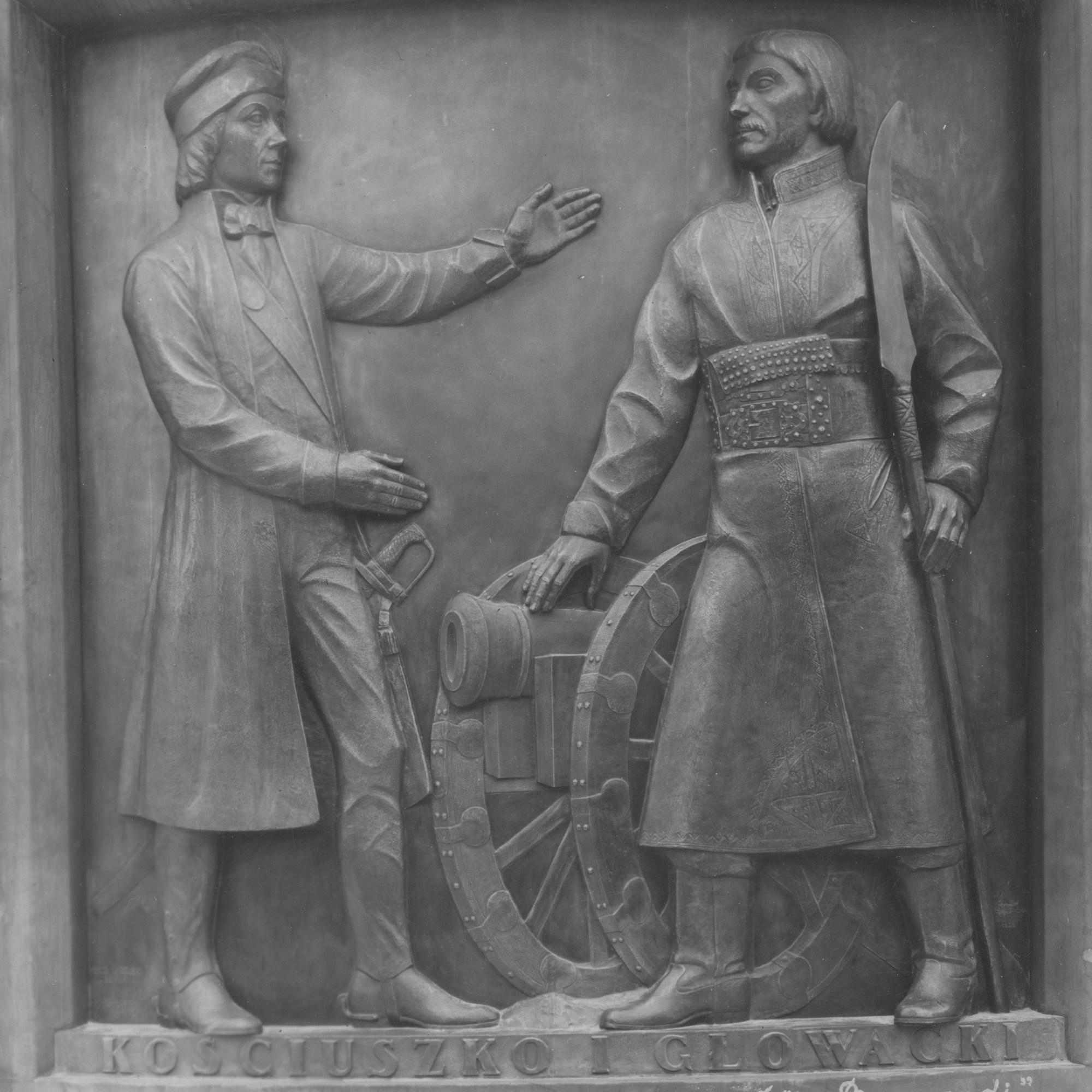
The same allegorical narrative continues throughout the four reliefs decorating the Monument’s massive base. Each portrays a carefully chosen triumphant event from Kosciuszko’s otherwise turbulent life: one commemorates his service in the American army, the other three – the 1794 Uprising named after him.
The scenes represented on the reliefs are:
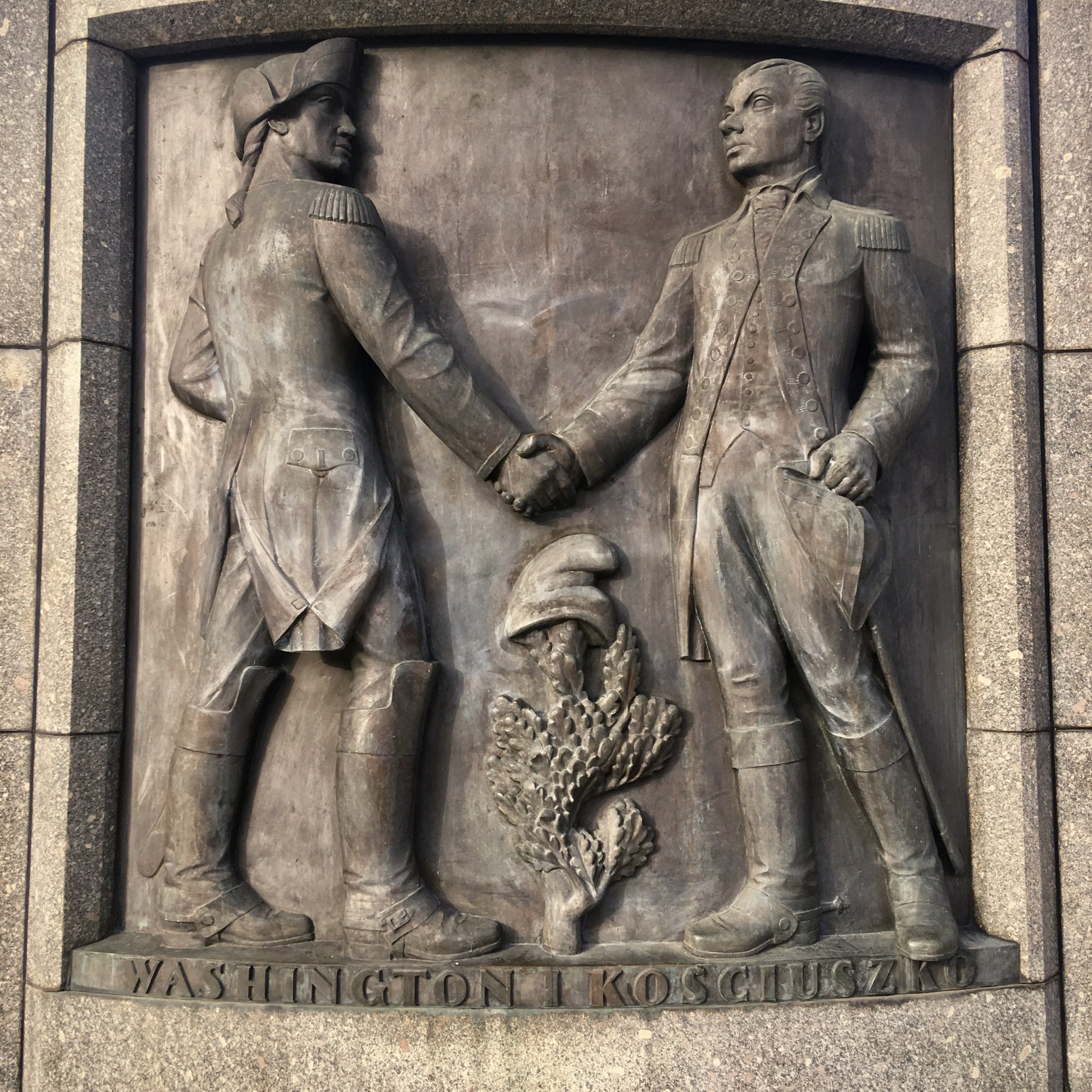
• George Washington and Thaddeus Kosciuszko shaking hands. The American Revolution of 1776–1783 turned out victorious, liberating the country from the British rule. Thaddeus, who had been one of the foremost military engineers on the American side, played a pivotal role in Washington’s success by establishing the defences at Saratoga and fortifying West Point. The relief depicts the two men bidding farewell to each other. Between them, there is another oak tree, once again symbolising freedom; and the Phrygian cap, stacked on top of it, signifies the revolution and pursuit of liberty.
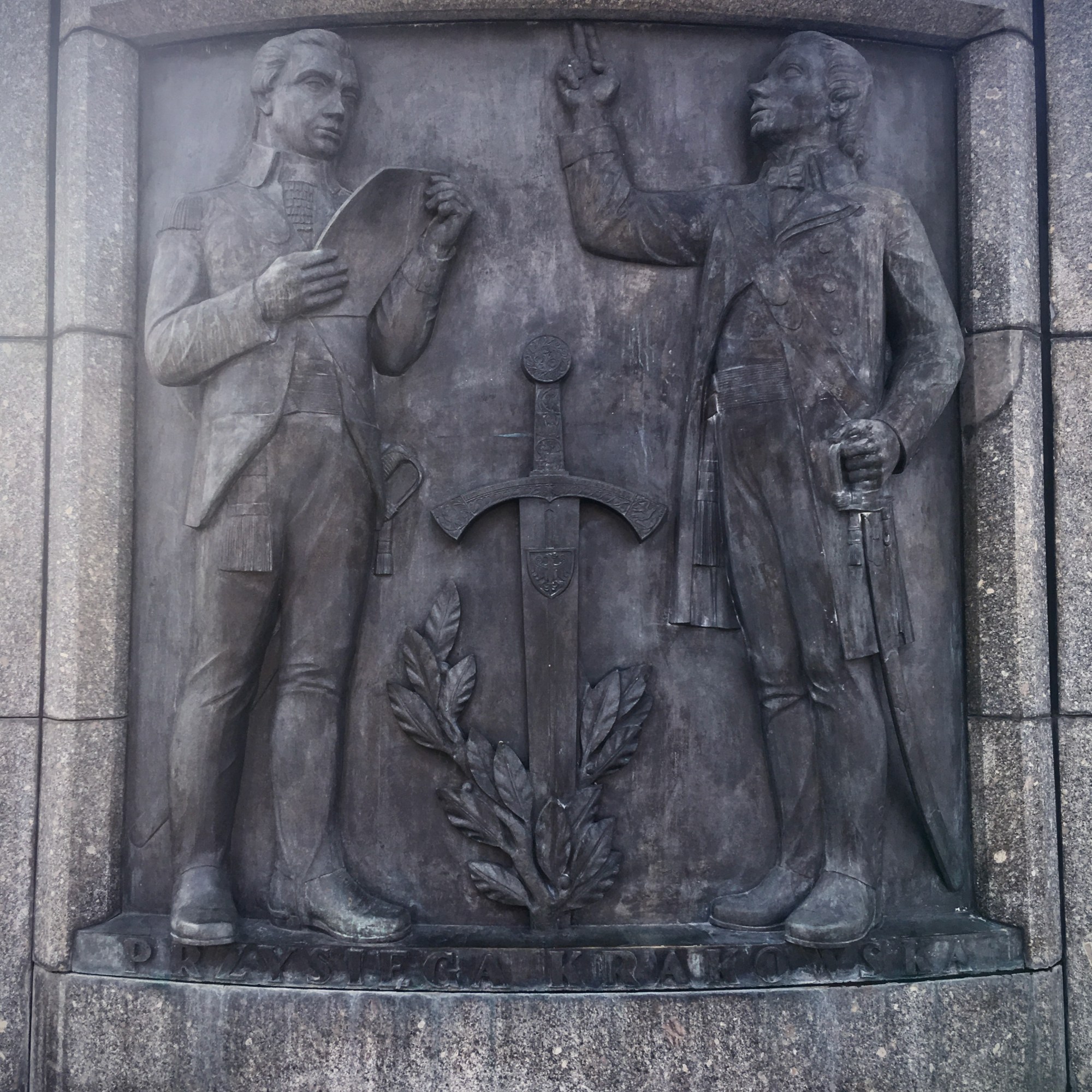
• Thaddeus Kosciuszko swearing the oath to the nation. On March 24th 1794, on the Main Square of Kraków, Thaddeus took the public oath and was named the commander-in-chief of the Polish-Lithuanian forces – which marked the beginning of the 1794 Uprising. The scene shows an officer of the National Guard2 reading out the oath and Kosciuszko, with his right hand up, looking towards the sky and repeating the words. The hilt between them, surrounded by a laurel branch, is that of Szczerbiec – the ceremonial sword used in the coronations of nearly all Polish-Lithuanian kings over the four centuries of the Commonwealth’s history. The portrayal of Kosciuszko alongside such a recognisable royal symbol expresses his perception as the kings’ equal – a trope frequently found in his iconography (e.g. in his representations on the town houses in Kraków).
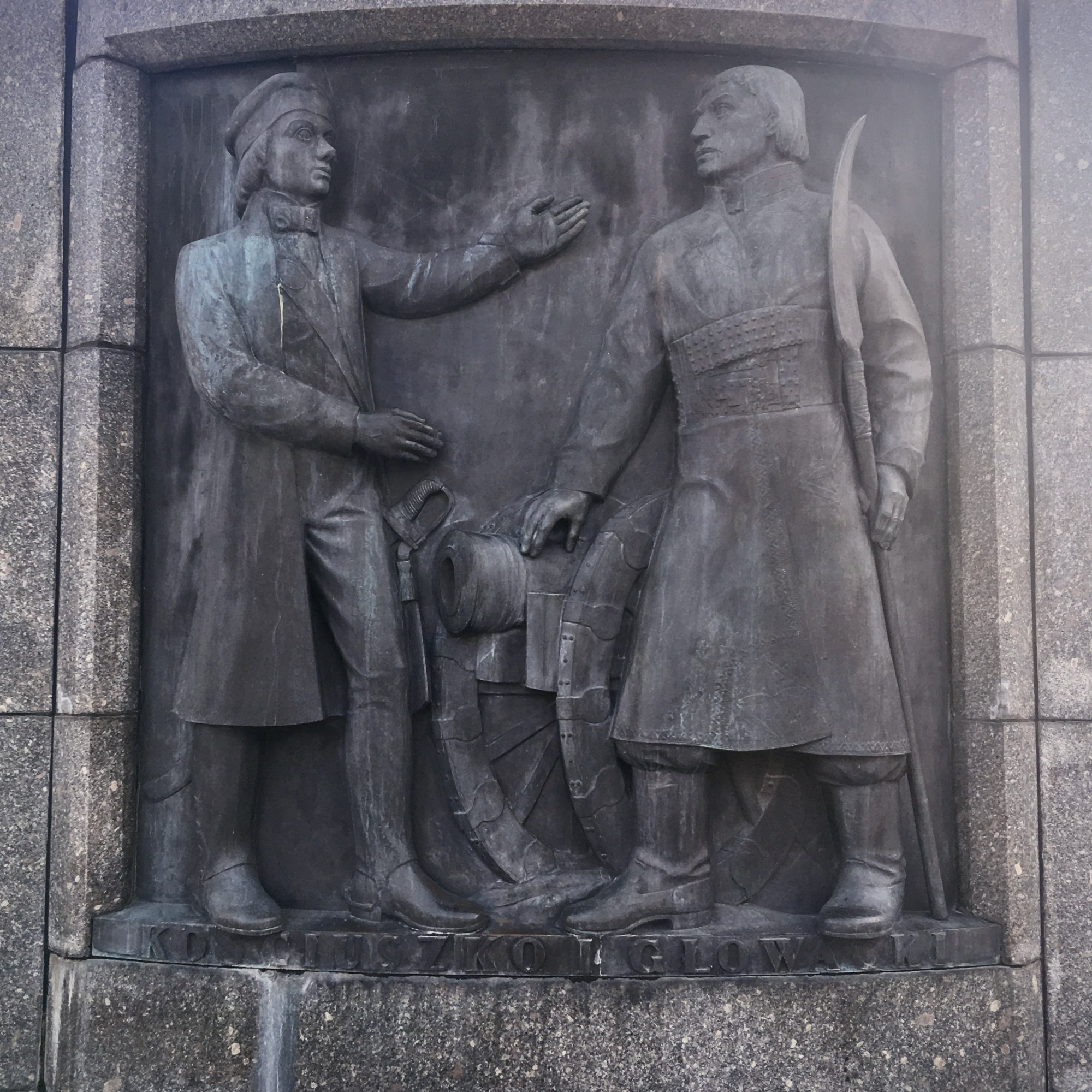
• Thaddeus Kosciuszko and Bartosz Głowacki. The battle of Racławice, the first major military encounter of the 1794 Uprising, was a blazing success for the Polish-Lithuanian side. The victory over the Moscovites would not, however, be possible without the involvement of the scythemen regimen – a cohort of peasant warriors armed solely with pointed scythes. Their participation was not only pivotal but also deeply symbolic, as it marked the first moment in the Polish history when the noble folk and serfs fought together in defence of their homeland. The most notorious figure among the peasants was Wojciech Bartos from the village of Rzędowice, not far from Racławice. He famously captured a Russian cannon all by himself by piercing the soldier in charge with his scythe and putting out the fuse with his hat. For that, he was later knighted and given the rank of the standard-bearer, while his name was changed to Bartosz Głowacki. On the relief, he is portrayed with his right hand on the captured cannon and holding a scythe in his left hand. Thaddeus Kosciuszko, depicted on the left, extends his arms towards him as if leaning into a friendly embrace – alluding to the dawn of equality between two estates that had never come together before.
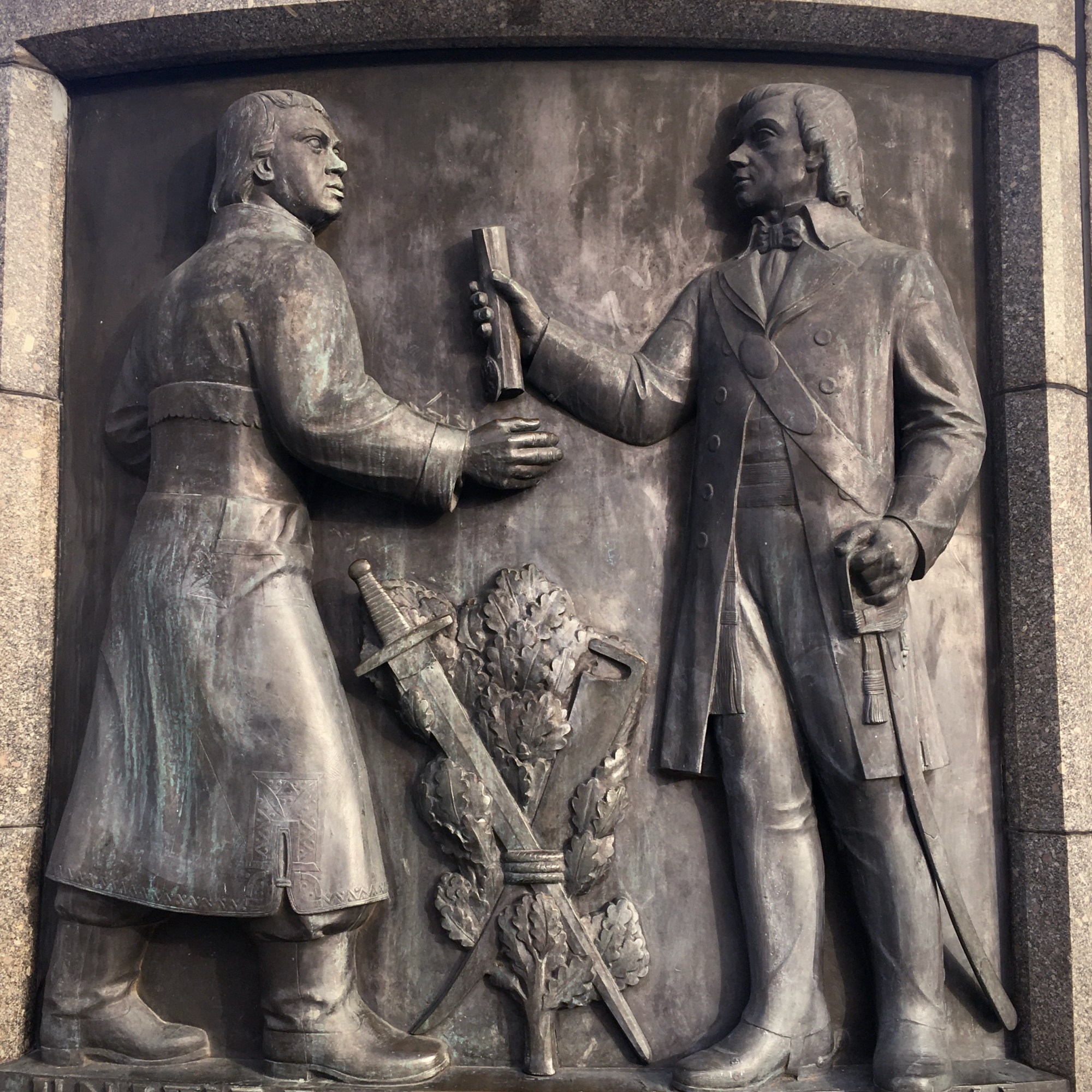
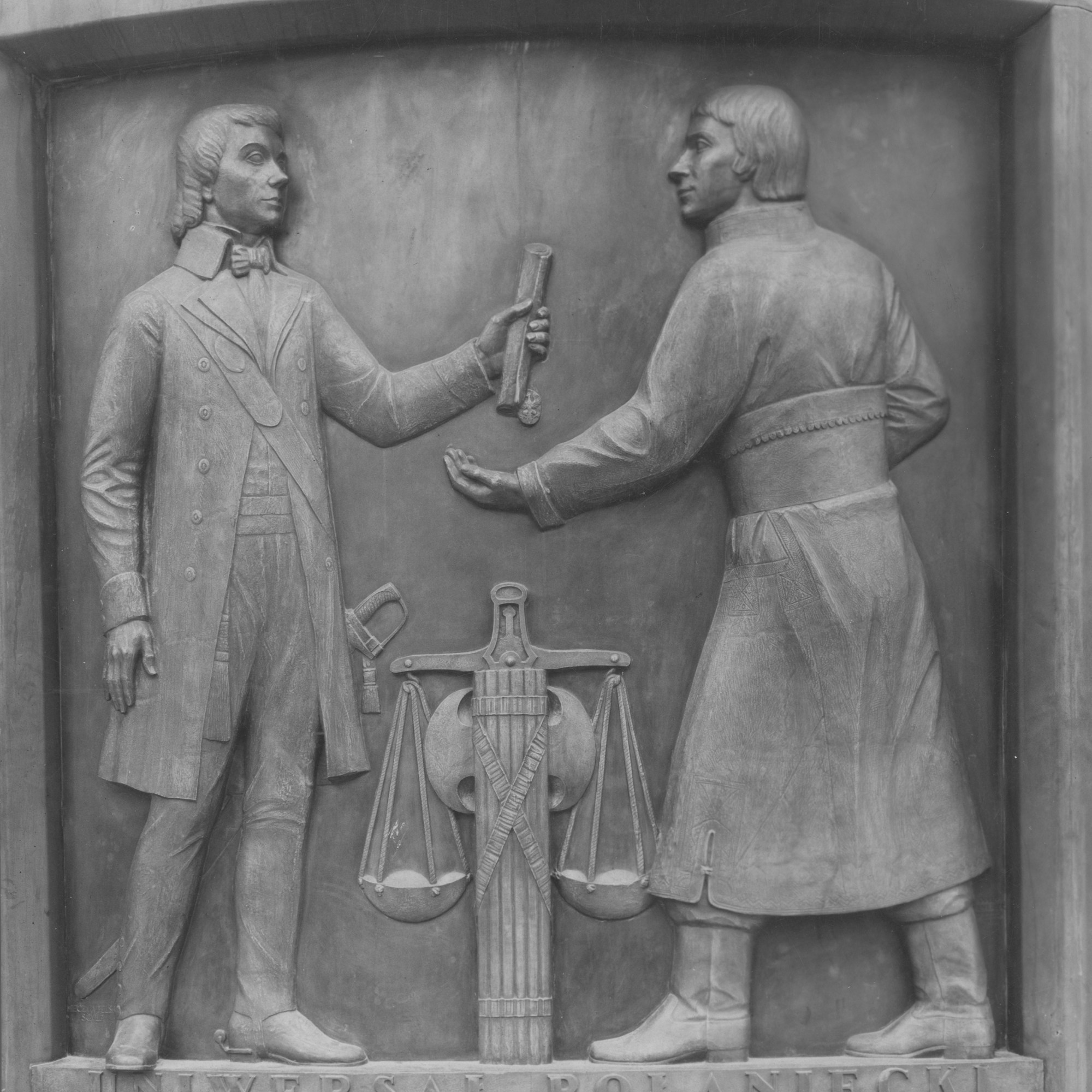
• Kosciuszko issuing the Proclamation of Połaniec. The relief illustrates the events of May 7th 1794 – the introduction of the aforementioned, radically progressive law granting unprecedented freedom to peasants living in the Commonwealth. Kosciuszko is depicted handing over the scroll containing the Proclamation – the same attribute we’ve already seen in the statue crowning the monument – to an unnamed figure representing the peasant estate. An oak tree grows between them, a sword and a scythe blade attached to it – an allegory of knighthood and peasantry fighting side by side for freedom.
Daunting beginnings – the interwar period
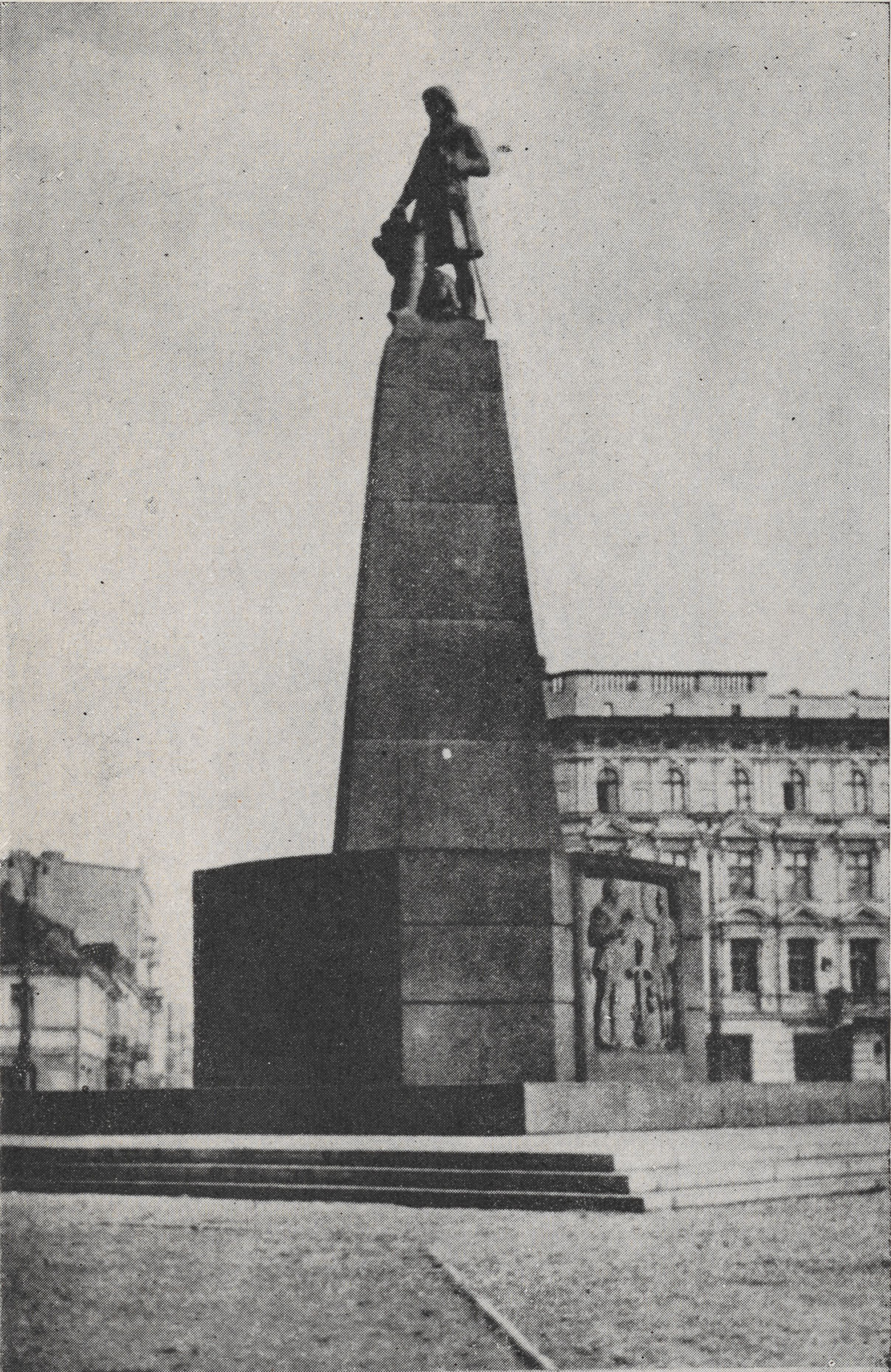
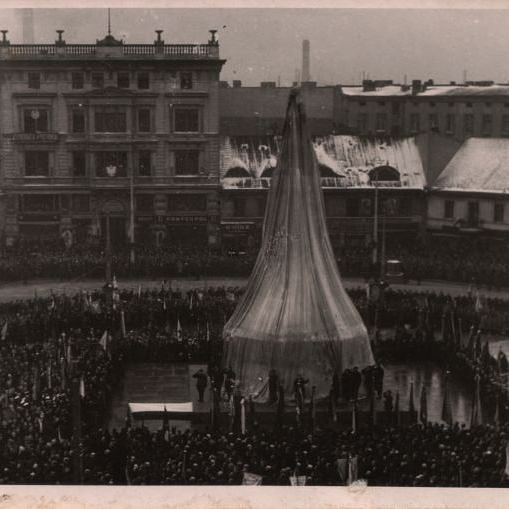
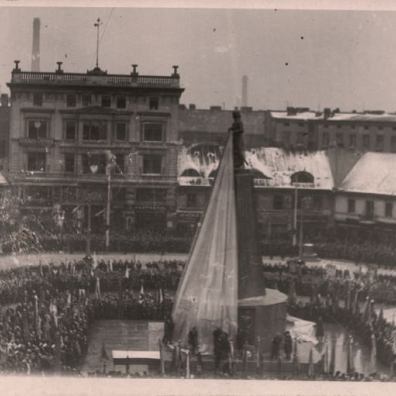
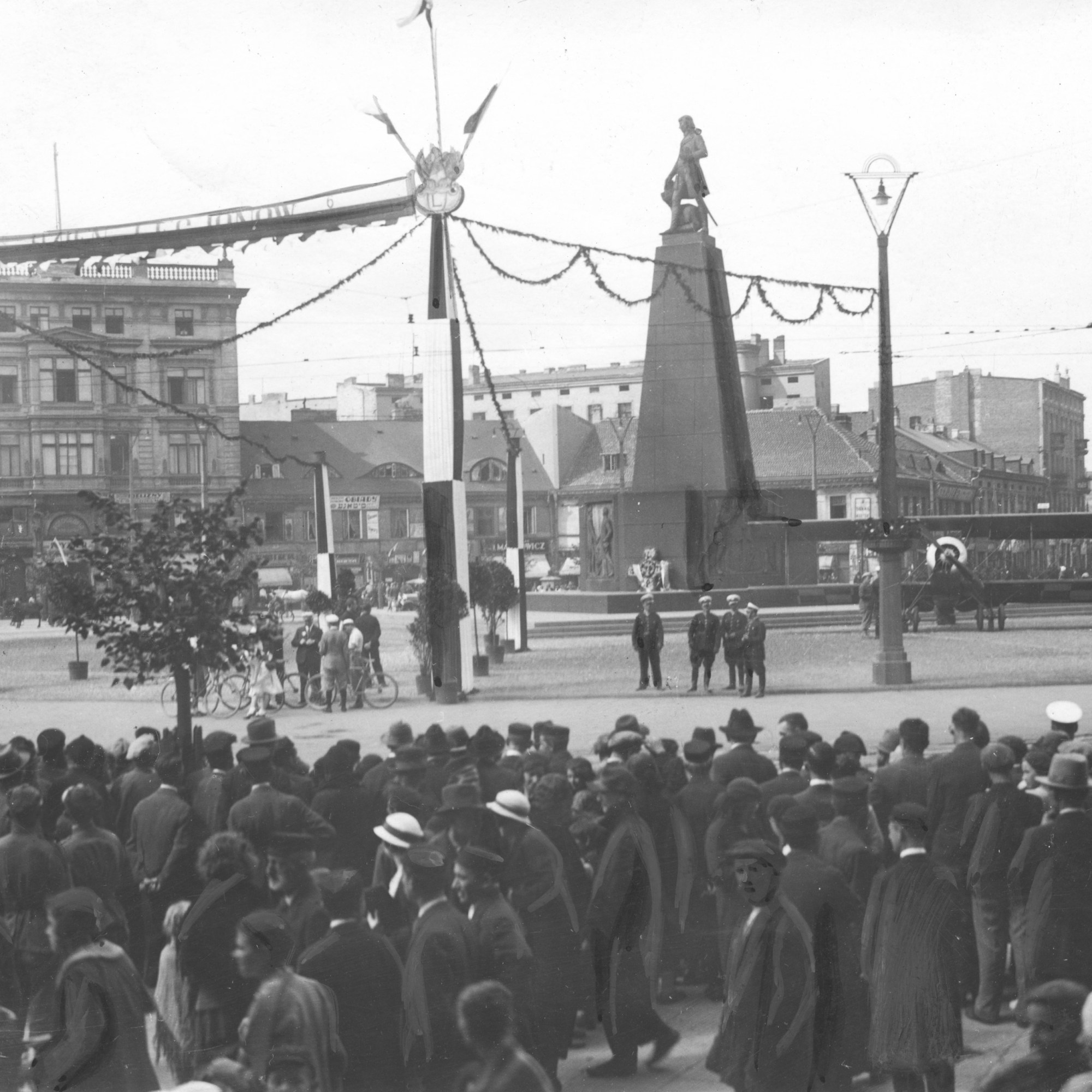
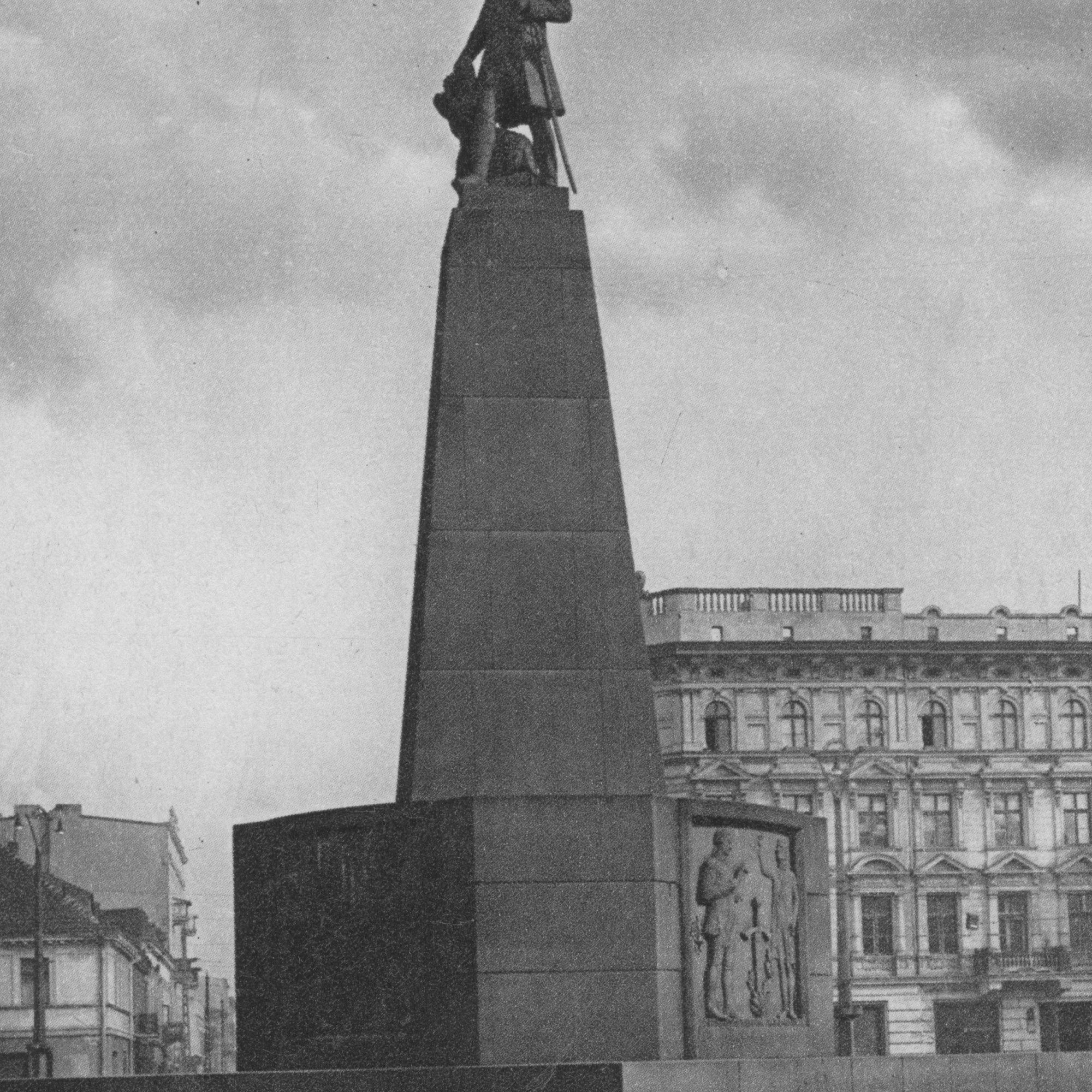
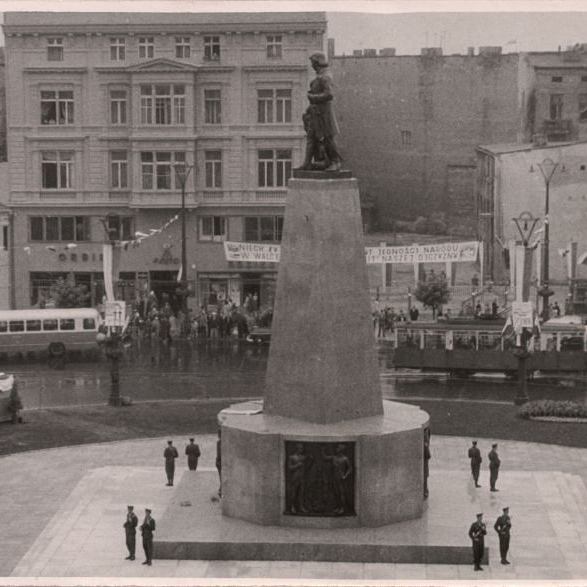
The decision to commemorate the General of the 1794 Uprising with a monument in Łódź was taken on October 15th 1917 – that is, on the 100th anniversary of his passing, which prompted an avalanche of tributes to Kosciuszko all throughout the country. The Liberty Square – an animated spot in the city at the intersection of four major avenues – was agreed upon as the most appropriate location.3 It took, however, nearly 10 years before the sculptor was named, and the project could finally take flight. The task was commissioned to Mieczysław Lubelski at the beginning of 1926, but the journey from the concept to a tangible reality was arduous and ridden with technical difficulties. The design itself was no short of monumental – the final effect was to be 16.7 metres (54.8 feet) tall and consisting of a massive, octagonal base decorated with four large reliefs, a four-sided, copper-clad obelisk sitting on top of it, and a colossal figure of Kosciuszko himself, crowning the composition. Some of the components, e.g. the copper slates, were of such a weight that it took the involvement of the Gdańsk Shipyard to get them in place.4 Eventually, 13 years after the initial decision was taken, the Kosciuszko monument was unveiled on the 14th of December 1930 – but alas, it was not destined to stand for another decade.
The catastrophe unfolds – World War II
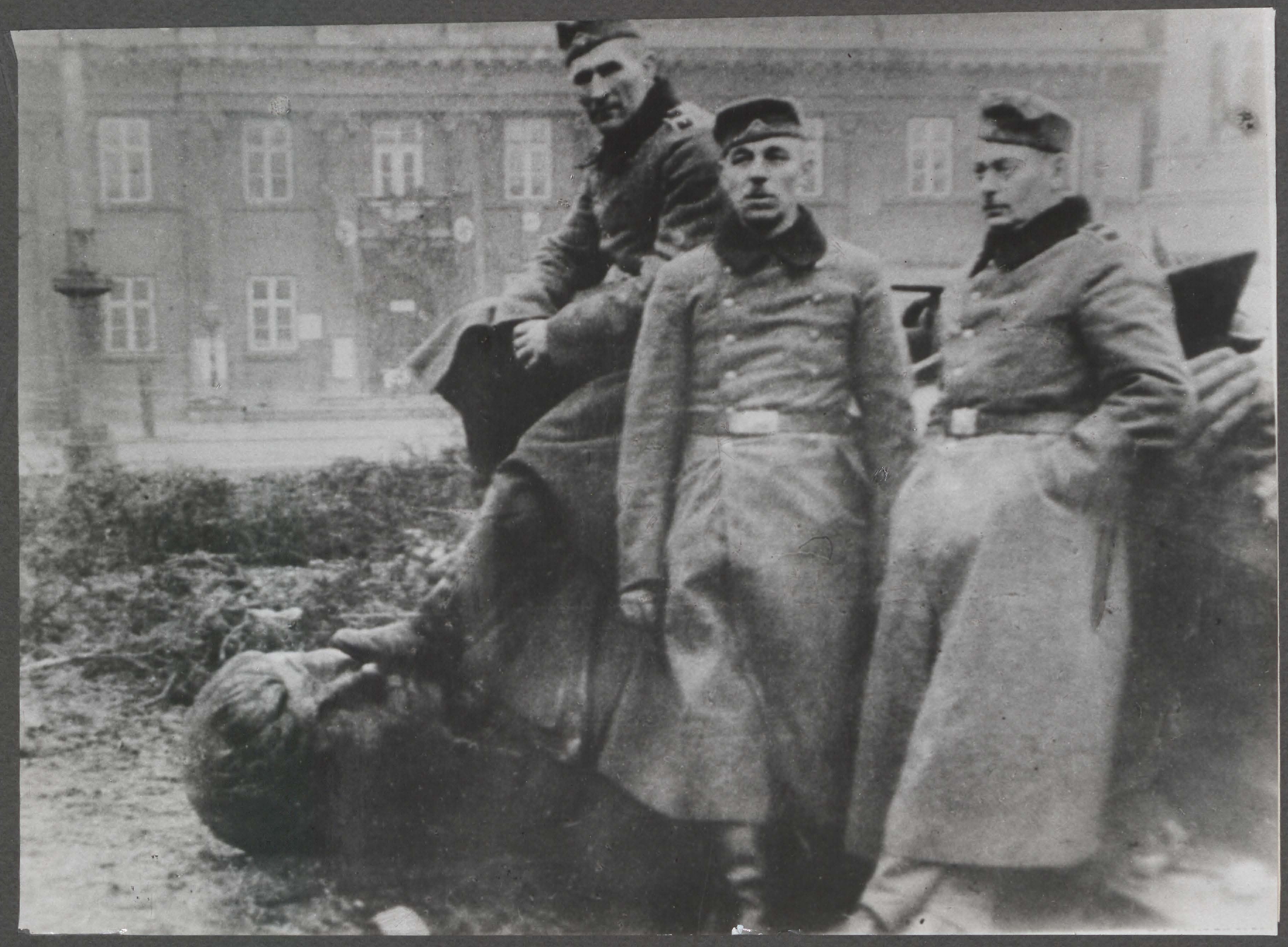
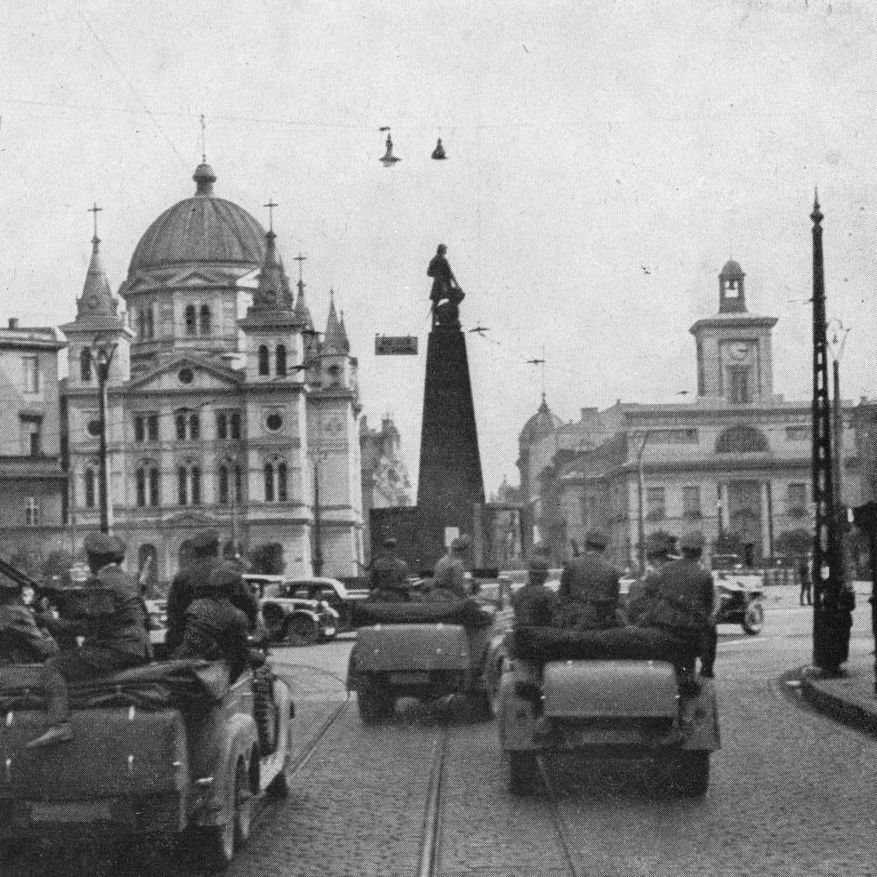
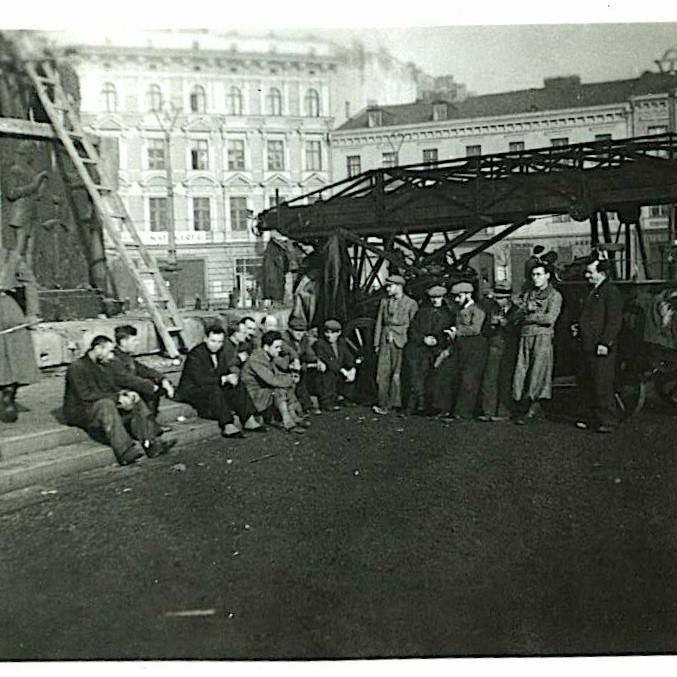
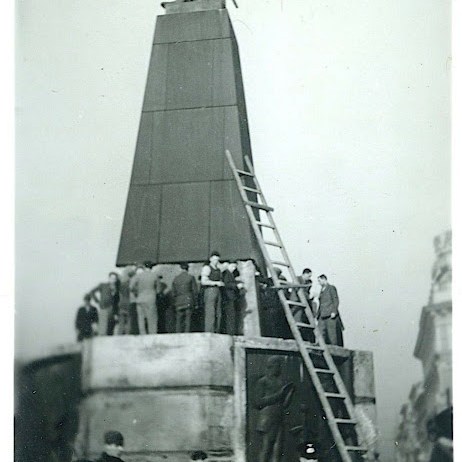
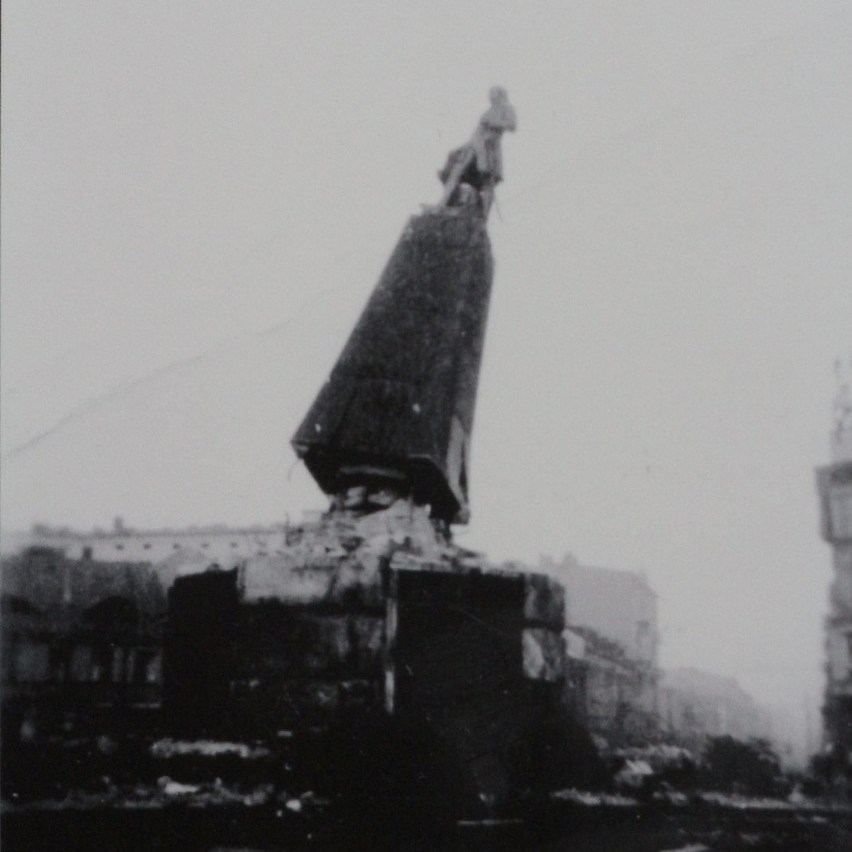
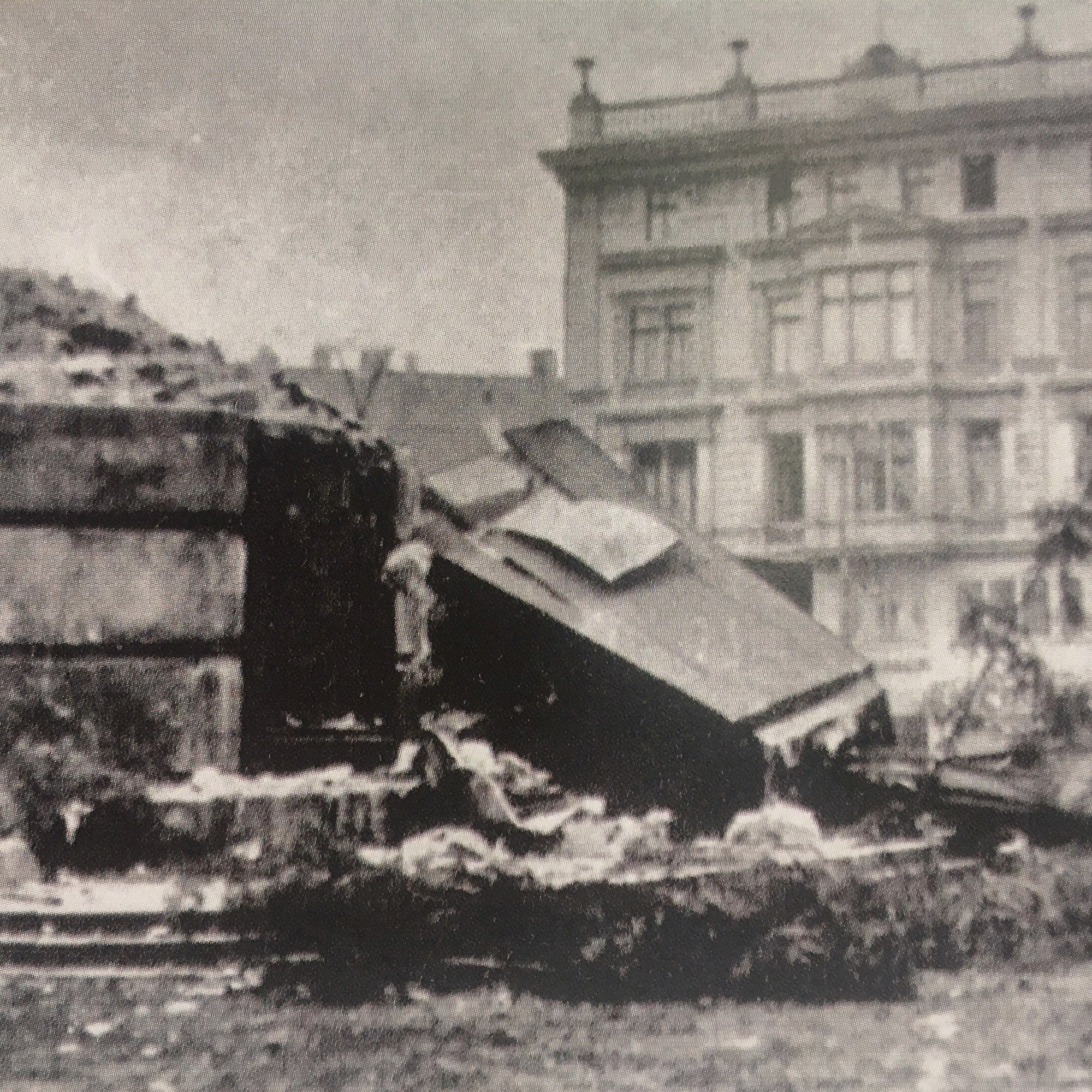
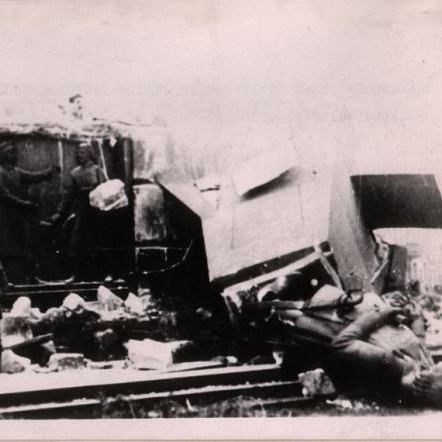
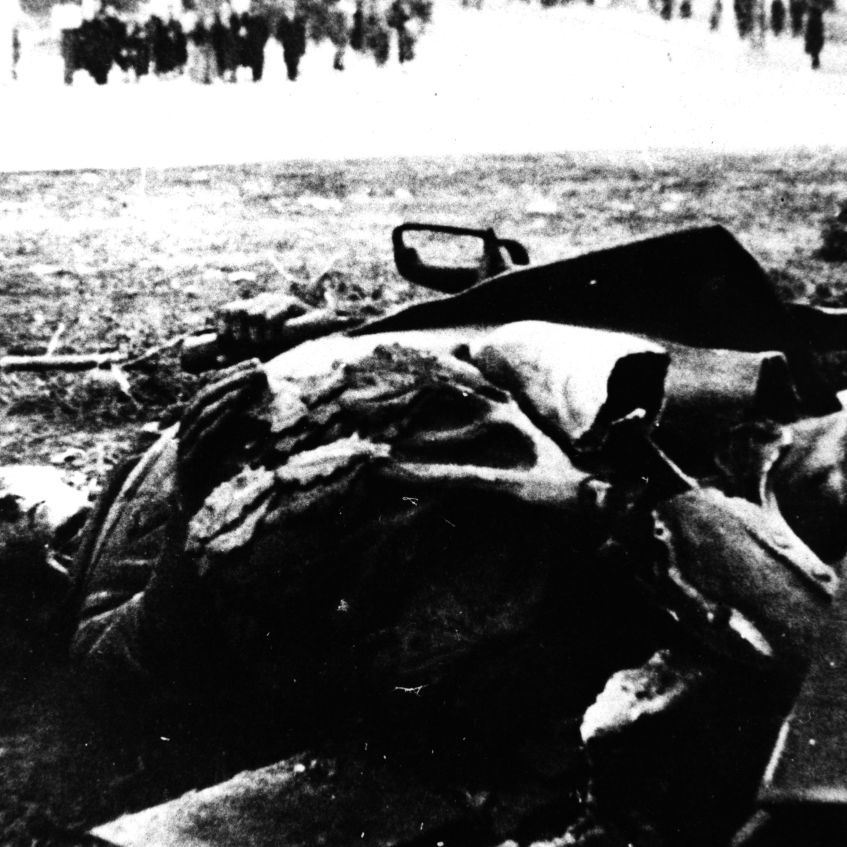
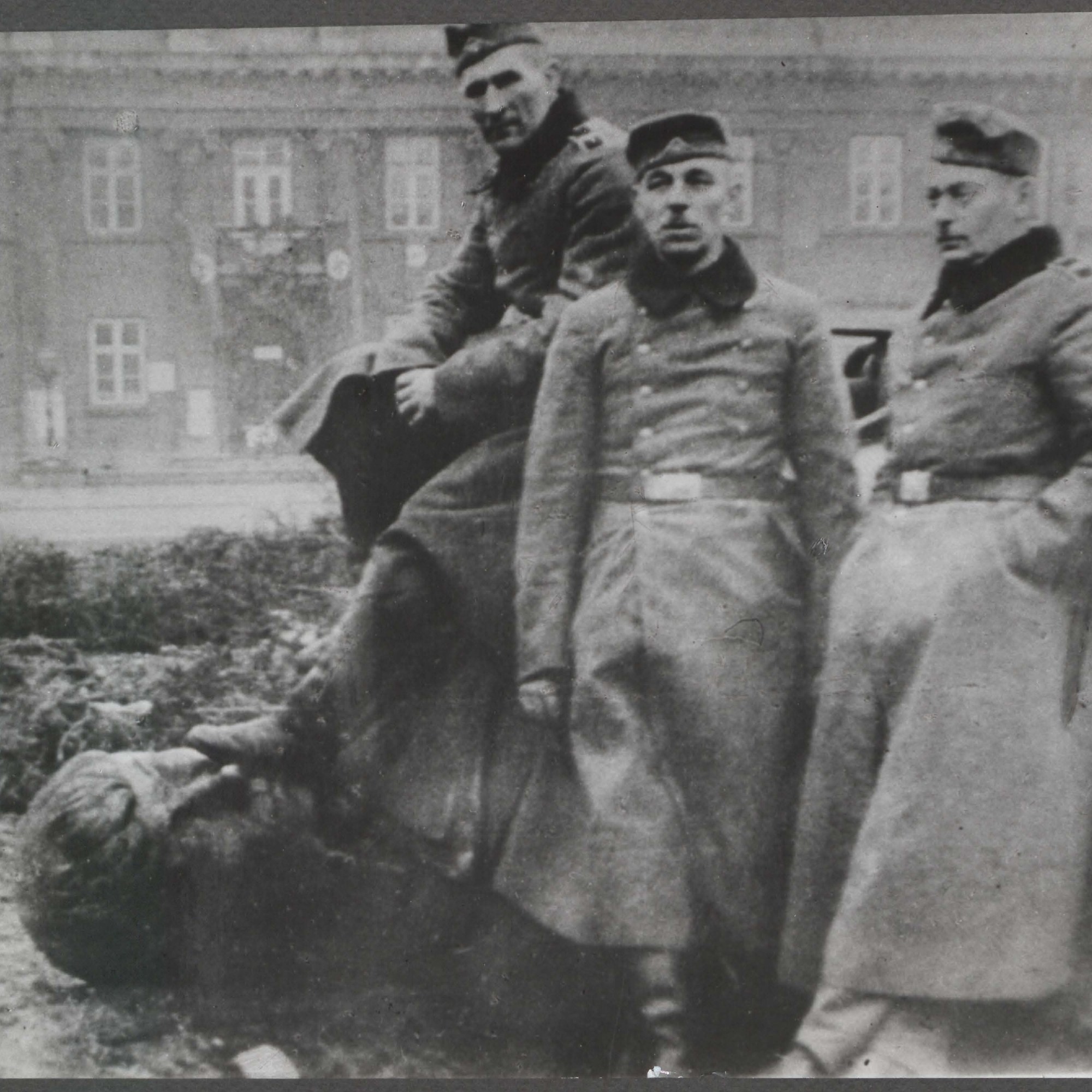
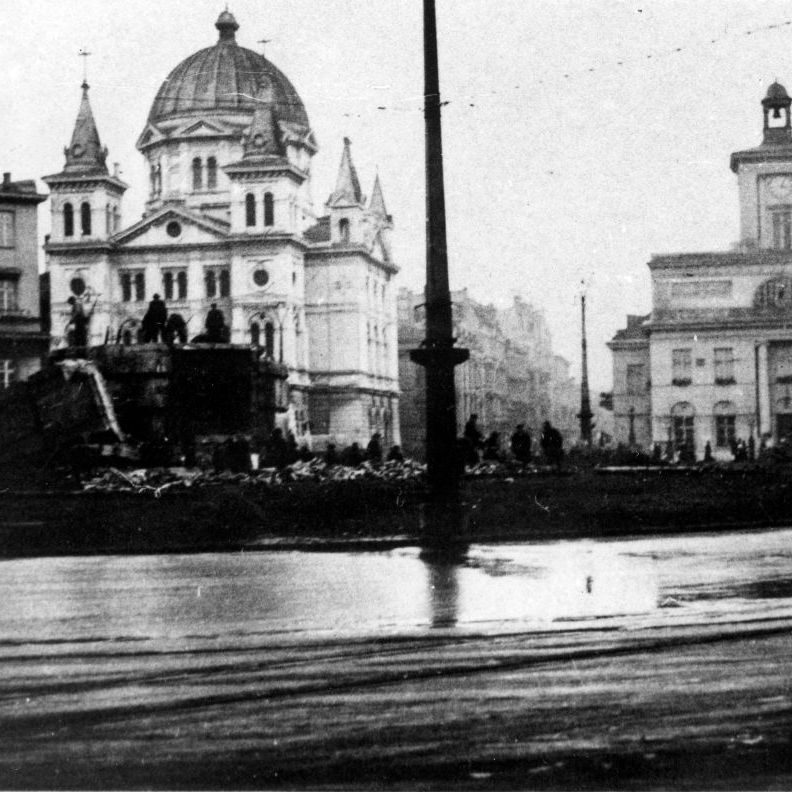
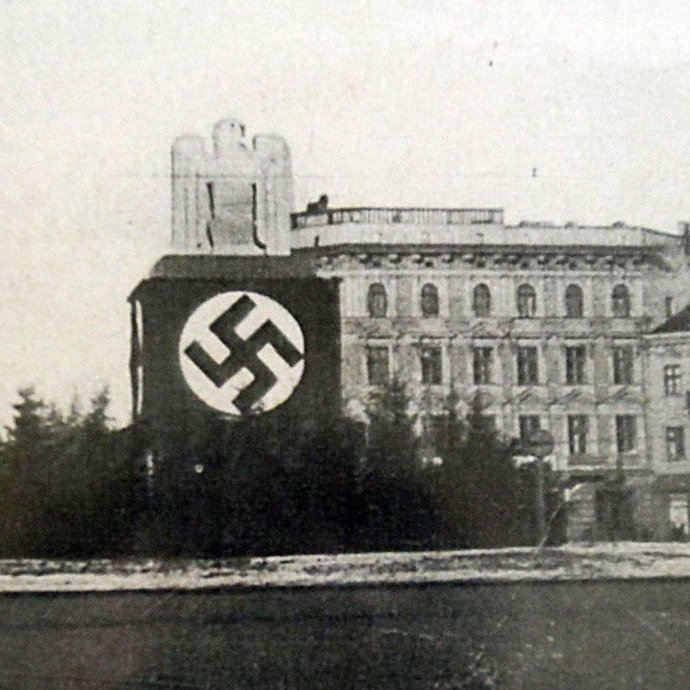
Thaddeus Kosciuszko towered above the centre of Łódź as the symbol of Poland’s might and pride – „the contemporary of Washington and Lafayette, a hero of his own and other nations” – as described by the committee commissioning the statue’s erection in 1917.5 Predictably, none of that could remain intact in the dark hour of the Nazi occupation. Soon after entering the city, the German soldiers got down to the task. The succinct notice printed in the local occupation newspaper, Lodzer Zeitung, on November 12th stated that the monument had been dismantled the day earlier, on the Polish Independence Day.6 This, however, has been somewhat contradicted by an eyewitness, Mr. Kazimierz Maj, who described the scene as follows:7
”
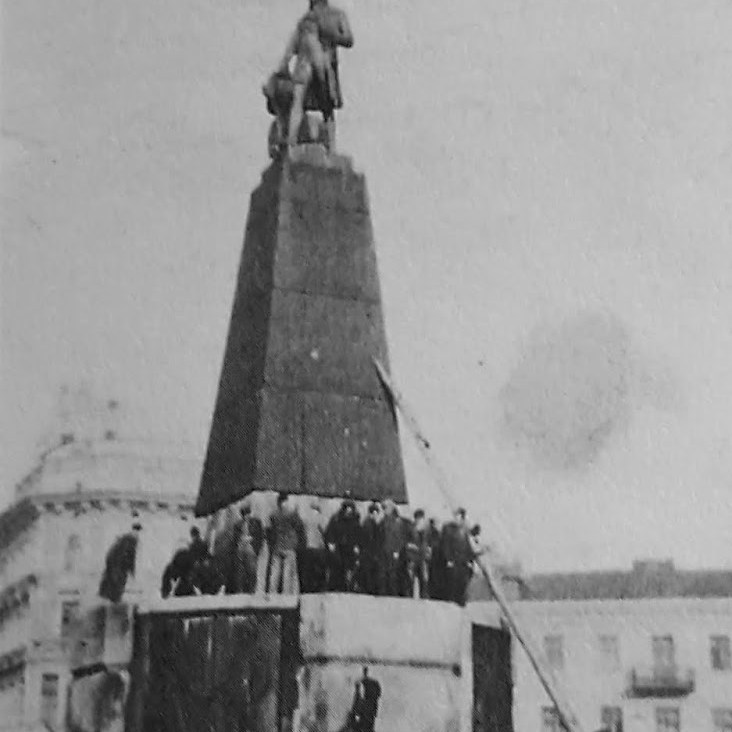
They first tried to topple the statue [only]. Thus, they sawed through its base and attached steel ropes to its head. Their other ends were tied to cars supposed to take the figure down – but Kosciuszko would not give in.
After the failure of the initial attempts at overthrowing the statue, the soldiers coerced the local Jewish population to work at planting explosives in the statue’s massive pedestal. But even that did not yield results. Eventually, as Mr. Maj recounted:
They had to plant the explosives multiple times and in several places in order to – after a week-long destruction – bring the monument down.
The German rule in Łódź was brief, but traumatising. As the Kosciuszko Monument fell, the occupants were sawing destruction throughout the rest of the city, burning the synagogues and annihilating all other traces of the Jewish presence. The city’s once thriving Jewish population of about 230 thousand people8 had been decimated – and Łódź received a wound so deep, it would never fully heal.
Picking up the pieces – Kosciuszko returns to the Liberty Square
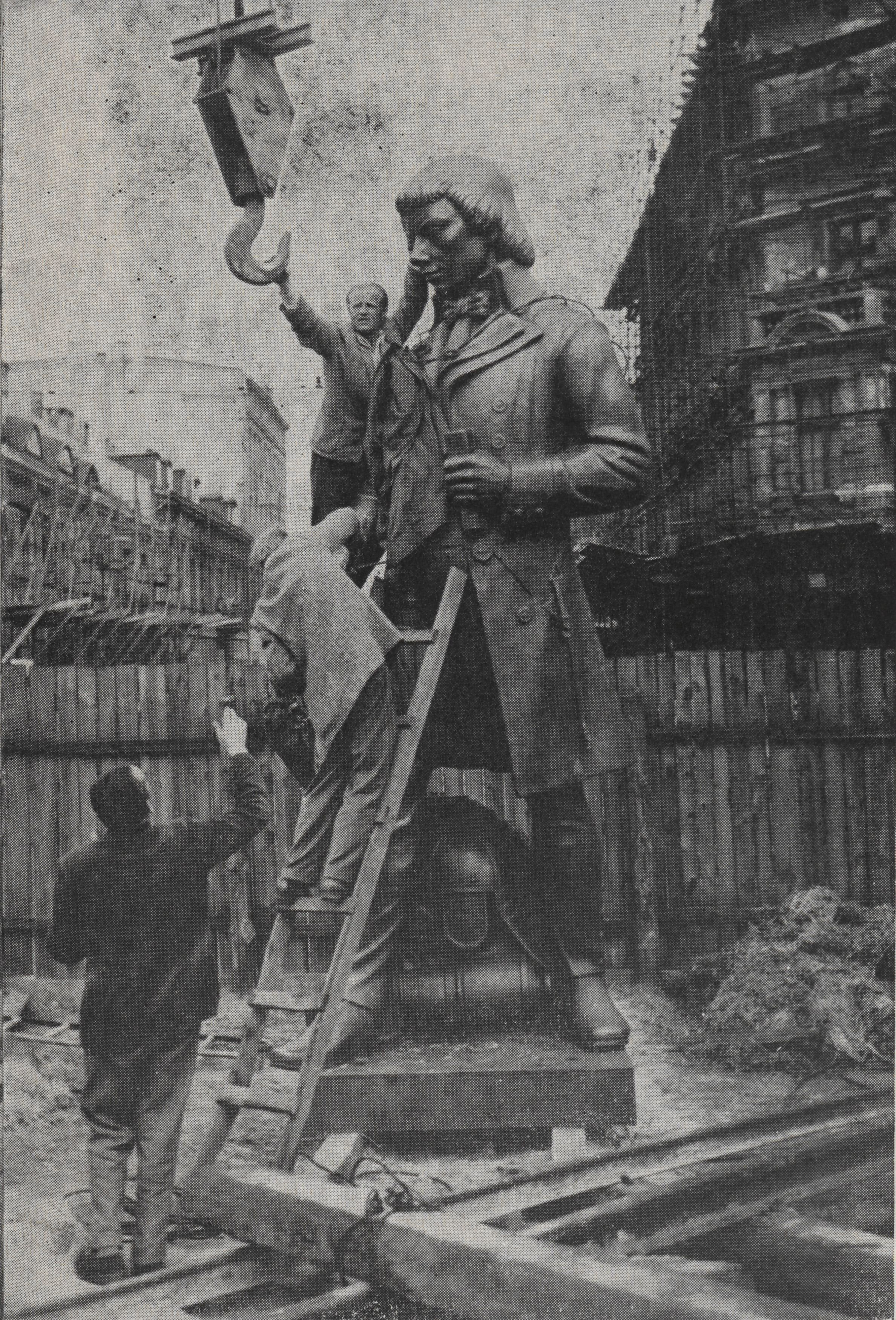
The Łódź everyone knew was gone. The best the injured population could do to reclaim a piece of what was lost was to restore at least some parts of the city’s pre-War symbolical narrative. Thus, the decision to rebuild the Kosciuszko Monument yielded itself as natural. In fact, the thought of it „arose on the same November night when the occupant destroyed it; it was then when Lodzian patriots swore to themselves it must be brought back” – stated the 1961 report on the restoration works.9
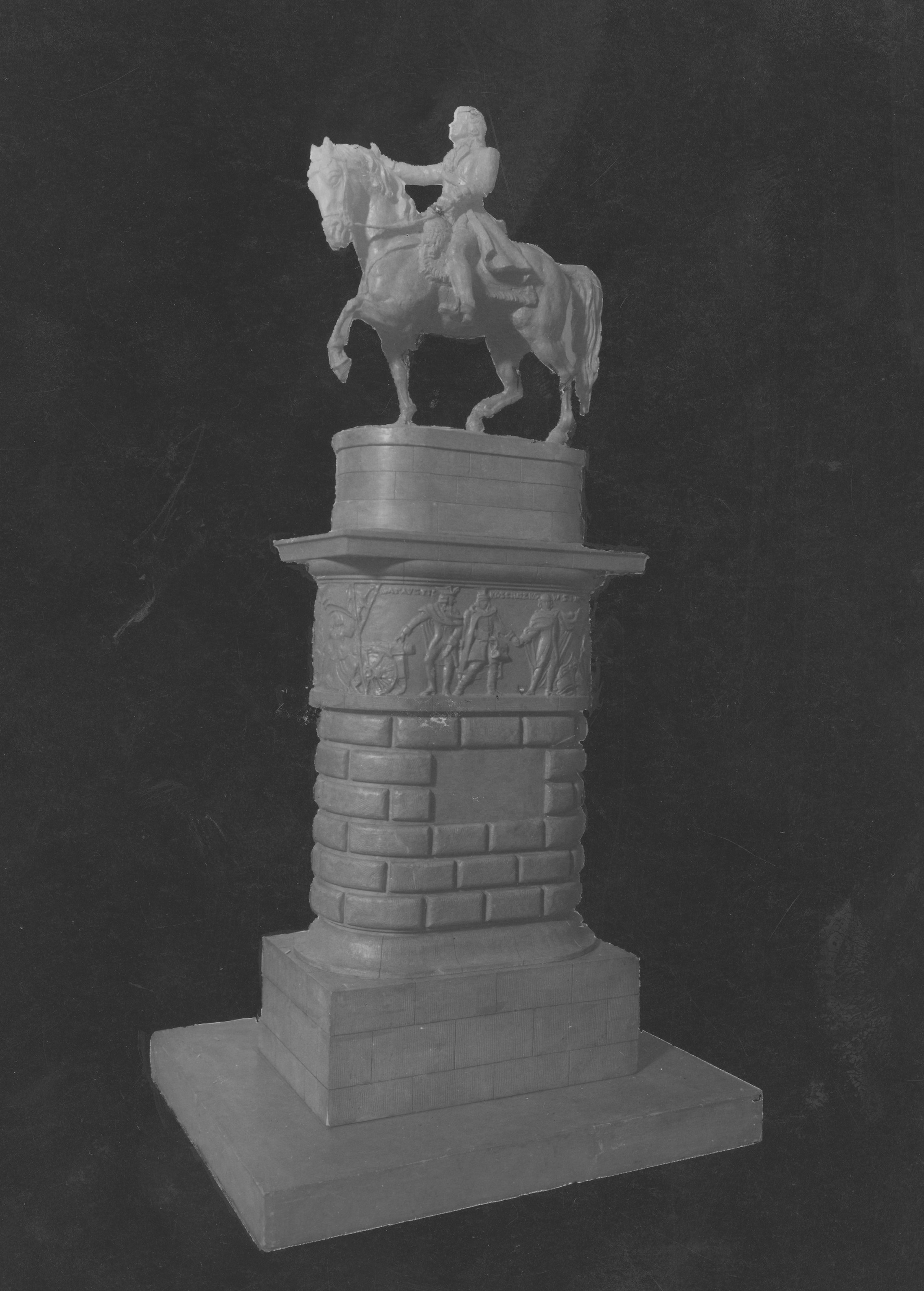
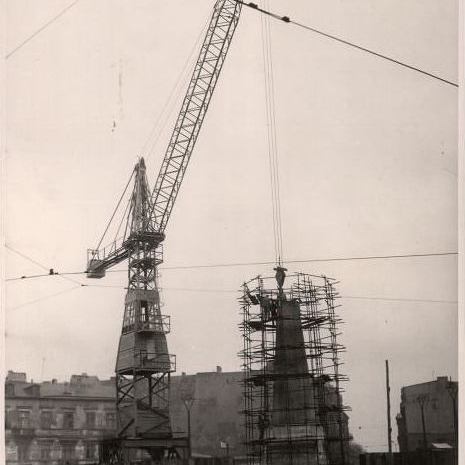
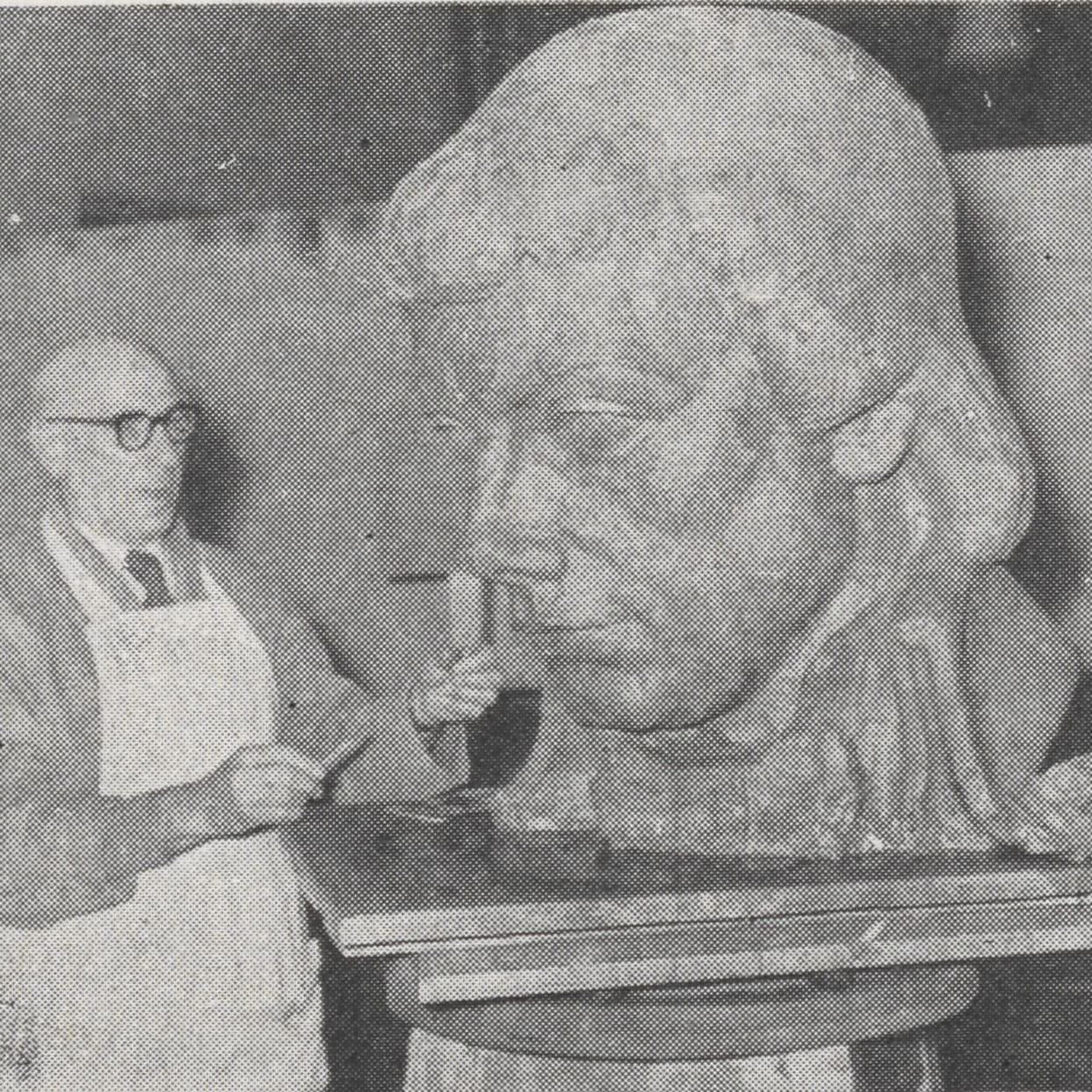
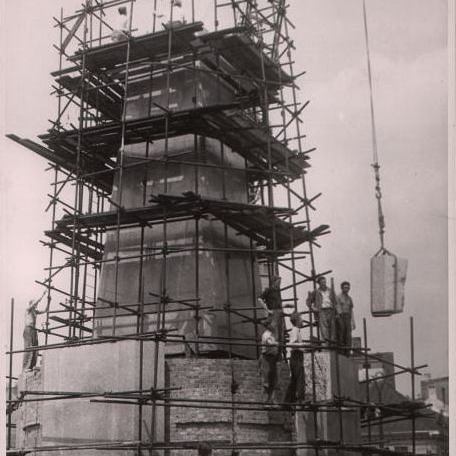
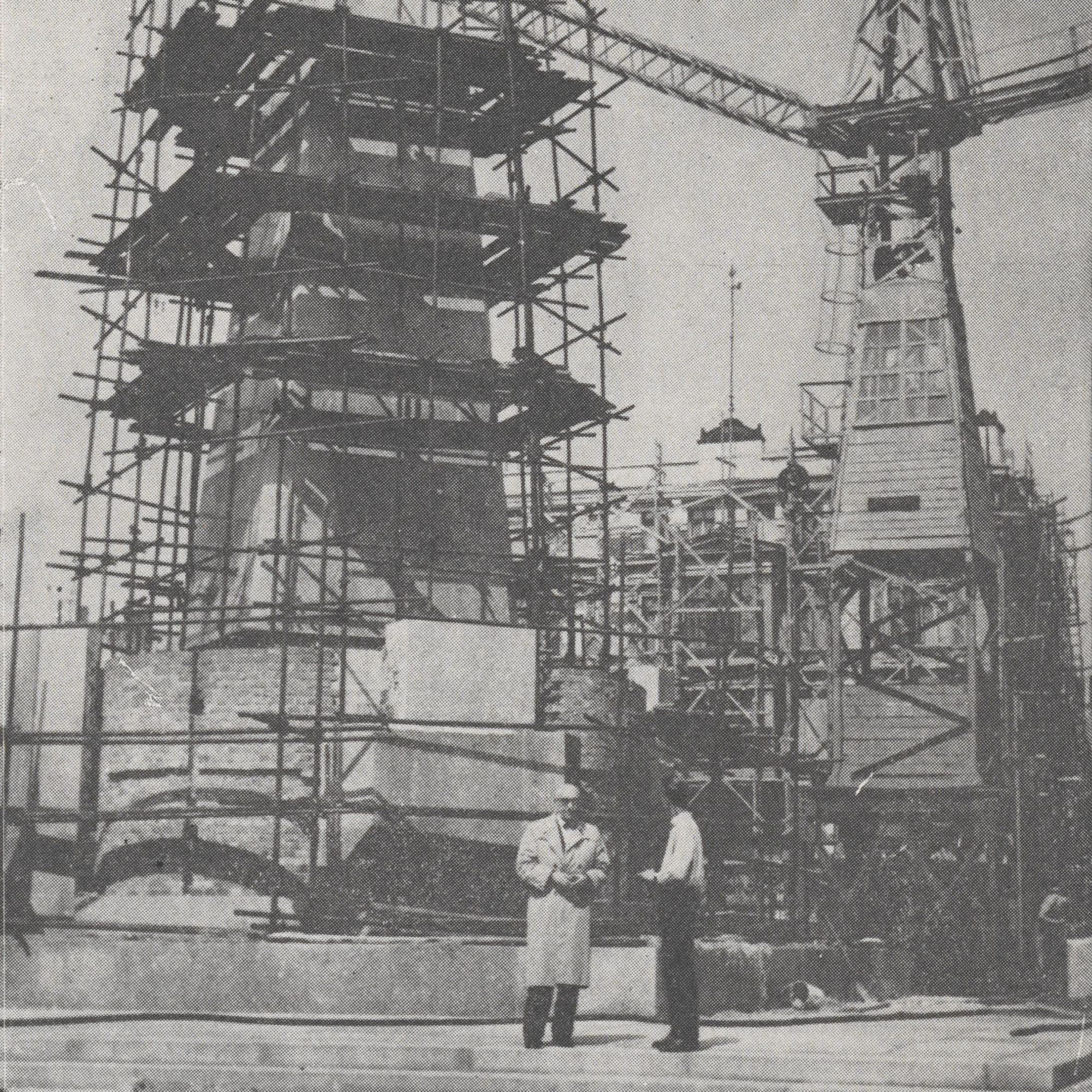
Those plans, however, would not be set in motion for yet another decade. The restoration process, which eventually launched in 1956, was preceded by lengthy discussions on the whereabouts and aesthetics of the Monument. Some argued that a major communication nod like the Liberty Square wasn’t an appropriately reverent location;10 others suggested it ought to be an equestrian statue similar to the one they’d seen in Kraków.11 Nevertheless, the nostalgia for the original project won in the end. The special Committee established to oversee the restoration reached out to Mieczysław Lubelski, the author of the pre-war monument, who had emigrated to England during the war. Eager to rebuild his work, he visited Łódź towards the end of 1957. With the contract signed a few weeks later, the plans could now begin to materialise.12 With Lubelski overseeing the process, it took little more than two years to complete it, leading to the unveiling of the new monument on July 22nd 1960.
The comparison of the 1930 and 1960 versions – what changed?
Although the pre- and post-war monuments were based on the exact same model, the new version underwent a couple major changes. Although not easy to distinguish on the black and white photographs from the 1930s, the base and the obelisk of the first monument were entirely clad with copper, giving it a metallic finish. Initially, the committee commissioning the monument leaned towards granite, but the insufficient access to the material prompted Lubelski to propose an innovative solution: attaching copper slates around a solid, concrete stem.13 In the 1960 version, however, he reverted to the original vision – resulting in the monument we see today at the Liberty Square, finished with grey granite sourced from quarries at the foot of the Karkonosze mountains in Lower Silesia.14
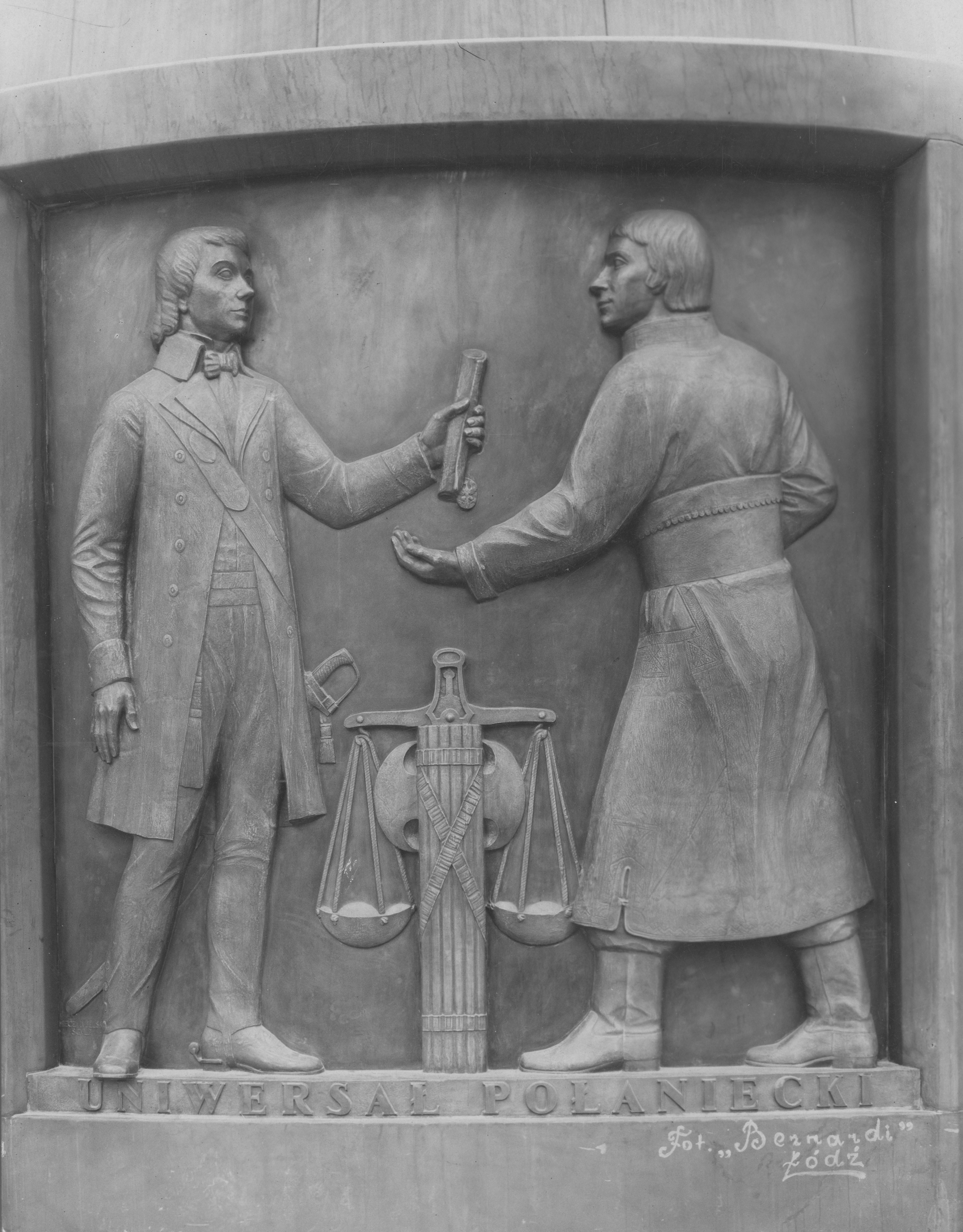
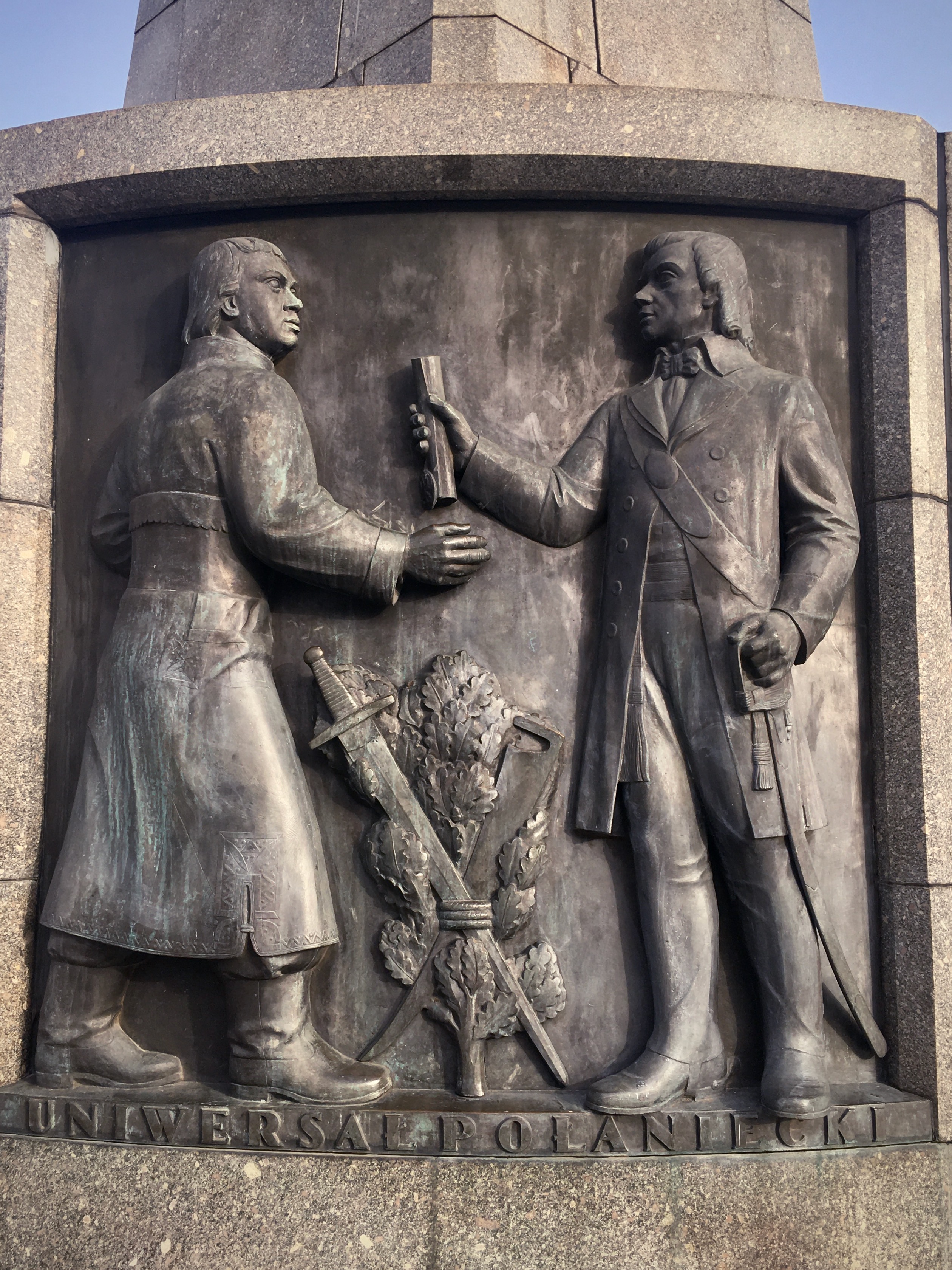
The second major difference, connected to the symbolic narrative, is found in the relief illustrating the Proclamation of Połaniec. Firstly, the figures of Kosciuszko and the peasant swapped places (on the 1930 relief, Kosciuszko was on the left; now, he’s on the right). Before, he was pictured with the scroll in his left hand, while his right hand hung idly. Now, the scroll is in his right hand, and the left is free to lean on the hilt of his sabre. The figure of the peasant remained largely the same, although his face appears slightly more mature in the new version. The most significant change, however, lies in the object between them. Before the war, it featured the fasces with a scale attached – then, symbols of republicanism and justice. After 1945, due to the association of the fasces with Mussolini’s fascist Italy, its meaning lost much of its previous clarity and positivity. Consequently, it was replaced with an oak tree, sword and scythe blade – an allegory of knighthood and peasantry coming together as equals.
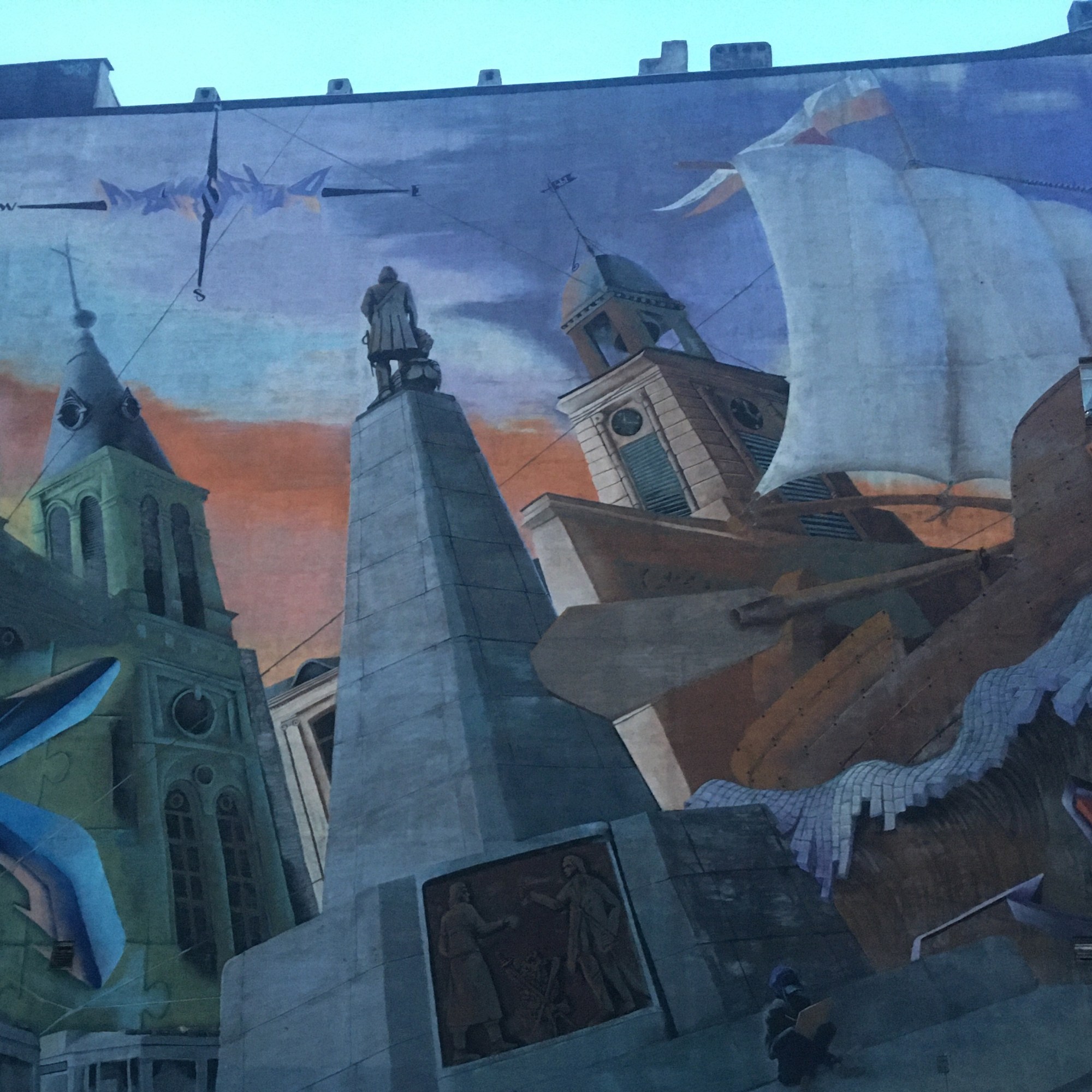
The Kosciuszko Monument we know today has become emblematic of the city of Łódź. Featured on postcards and souvenirs, it remains a popular meeting point – and occasionally, a victim of innocent pranks (such as being dressed up as a unicorn). With the impressive renovation works of the Liberty Square completed in spring 2024, Łódź continues the long and winding road to retrieve its beauty and elegance from before World War II – a great restoration that commenced in as early as in the dark hour of 1939, when the people of the city decided that Kosciuszko must return.
References
- Author unknown, Z historji budowy pomnika Kościuszki w Łodzi (Eng. The story of the erection of the Kosciuszko monument in Łódź), Łódź: Wydawnictwo Magistratu Miasta Łodzi, 1930, p. 6 (available in the Departament of Regional Resources of the Józef Piłsudski Voivodeship Library in Łódź; signature: 16//73/76 PR). ↩︎
- Loc. cit. ↩︎
- Loc. cit., p. 5. ↩︎
- Loc. cit., p. 8. ↩︎
- Loc. cit., p. 5. ↩︎
- „Kosciuszko–Denkmal abgebrochen” (Eng. The Kosciuszko Monument dismantled) [in:] Lodzer Zeitung, 12 XI 1939, no. 308, p. 3. Available at: https://bc.wbp.lodz.pl/dlibra/publication/32365/edition/30864/content ↩︎
- „Jak Kościuszko uległ przemocy – relacja naocznego świadka” (Eng. How Kosciuszko succumbed to violence – an eyewitness’ account) [in:] Dziennik Łódzki, 10 XII 1948, no. 340, p. 3. Available at: https://bc.wbp.lodz.pl/dlibra/publication/59374/edition/56729/content ↩︎
- Wiesław Puś, Stanisław Liszewski, Dzieje Żydów w Łodzi (Eng. The History of Jews in Łódź), Łódź: Wyd. Uniwersytetu Łódzkiego, 1991, pp. 52–53, ↩︎
- Various authors, O pracach Społecznego Komitetu Odbudowy Pomnika Tadeusza Kościuszki w Łodzi (Eng. On the works of the Social Committee for the Restoration of the Kosciuszko Monument in Łódź), Łódź: Społeczny Komitet Odbudowy Pomnika Tadeusza Kościuszki, 1961, p. 1 (available in the Departament of Regional Resources of the Józef Piłsudski Voivodeship Library in Łódź; signature: 301//71/72 PR). ↩︎
- „Jak Kościuszko uległ przemocy – relacja naocznego świadka”, loc. cit. ↩︎
- Igor Rakowski-Kłos, „Pierwszy łódzki pomnik. «Jeden z najprzeraźliwszych kiczów w Polsce»” (Eng. The first statue in Łódź. “One of the most repugnant instances of kitsch in Poland”) [in:] Gazeta Wyborcza Łódź, published: 01 II 2023. Available at: https://lodz.wyborcza.pl/lodz/56,35136,19320172,kicz-i-ramota-lodzianie-o-pomniku-kosciuszki-85-lat-temu.html ↩︎
- O pracach Społecznego Komitetu Odbudowy Pomnika Tadeusza Kościuszki w Łodzi, p. 1. ↩︎
- Z historji budowy pomnika Kościuszki w Łodzi, pp. 6–7. ↩︎
- O pracach Społecznego Komitetu Odbudowy Pomnika Tadeusza Kościuszki w Łodzi, p. 2. ↩︎
Gallery
The Kosciuszko Monument in Łódź of today
The unveiling ceremony on Dec 14th 1930
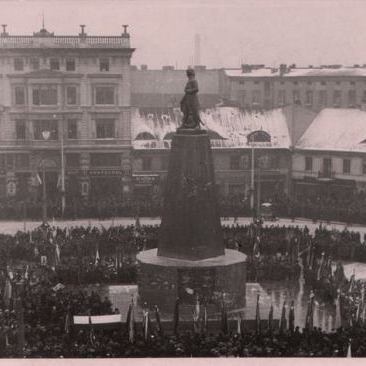
The Monument between 1930 and 1939

The destruction – November 1939
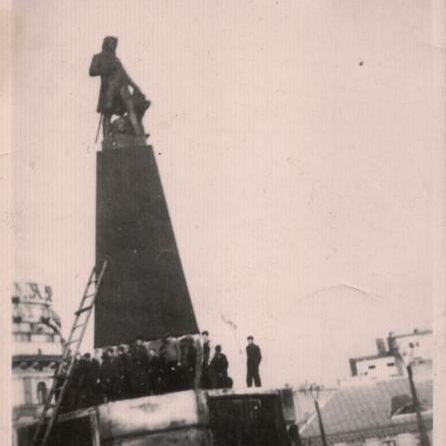
The restoration in 1959–60
The Monument as a popular symbol of Łódź
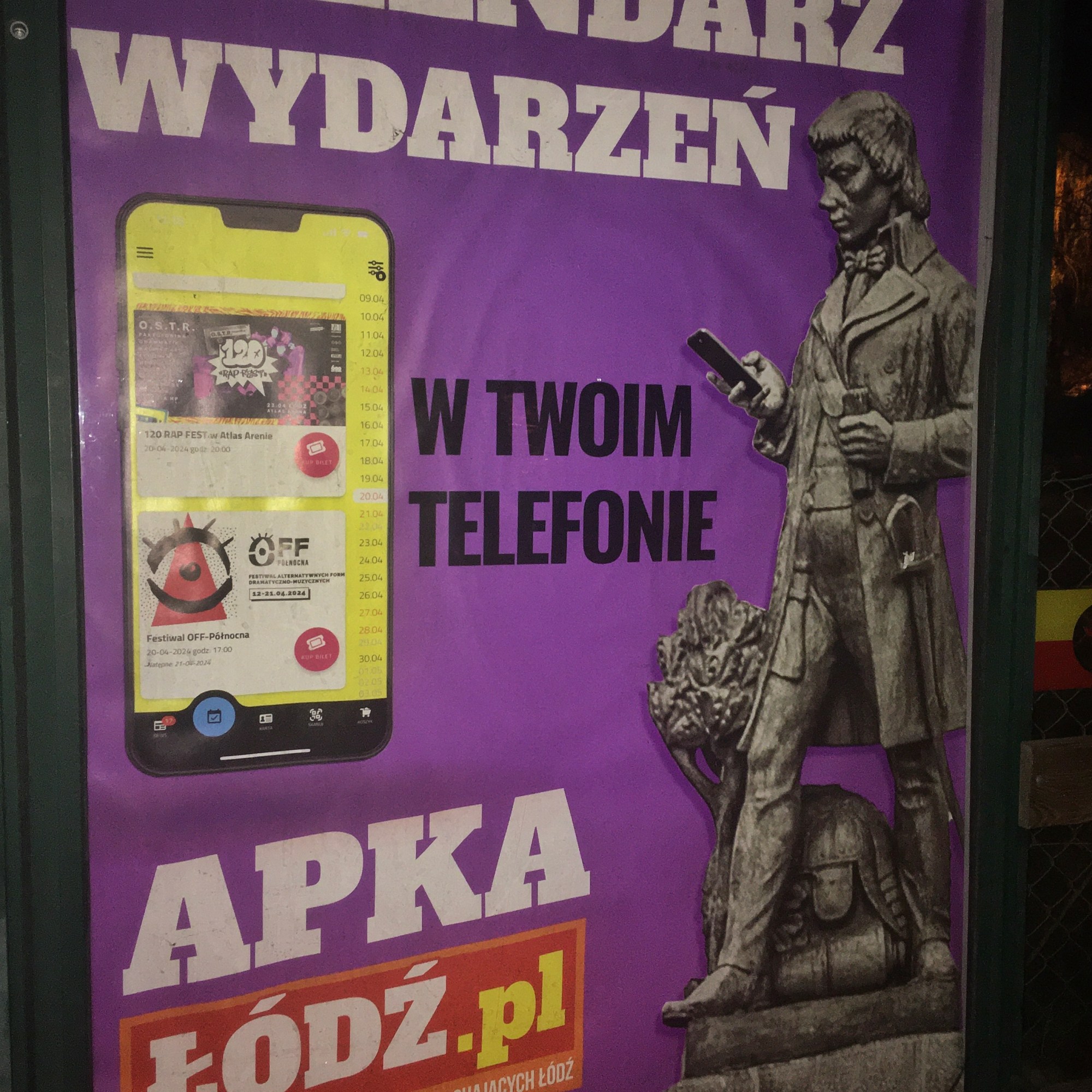
 TADEUSZ KOŚCIUSZKO – nasz współczesny