The Chapel in Chyzhewshchyna
- The long-awaited commemoration
- The biggest battle of the 1794 Uprising in Belarus
- As Krupczyce becomes Chyzhewshchyna, the memory of the battle persists.
- References
- Gallery
The long-awaited commemoration
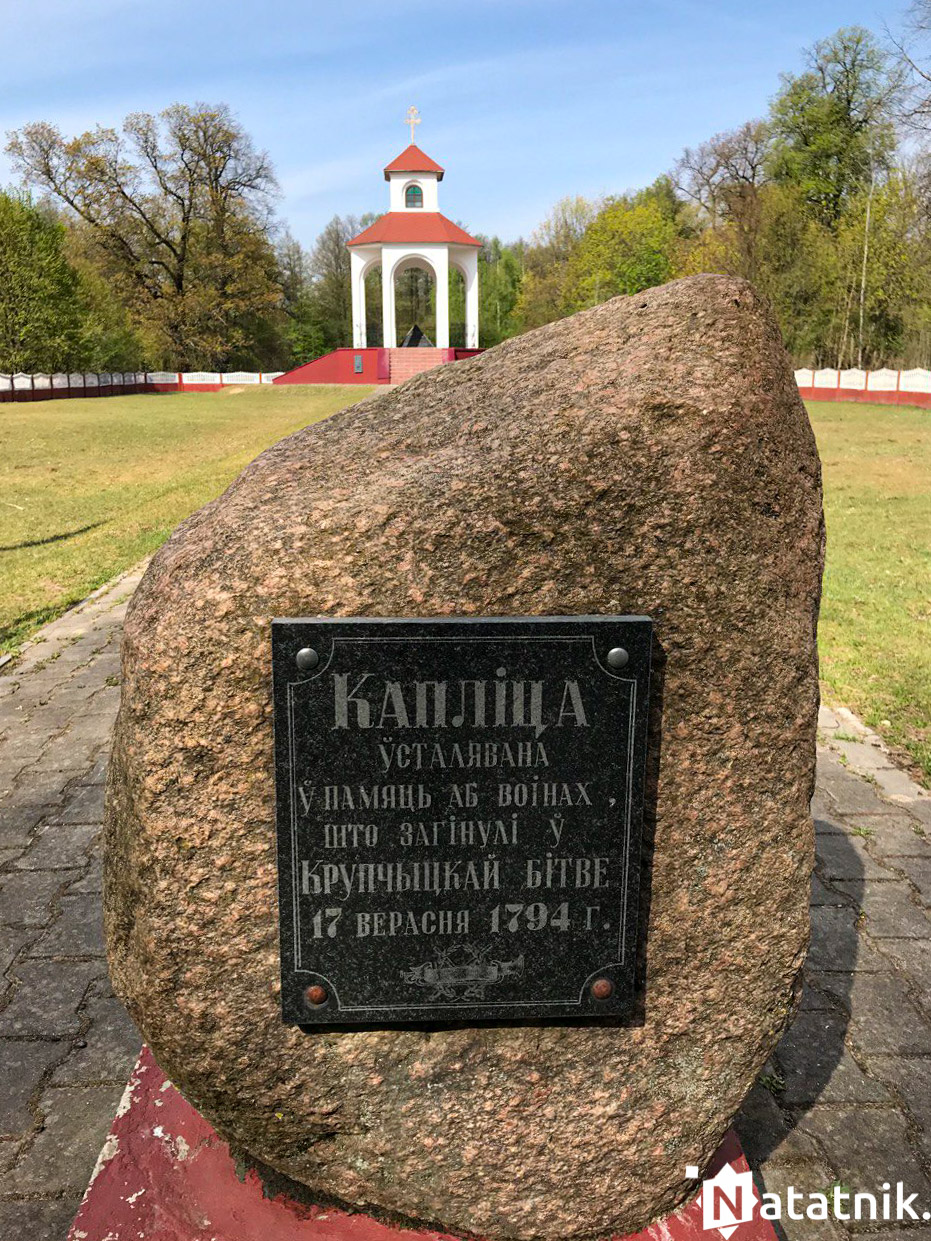
The year 2004 in Belarus was unprecedentedly rich when it came to acts of commemoration dedicated to Thaddeus Kosciuszko and his 1794 Uprising. After 60 years of oblivion, the house of his birth in Myerachowshchyna reappeared on the map; and soon thereafter, in the village of Chyzhewshchyna (Bel. Чыжэ́ўшчына), a chapel was erected to commemorate the battle of Krupczyce – the biggest military encounter of the Kosciuszko Uprising on the territory of modern day Belarus. Where exactly is Chyzhewshchyna? It’s located about 100 km southwest from Myerachowshchyna, within the same region of Brest. Curiously, it’s only 15 km away from Malye Sekhnovichi – the ancestral seat of the Kosciuszkos and Thaddeus’ own home in the period between his return from the US in 1784 and his long-awaited admittance into the army of the Commonwealth in 1790.
The biggest battle of the 1794 Uprising in Belarus
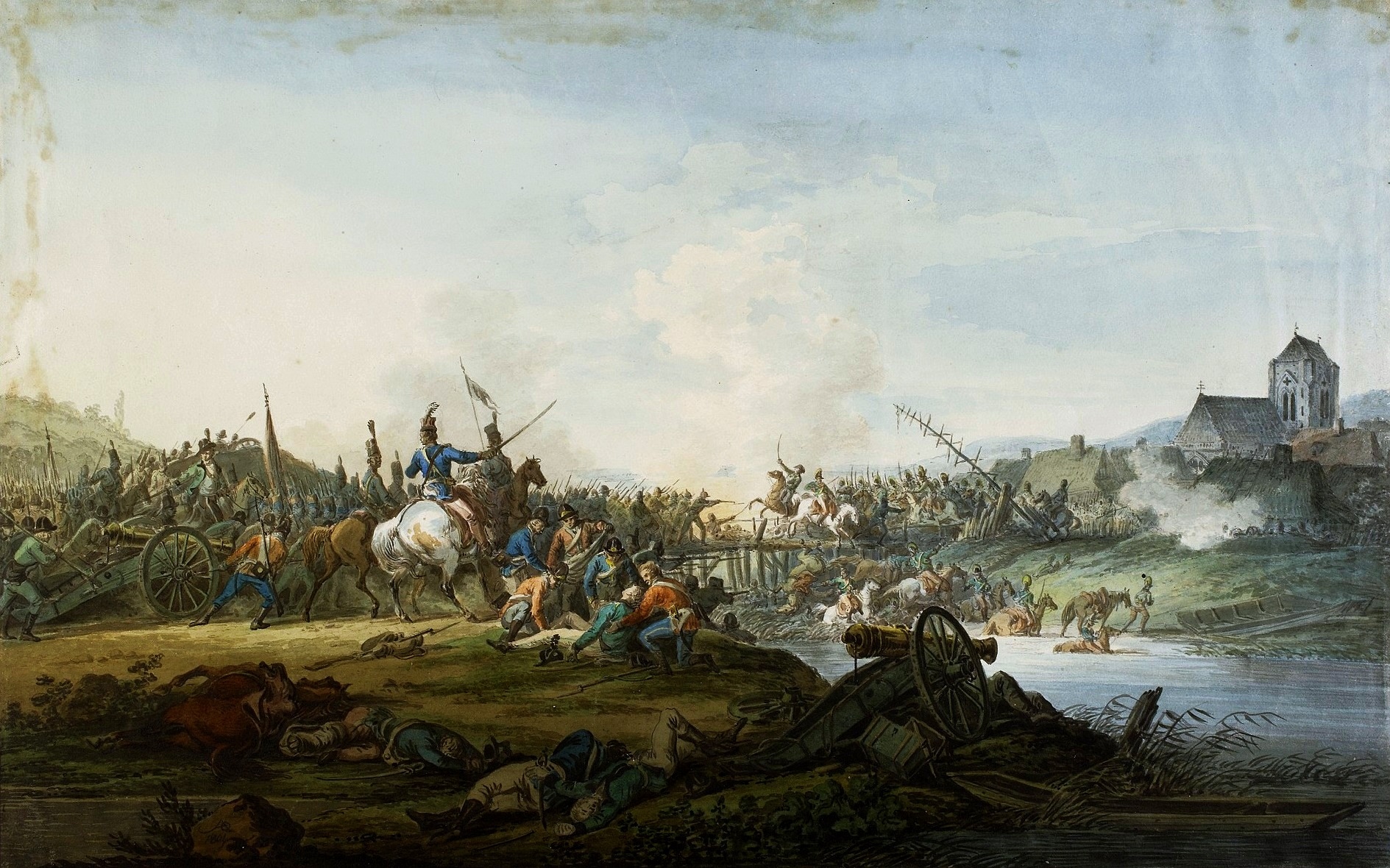
The battle of Krupczyce took place of September 17th 1794 – as one of the final acts of the Kosciuszko Uprising before its extinguishment in November that year. The forces of the Commonwealth were led by general Karol Sierakowski – although he himself was a man native to the region of Brest, he commanded a richly heterogenous assemblage of soldiers, who hailed from both the Crown1 (that is, the part of the Commonwealth that roughly corresponds to modern-day Poland) and the Grand Duchy of Lithuania (especially from the city of Hrodna).2 Many of the soldiers were Tatars – strongly patriotic Polish and Lithuanian muslims, who inhabited the surrounding regions since at least the 15th century (within Sierakowski’s division, they formed the two Lithuanian Vanguard Regiments).3 Alas, Sierakowski’s forces were overwhelmingly outnumbered by those of his rival from the battlefield – none other than the infamous general Alexander Suvorov (who mere several weeks later would facilitate the massacre of the civilian population of the Praga district in Warsaw). 3,996 soldiers of the Commonwealth, many of whom had just been freshly recruited, stood against 12,000 seasoned Russian and Cossack fighters; this sheer disparity made it impossible for Sierakowski to come out of the battle victorious. Nonetheless, after holding his position for six hours, he pushed the enemy back enough to safely withdraw the troops and secure their passage. After 45 kms of exhausting march, about 3,700 Commonwealth soldiers reached the town of Brest and then Terespol.4
As Krupczyce becomes Chyzhewshchyna, the memory of the battle persists.
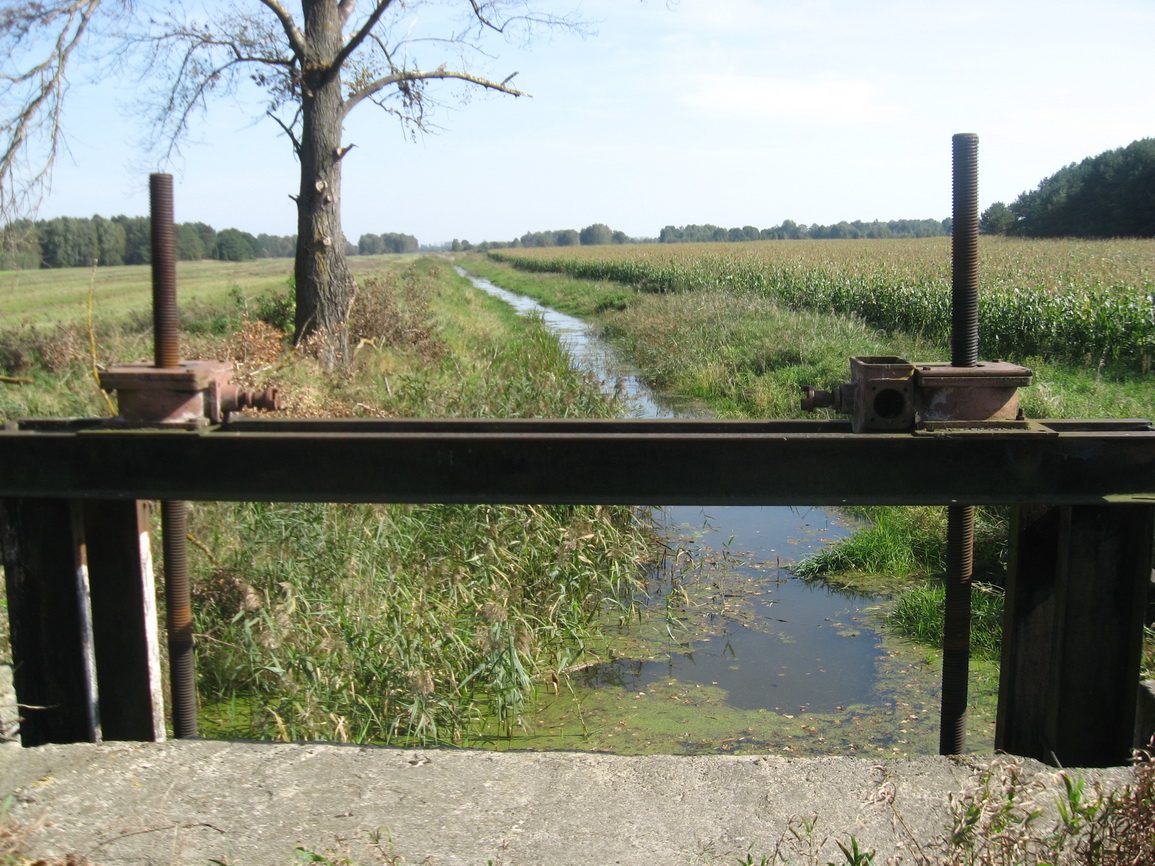
The village of Krupczyce (Bel. Крупчыцы, roughly transcribed in English as Kruptchytzeh), which gave its name to the battle, isn’t anymore: having grown in the 17th century around a Carmelite monastery, it decreased in importance after the January Uprising of 1863 and the monastery’s dissolution at the hands of the repressive tsarist apparatus. As the neighbouring village of Chyzhewshchyna expanded, it soon incorporated Krupczyce as well as another settlement, Rakoczyce.
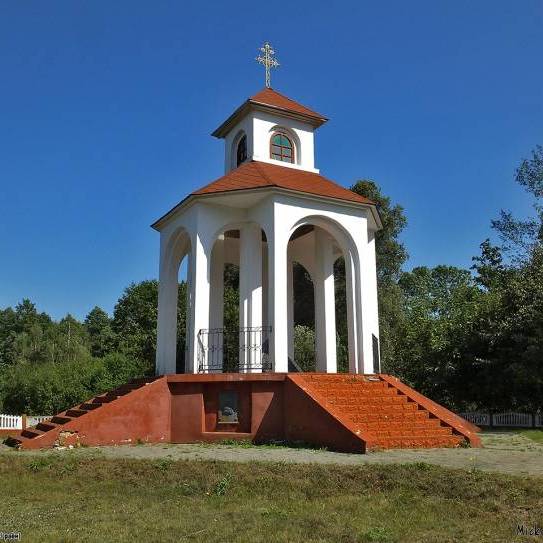
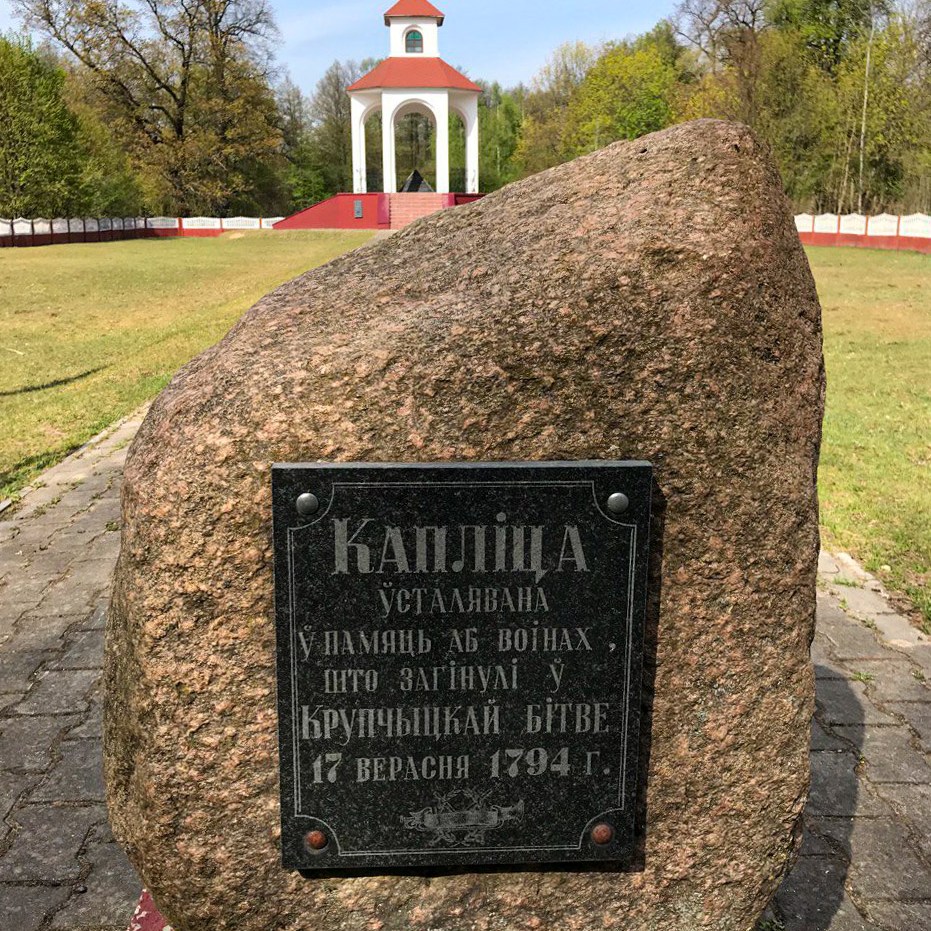
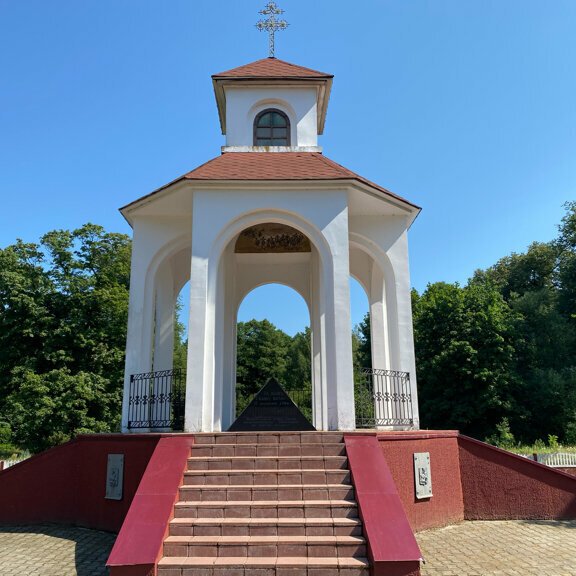
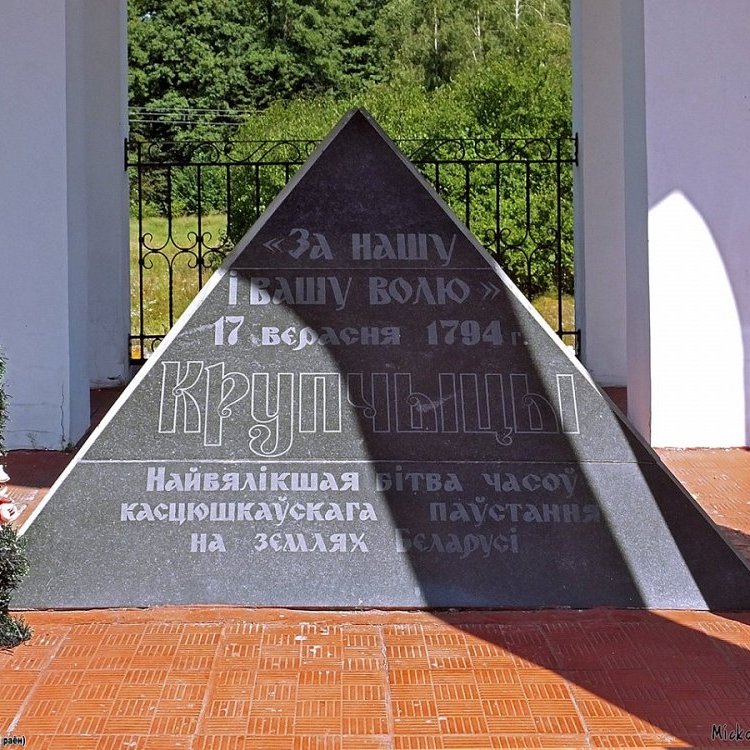
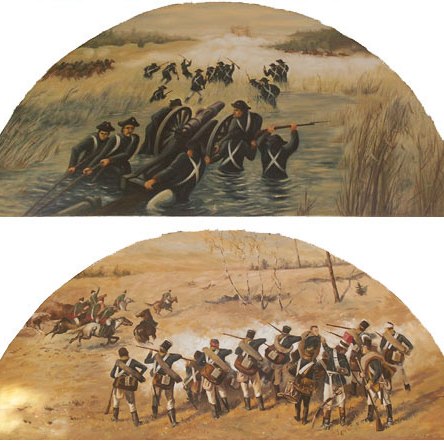
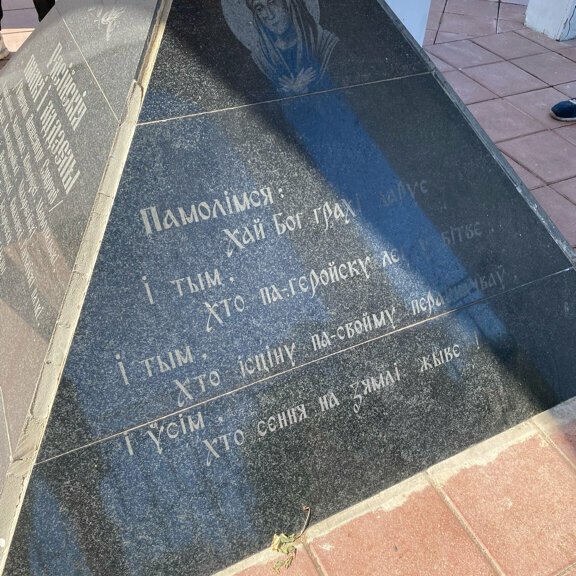
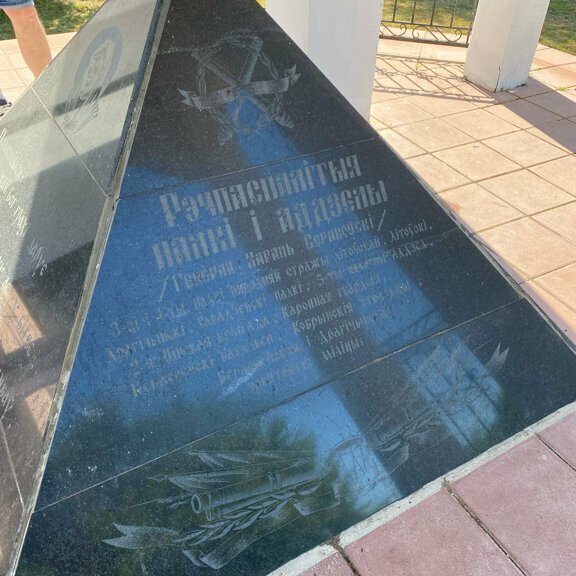
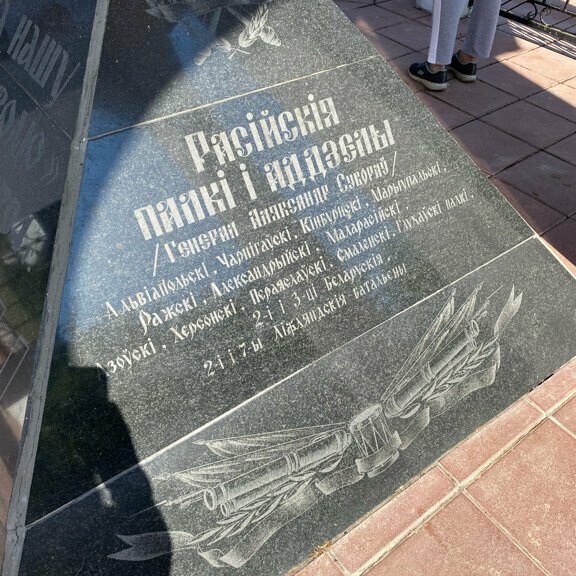
The memory of the military encounter between Sierakowski and Suvorov lingered regardless, although appropriated for the purpose of contrasting narratives. In 1952, at the outskirts of the village, the Soviet authorities erected a small obelisk commemorating the Russian participation in the battle;5 the new chapel, however, was built with the purpose of honouring all the fallen. Ceremonially opened on the 210th anniversary of the battle,6 it is an eukterion (i.e. a small chapel without a designated place for an altar), the form of which resembles an open gazebo built on a cruciform plan. Underneath the ceiling, there are four paintings of semi-tondo shape, each depicting a scene from the battle (their style and content strongly reminiscent of the Panorama of Racławice). The gazebo towers over a pyramid-shaped block of granite carrying an inscription on each side. The frontal inscription states the name and date of the battle and opens with the phrase: За нашу і вашу волю (“For your freedom and ours”), popularly associated with Kosciuszko and his army, as well as with the subsequent popular uprisings in the former Polish-Lithuanian Commonwealth against the Russian Empire. The two inscriptions on the sides contain lists of regiments who met in the field on September 17th 1794; the fourth and final inscription is a poignant prayer, which appears to explicate the rationale underlying the construction of the chapel:
”
Памолімся: хай Бог грахі даруе
І тым, хто па-геройску лёг у бітве,
І тым, хто ісціну
па-свойму перайначваў,
І тым, хто сёння на зямлі жыве!
Let us pray so that God forgives the sins
of those who heroically perished in the battle,
of those who distorted the truth for their own benefit,
and all those who live on earth today.
References
- Stanisław Herbst, „Krupczyce – Grobla Terespolska” [in:] Rawski T. (ed.), Powstanie Kościuszkowskie 1794. Dzieje militarne, Vol. II (Warszawa: Agencja Wydawnicza „Ergos”; Wojskowy Instytut Historyczny, 1996), p. 169. ↩︎
- Loc. cit. ↩︎
- Arkadiusz Kołodziejczyk, „Tatarskie Pułki Straży Przedniej Wielkiego Księstwa Litewskiego w Powstaniu Kościuszkowskim,” Niepodległość i Pamięć, 2009;16/1(29):5–18, p. 13. Available from: https://bazhum.muzhp.pl/media/files/Niepodleglosc_i_Pamiec/Niepodleglosc_i_Pamiec-r2009-t16-n1_%2829%29/Niepodleglosc_i_Pamiec-r2009-t16-n1_%2829%29-s5-18/Niepodleglosc_i_Pamiec-r2009-t16-n1_%2829%29-s5-18.pdf [Accessed: 03.03.2024]. ↩︎
- Stanisław Herbst, op. cit., pp. 171–174. ↩︎
- Константин Босак, “Памятник погибшим 6 сентября 1794 года у Крупчиц в бою между войсками Суворова и Сароковского”, Radzima.org, last updated January 1st 2023, https://radzima.org/be/fota/52466.html [Accessed: 06.03.2024]. ↩︎
- Anatoliy Benzyaruk, „Адгукнулася мінулае словам-успамінам,” Brama 2004;1(22). Available from: https://brama.brestregion.com/nomer22/artic08.shtml [Accessed: 06.03.2024]. ↩︎
Gallery
The chapel from the outside.
The interior of the chapel.
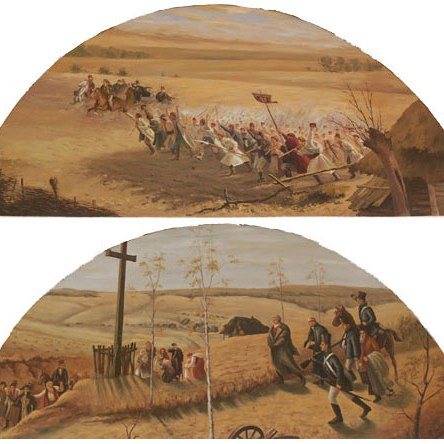
 TADEUSZ KOŚCIUSZKO – nasz współczesny