Kosciuszko on the Town Houses of Kraków
- Kraków’s perpetual affection
- The dream of independence inscribed in stone
- A stroll along the Długa Street
- Sauntering on: Rakowicka, Felicjanek.
- To be continued…
- References
- Gallery
The following article has been largely based on the chapter by Beata Makowska PhD (Tadeusz Kościuszko Kraków University of Technology), entitled „Thaddeus Kosciusko’s image in decorations of town houses in Krakow, Poznan and Lodz,” included in a volume edited by Maria Jolanta Żychowska „Tadeusz Kościuszko: Historia, Współczesność, Przyszłość, Relacje i Zależności” (Kraków, 2017).
Kraków’s perpetual affection
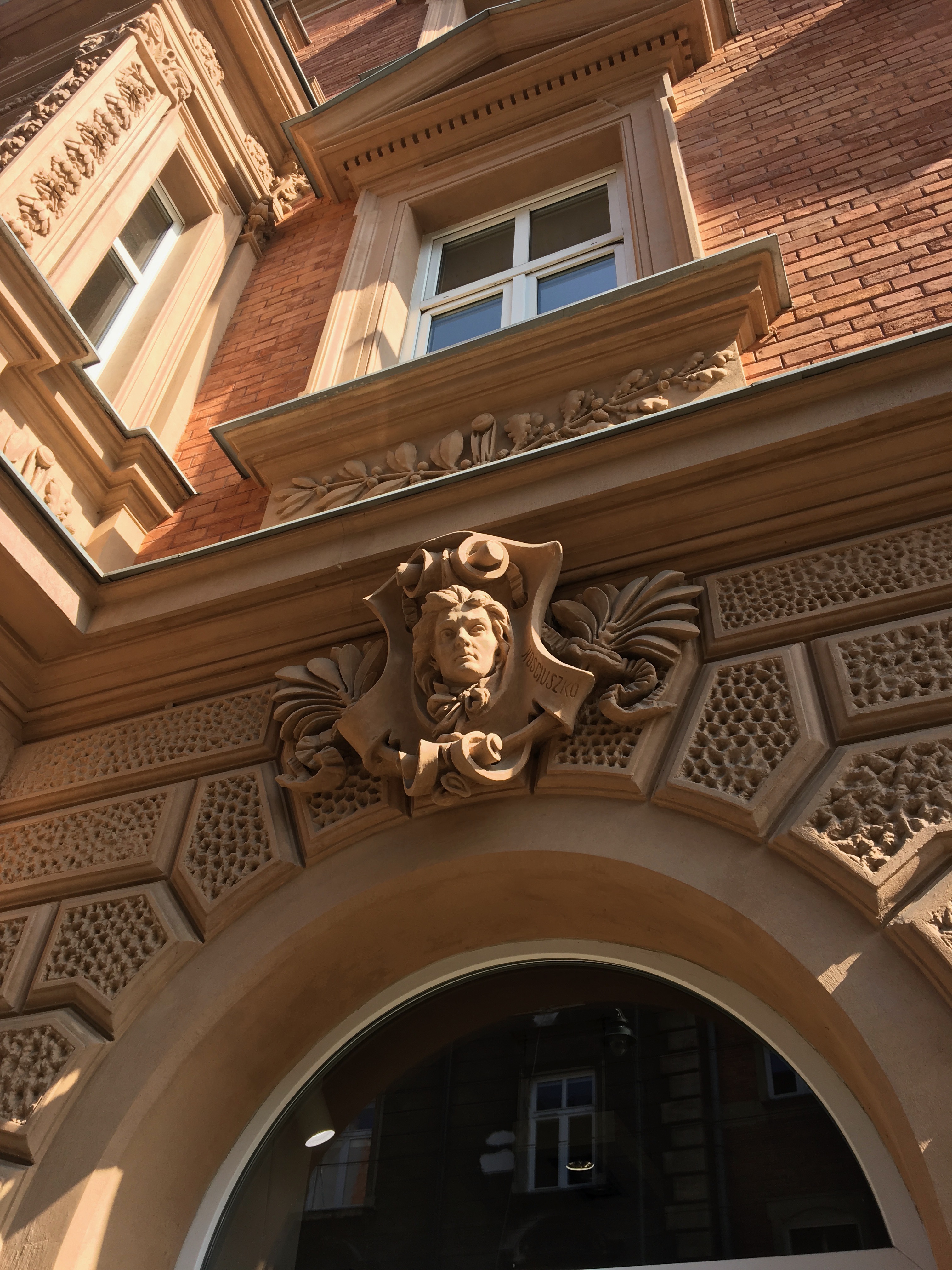
Although Thaddeus Kosciuszko didn’t have the chance to pass much time in Kraków (his personal history tied him mostly to the Polesie region of Eastern Poland and Western Belarus, as well as to Warsaw), the old Polish capital continues to nourish a palpable love for him. After all, that was where the 1794 Insurrection started and Thaddeus swore his oath to the nation; that is also where his mortal remains have been interred, resting there to this day. Kraków is filled with graceful tokens of its affection for Kosciuszko: some are grand and conspicuous, such as the famed Mound or the equestrian statue at the Wawel hill, while others are more personal and discrete – of these, we’ll speak in this post.
The dream of independence inscribed in stone
The last quarter half of the 19th century wasn’t an easy period for Kraków. It had been nearly a century since the final partition of the Polish-Lithuanian Commonwealth and the country’s subsequent disappearance from the map. The national uprisings, the last of which took place in 1863, turned out unsuccessful or even catastrophic, leaving the dream of independence as unattainable as ever. Thus, the only secure path to reconnecting with one’s Polishness was through language, literature or art – and these indeed flourished, often created with the intent of ‚comforting the heart’ of the subdued nation (e.g. Henryk Sienkiewicz’s prose or Jan Matejko’s monumental, historic paintings). The longing for the lost homeland and hope for its retrieval permeated many creative endeavours, and architecture was no exception: subtle references to the Commonwealth’s lost might continue to adorn the 19th century town houses in Poznań, Łódź, and especially Kraków. Let us scout the surroundings of Kraków’s Old Town for patriotic decorations – among which Kosciuszko’s portrait is a particular favourite.
A stroll along the Długa Street
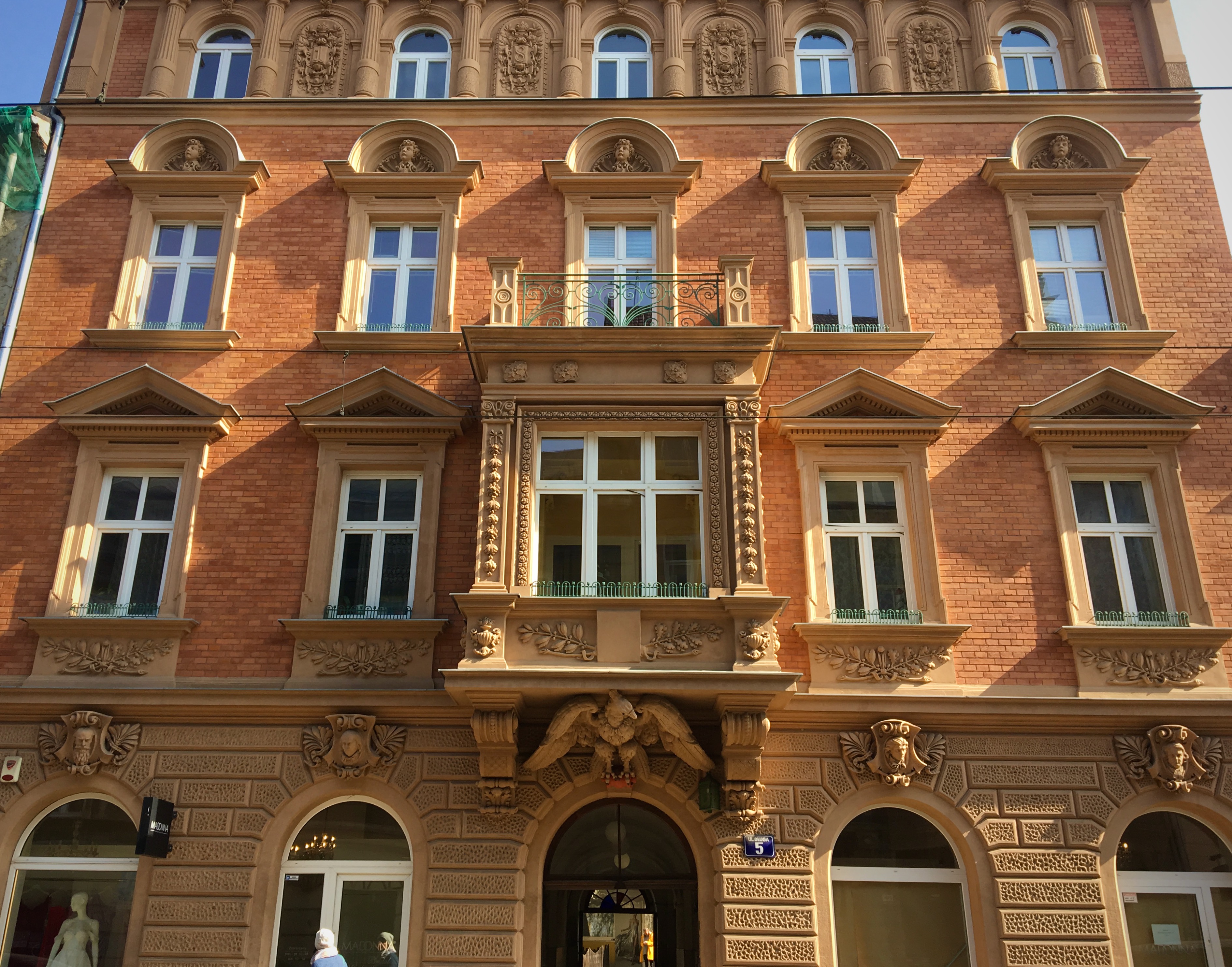
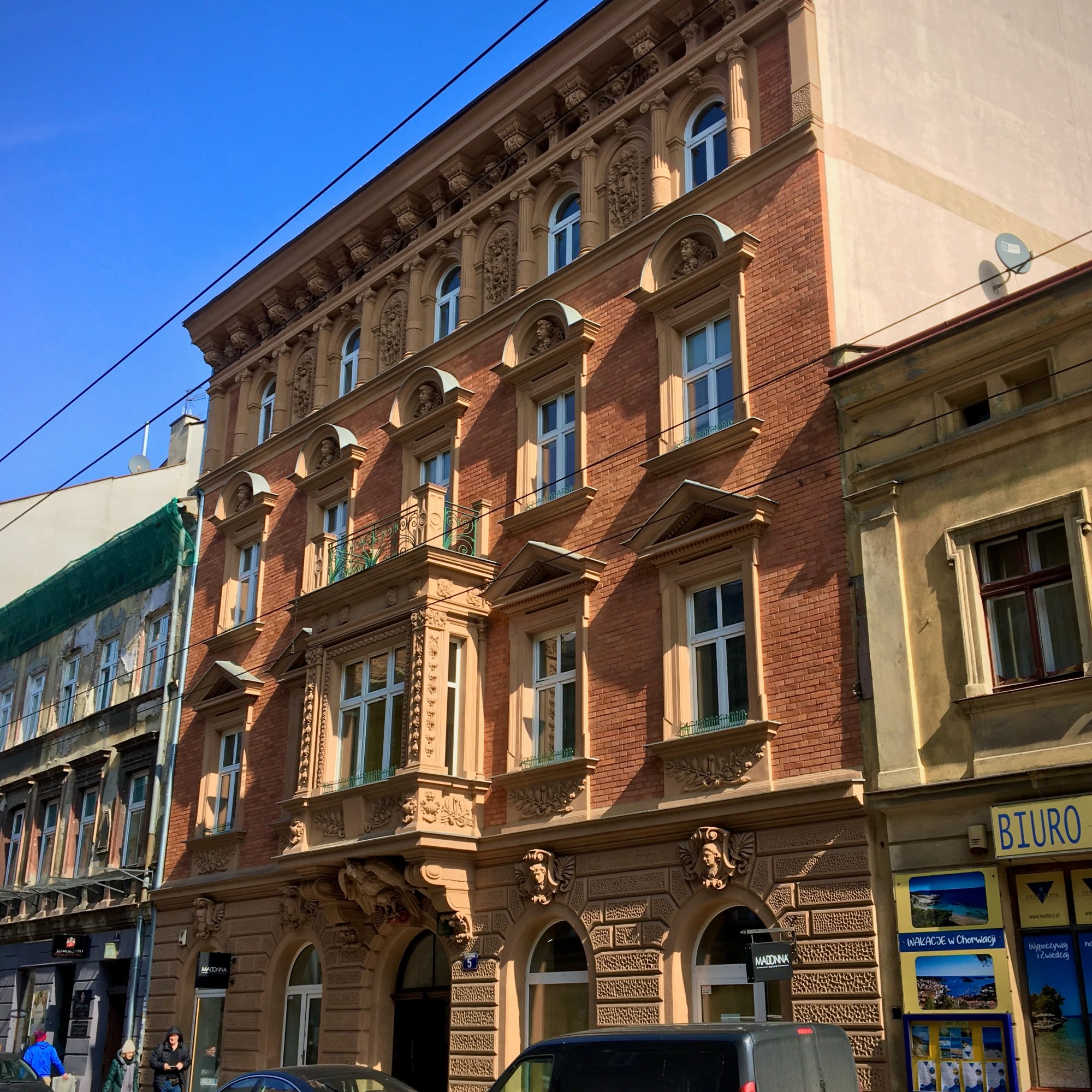
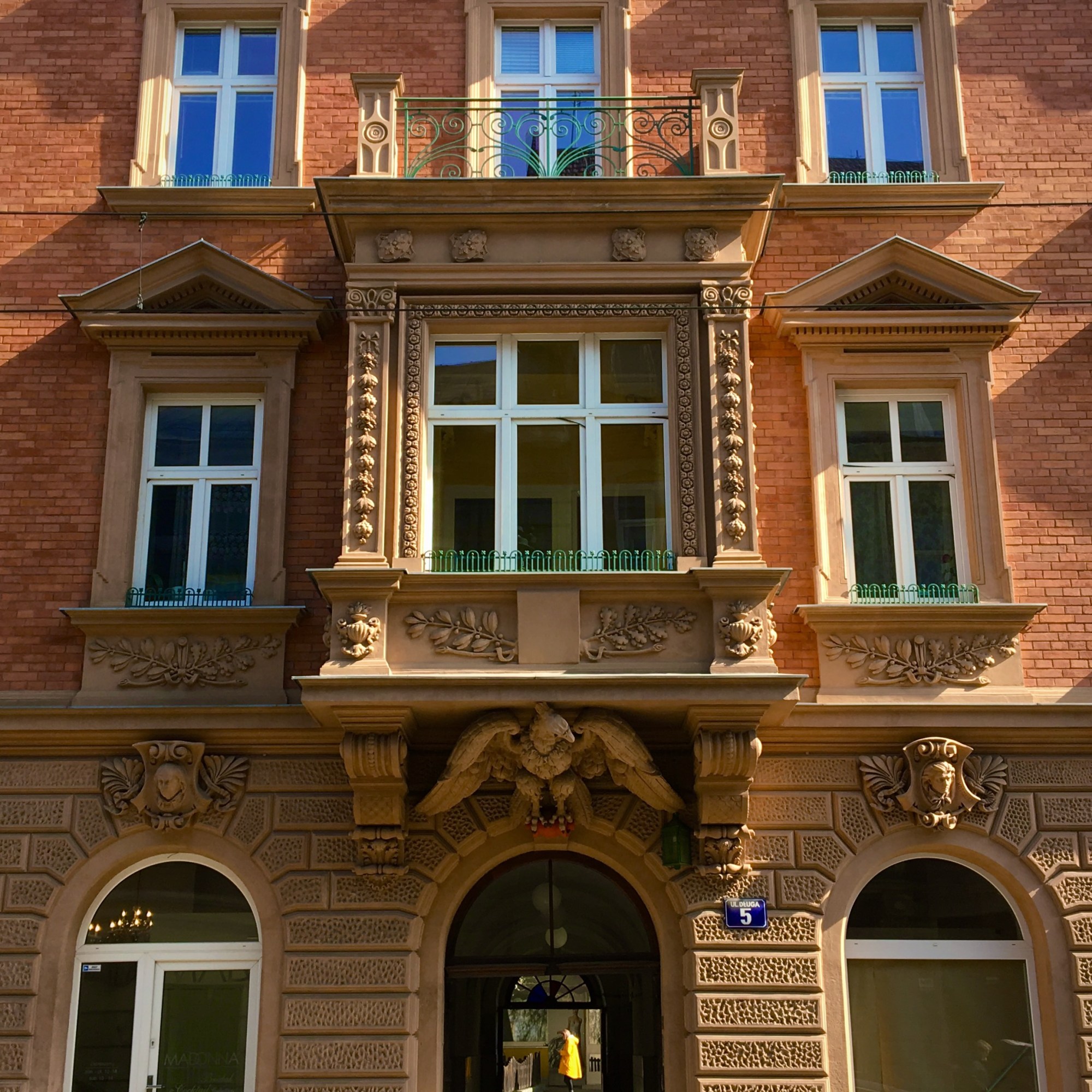
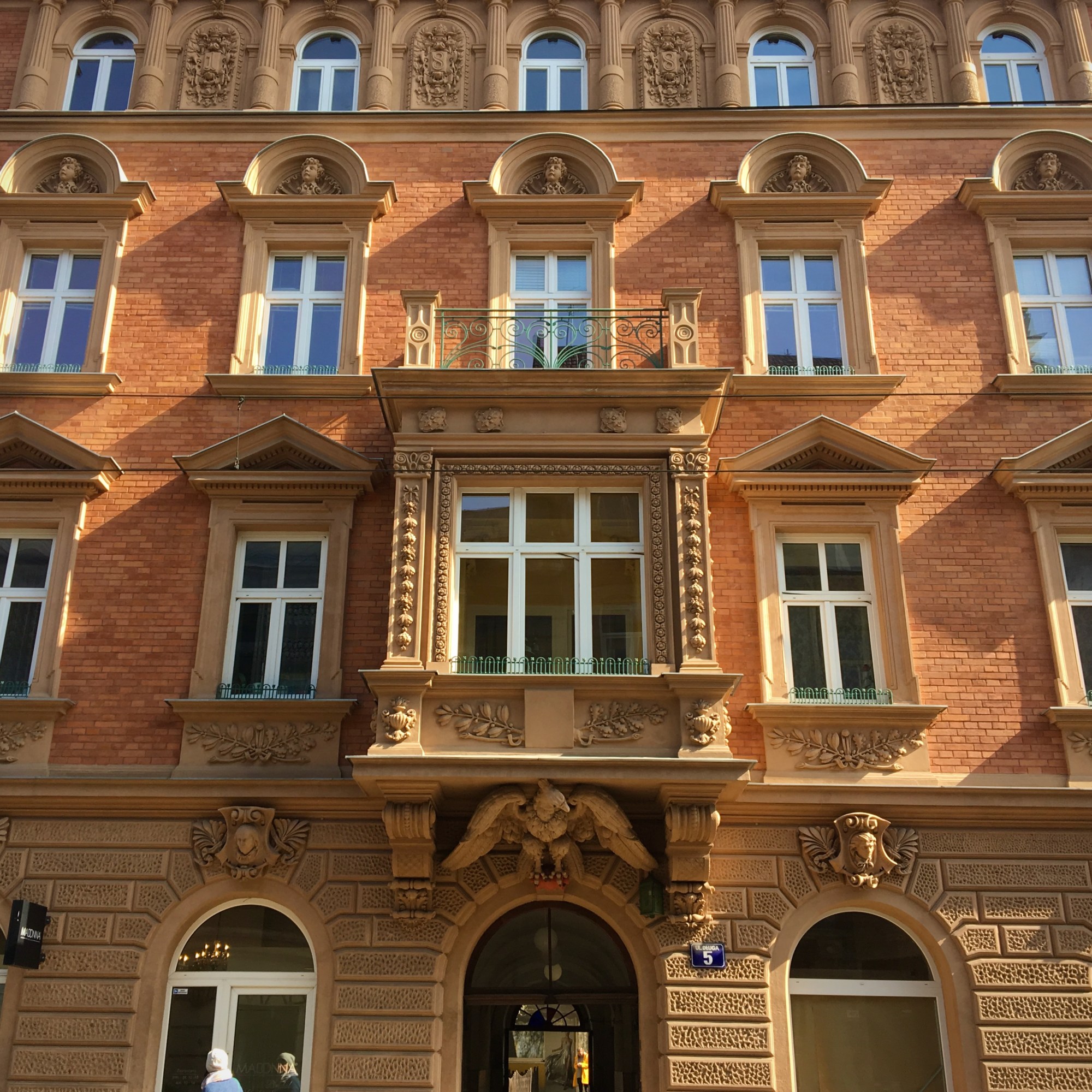
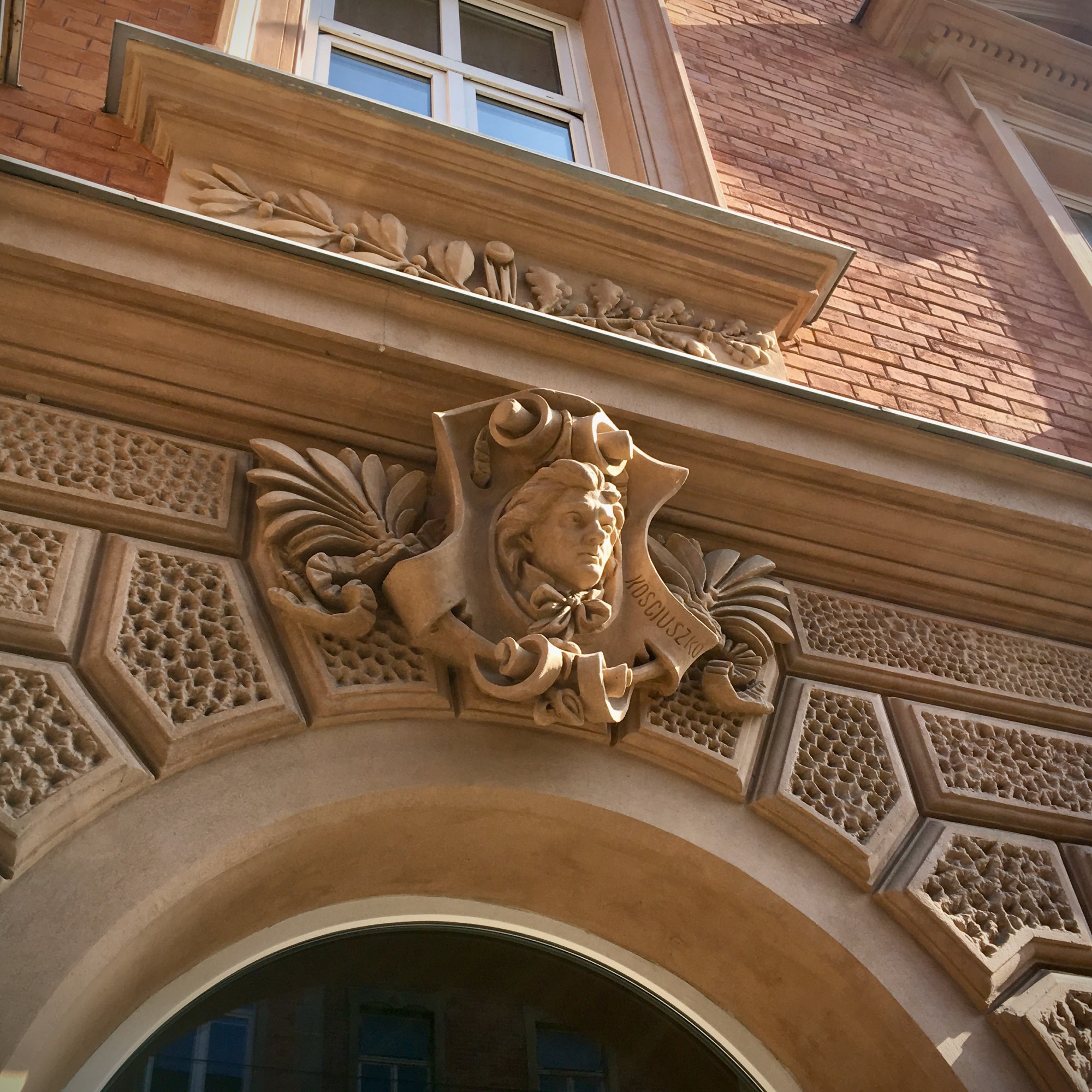
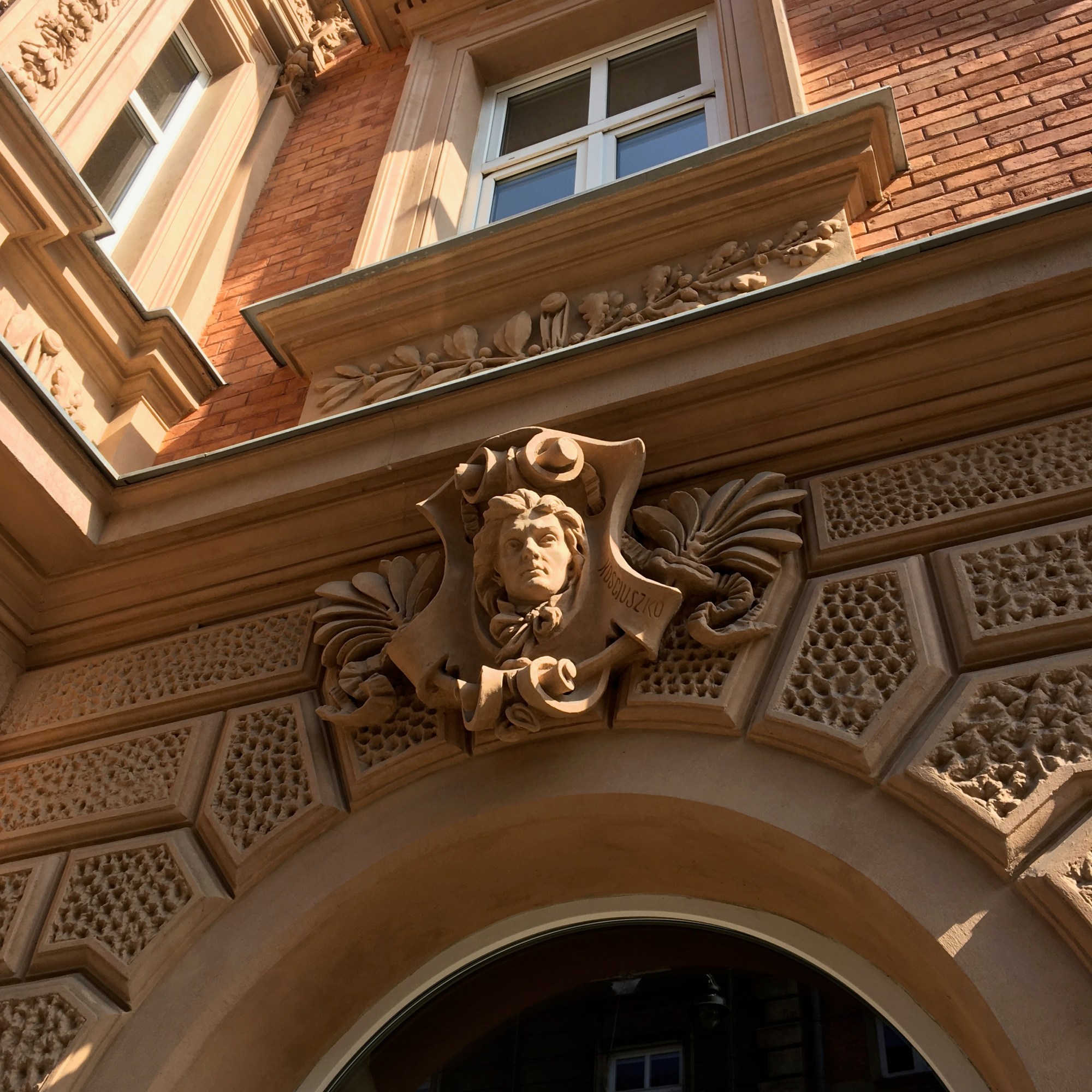
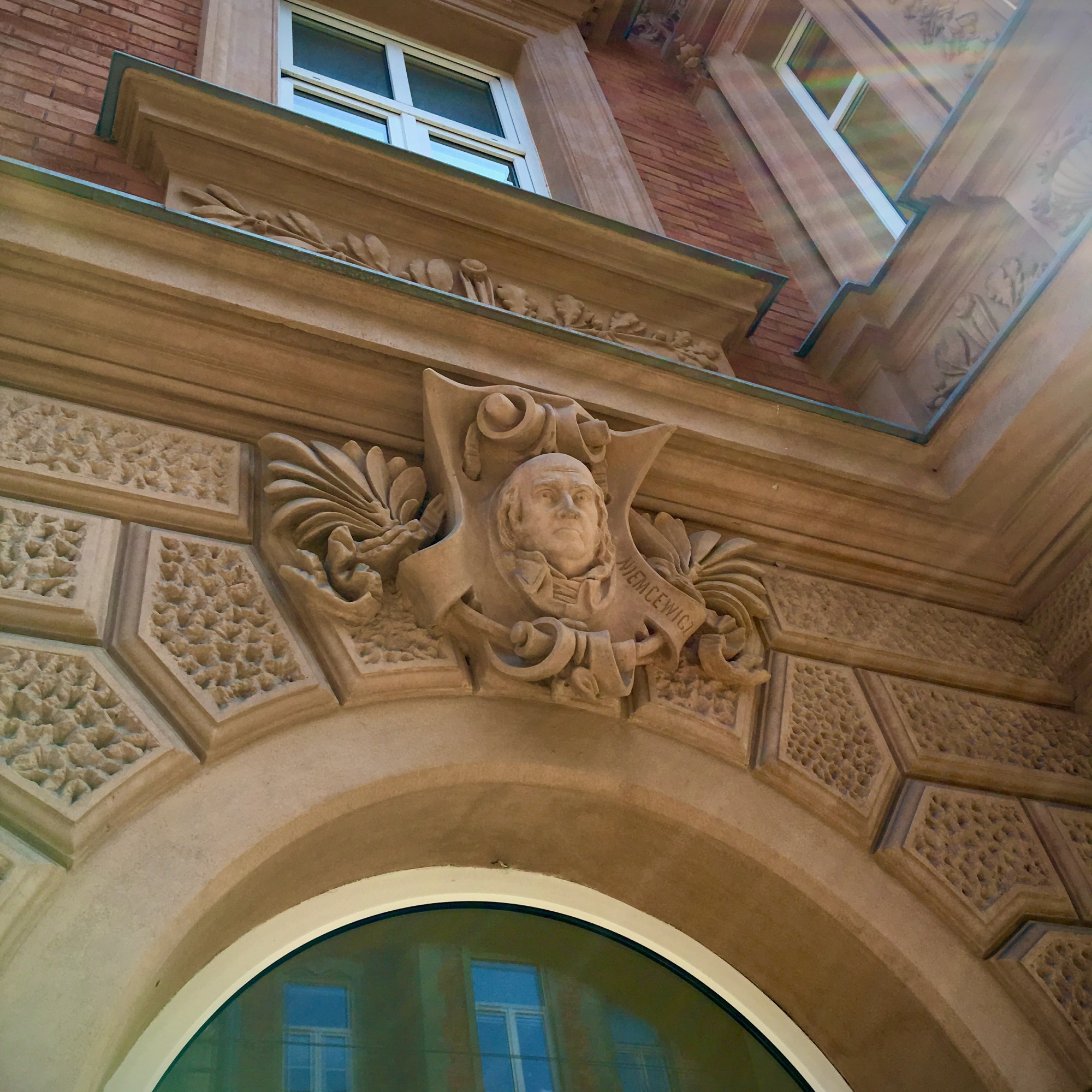
Długa Street (Eng. Long Street) starts right at the edge of the Old Town, not far from the Barbican, and continues north towards the district of Krowodrza. Along this route, we encounter at least four architectural tributes to Tadeusz Kościuszko, beginning with the house at number 5. The Neo-Renaissance facade is divided into four horizontal sections, the lowest of which contains a rich patriotic decoration: an Eagle – the Polish coat of arms – on the central axis and portraits of four beloved Polish historical figures corresponding to the four outer axes of the facade. Three of the figures are strongly associated with the events of 1791–95, i.e. the final years of the Commonwealth: Thaddeus Kosciuszko – a commander in the 1792 War for the Constitution and the leader of the 1794 Uprising, Julian Ursyn Niemcewicz – Kościuszko’s secretary of many years, one of the authors of the May Constitution of 1791, and a popular playwright, and Hugo Kołłątaj – a patriotic priest, the chief author of the May Constitution and the spiritus movens behind the 1794 Uprising. The remaining figure – the one on the extreme left – belongs to a period 150 years earlier: Stefan Czarnecki was a 17th century hetman (i.e. general), recognised for his contributions to the Commonwealth’s near-impossible victory over the Swedes in the 1650s. The house at 5 Długa Str. was commissioned by Adam Trembecki and designed in 1879–89 by Maksymilian Nitsch. The sculptures were authored by Michał Stefan Korpal.1
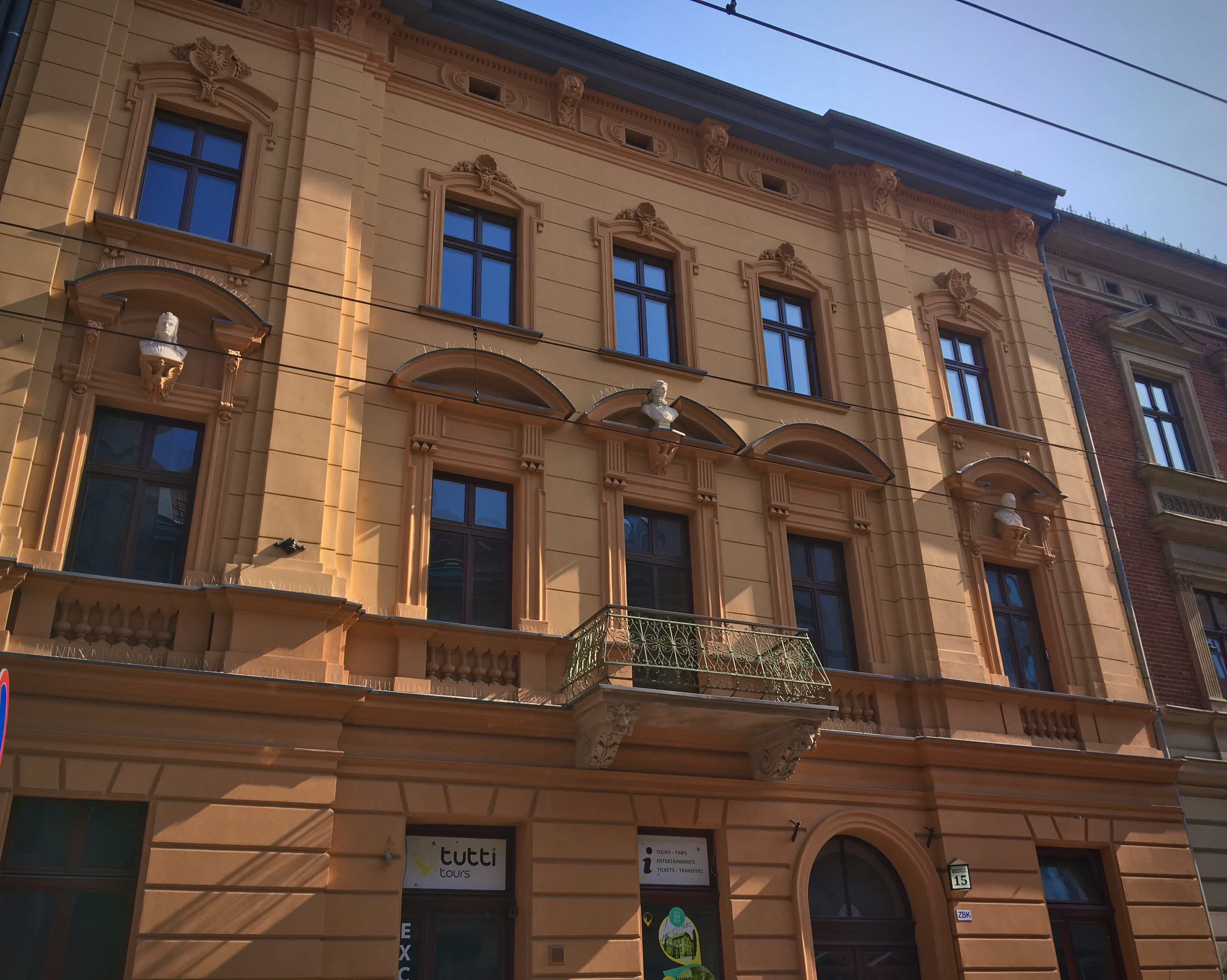
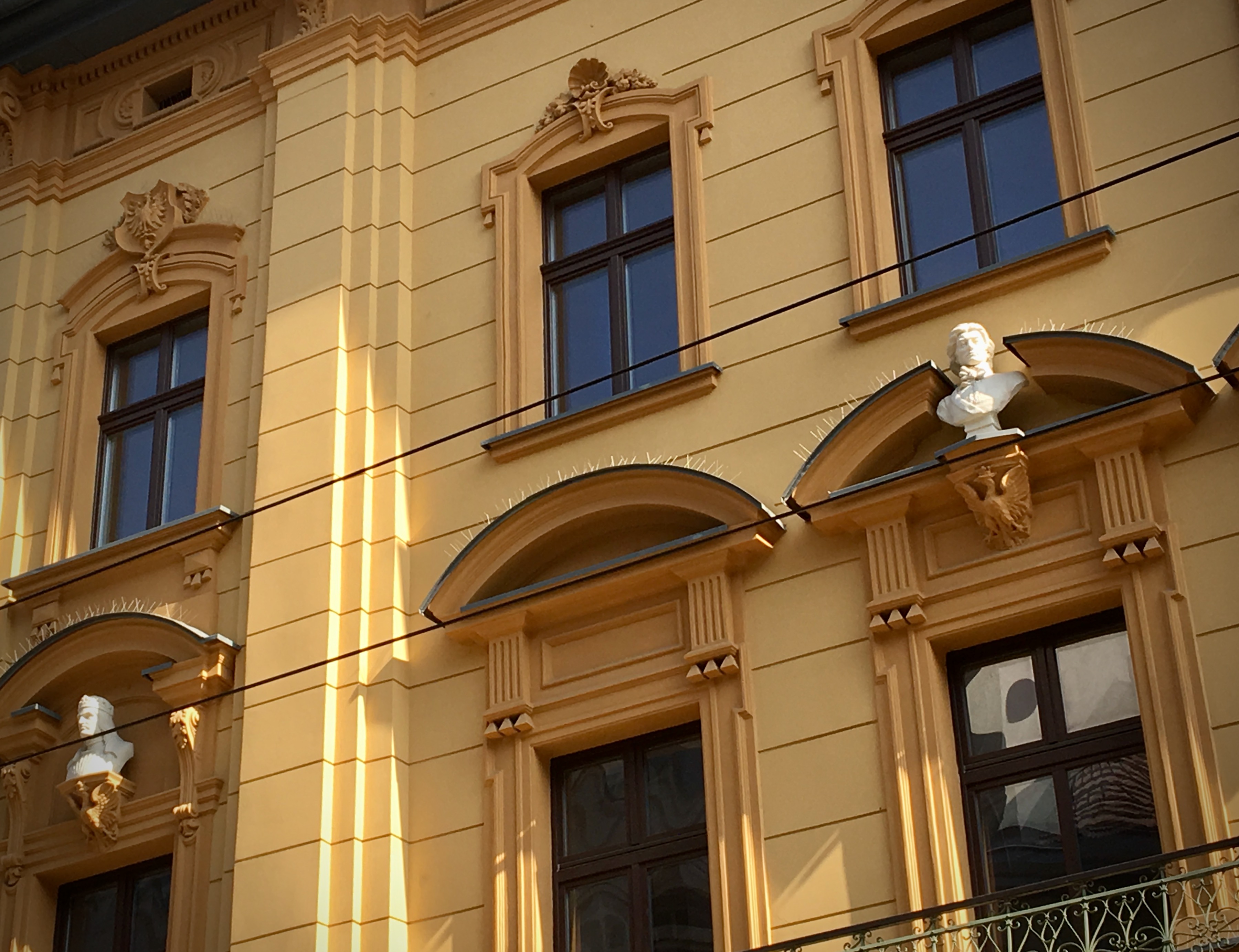
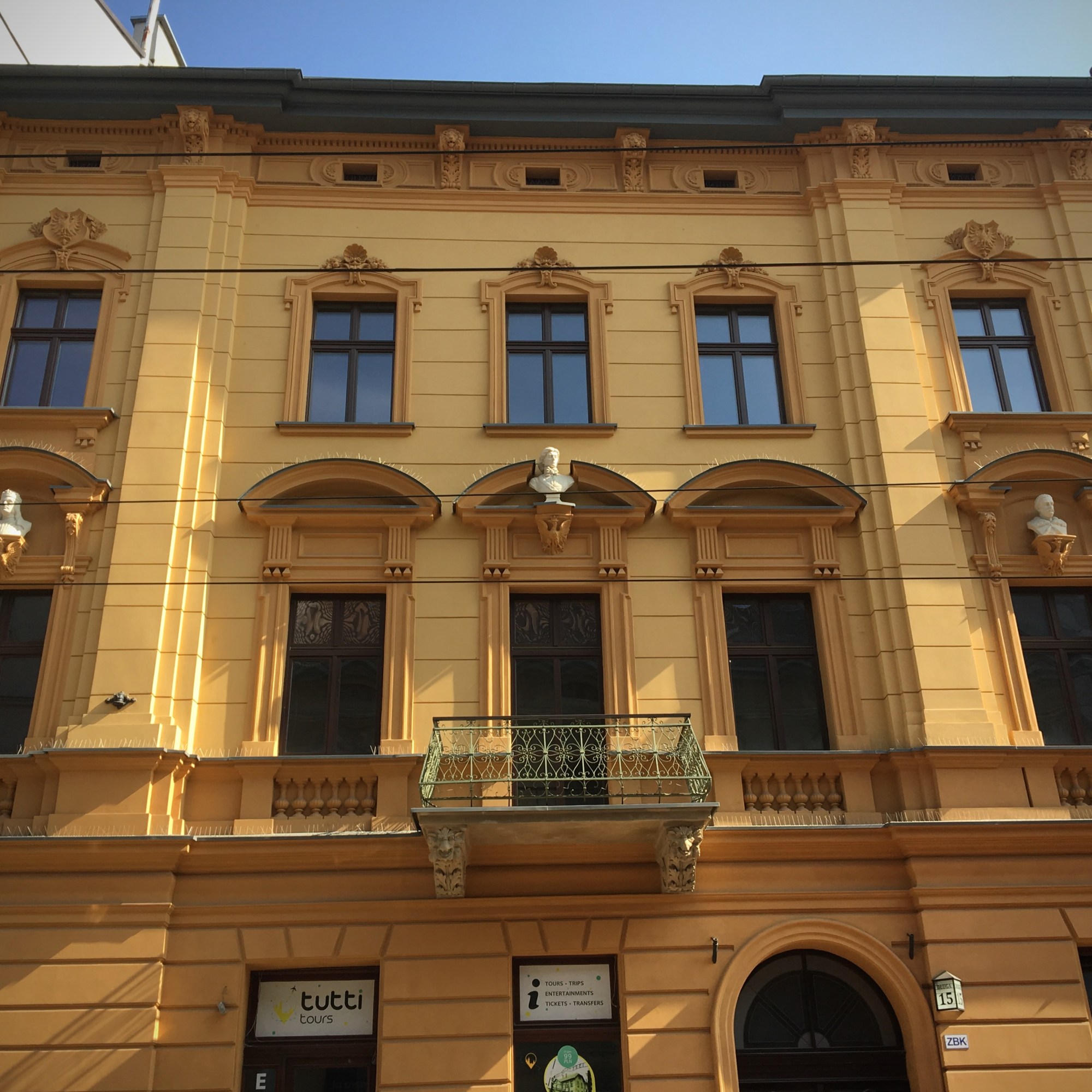
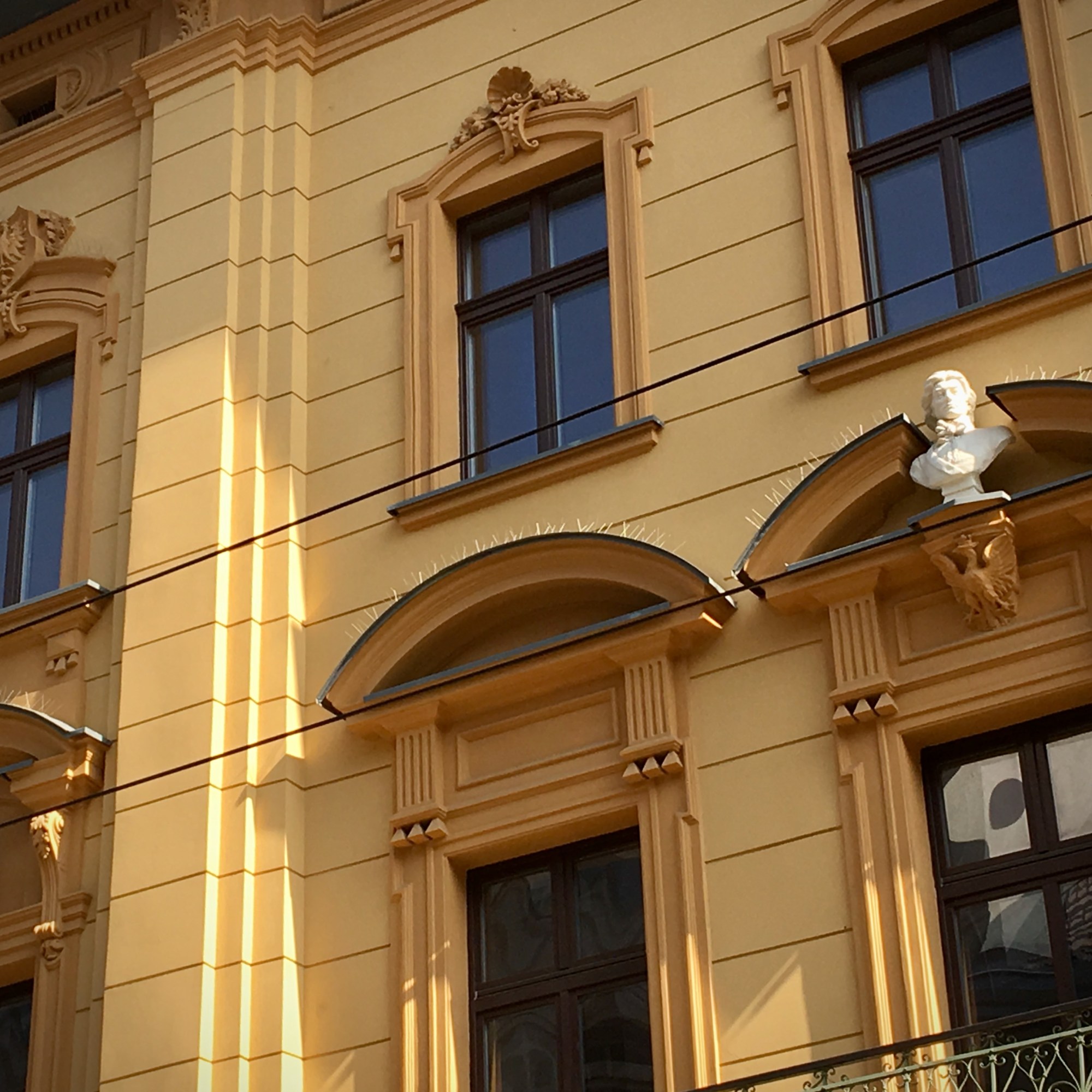
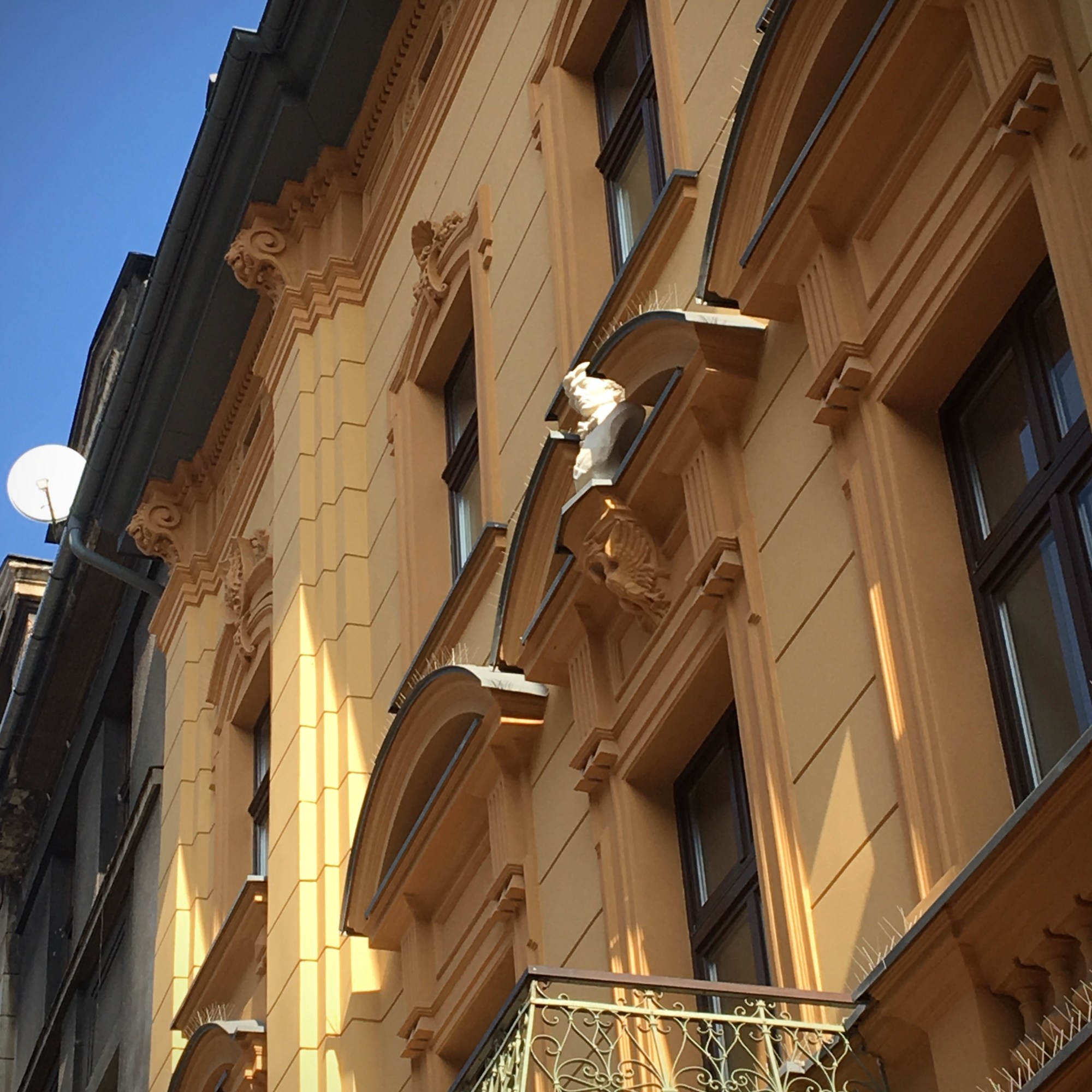
Walking on, we arrive at 15 Długa Str. – a freshly renovated facade with three horizontal sections and five vertical axes. The bust of Kosciuszko adorns its very centre, as it is located at the intersection of the middle axis and the cornice of the second horizontal band. Similarly to 5 Długa Str., Kosciuszko’s portrait is accompanied by representations of other heroes, in this case, king Sigismund I the Old (1467–1548) and king Jan III Sobieski (1629–96) – both uniformly counted among the greatest and most capable monarchs in the history of the Commonwealth. Also, just as Kosciuszko, they are both buried in the Royal Crypts of the Wawel Cathedral. Each of the three can be perceived as the most eminent figure of their respective historic period: Sigismund of the 16th century and the Polish Renaissance, Jan Sobieski of the 17th century and the Polish Baroque, Kosciuszko of the 18th century and the Polish Enlightenment. Placing Kosciuszko’s portrait in the company of these two testifies to his status as an equal of the kings in the eyes of the nation. The town house at 15 Długa Str. was designed in 1893–94 by architect Leopold Tlachna and commissioned by Zygmunt Mikołajski.2
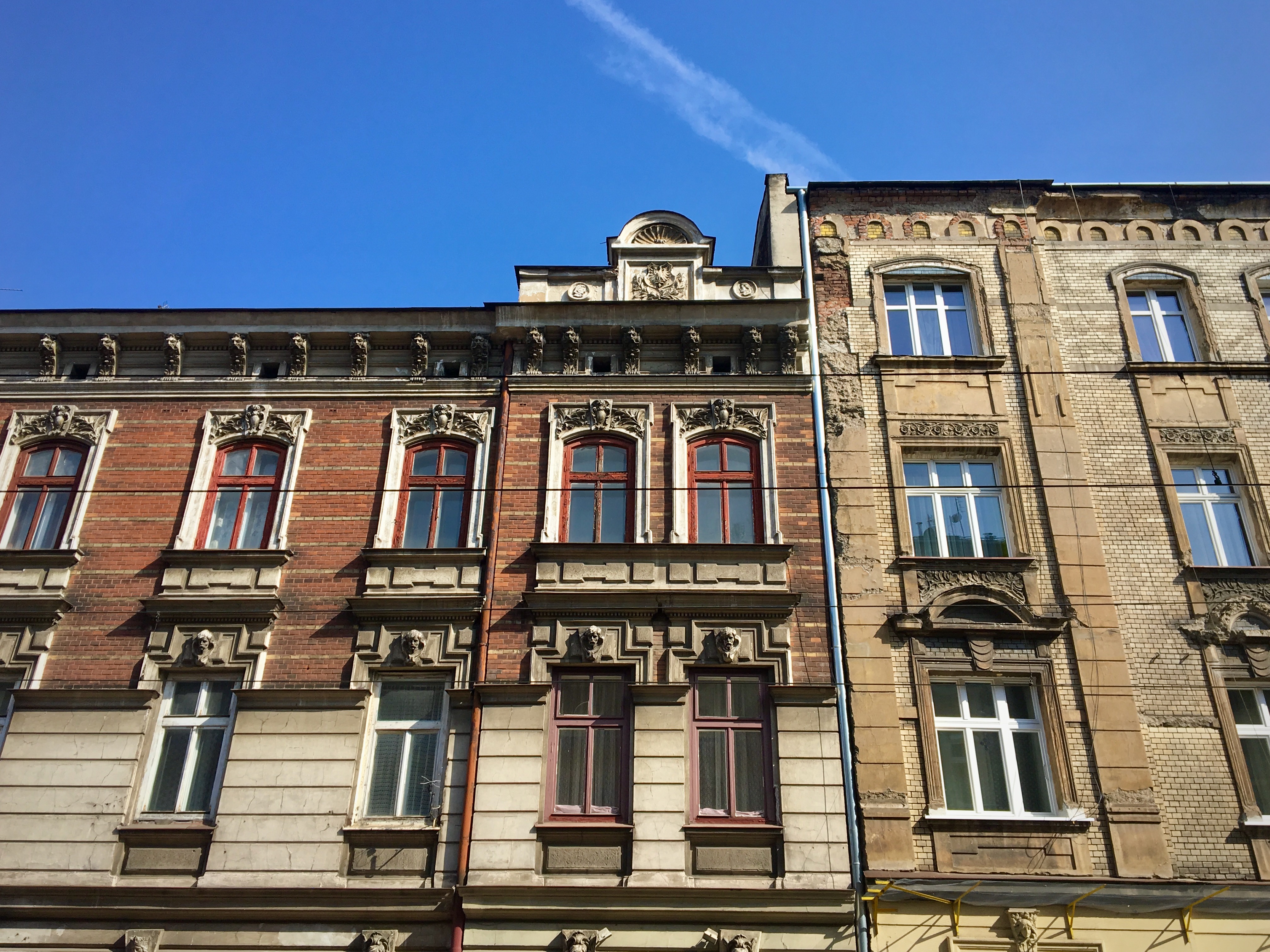
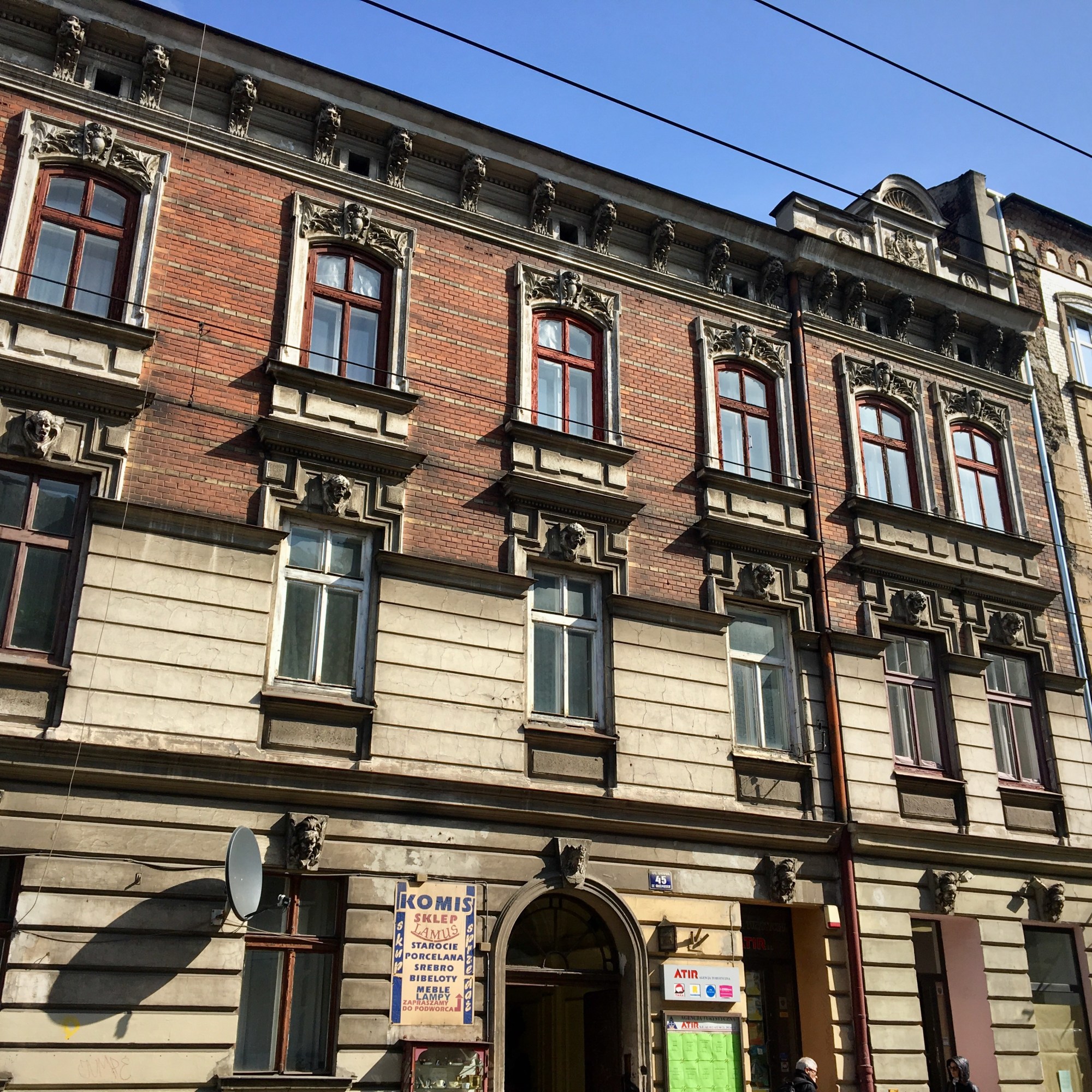
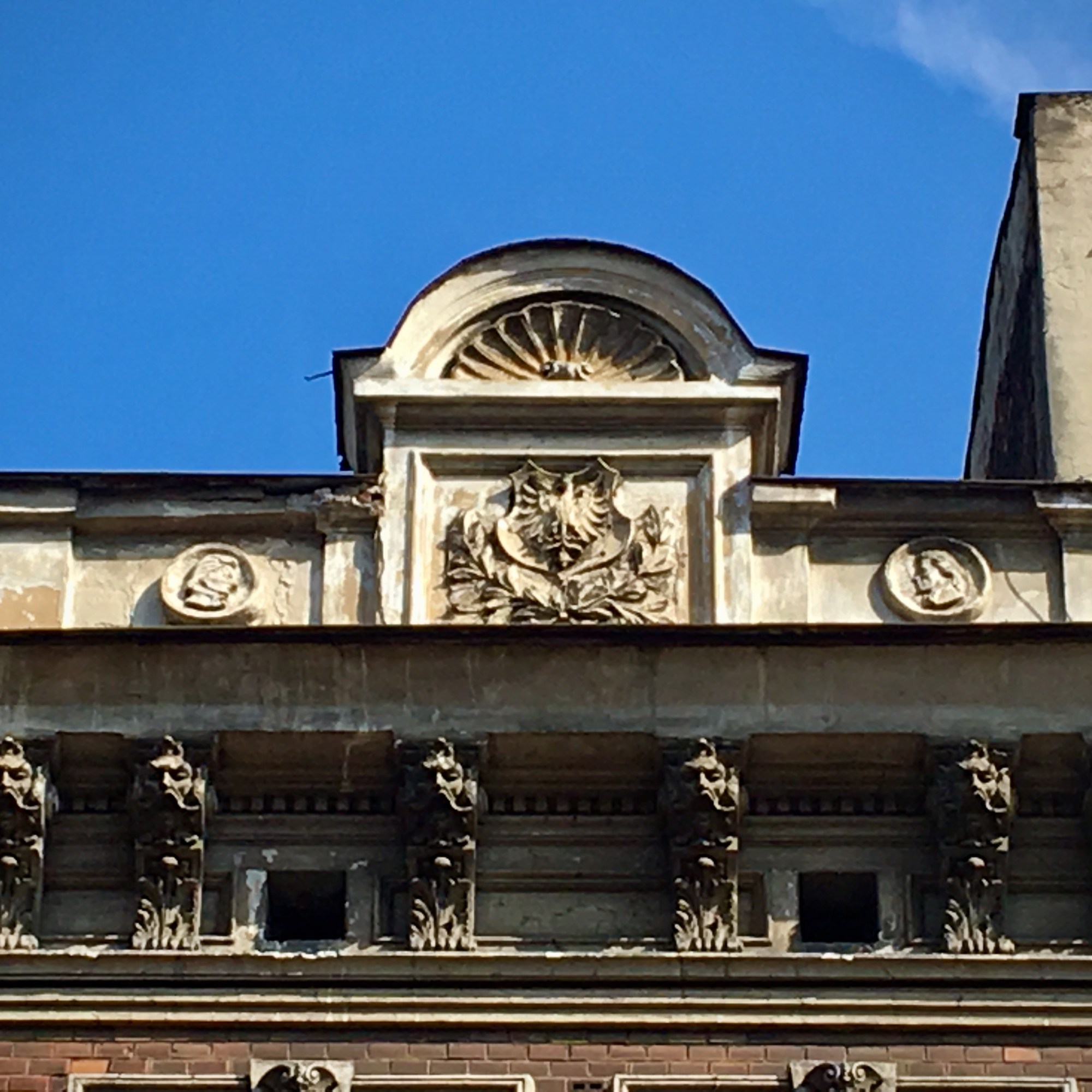
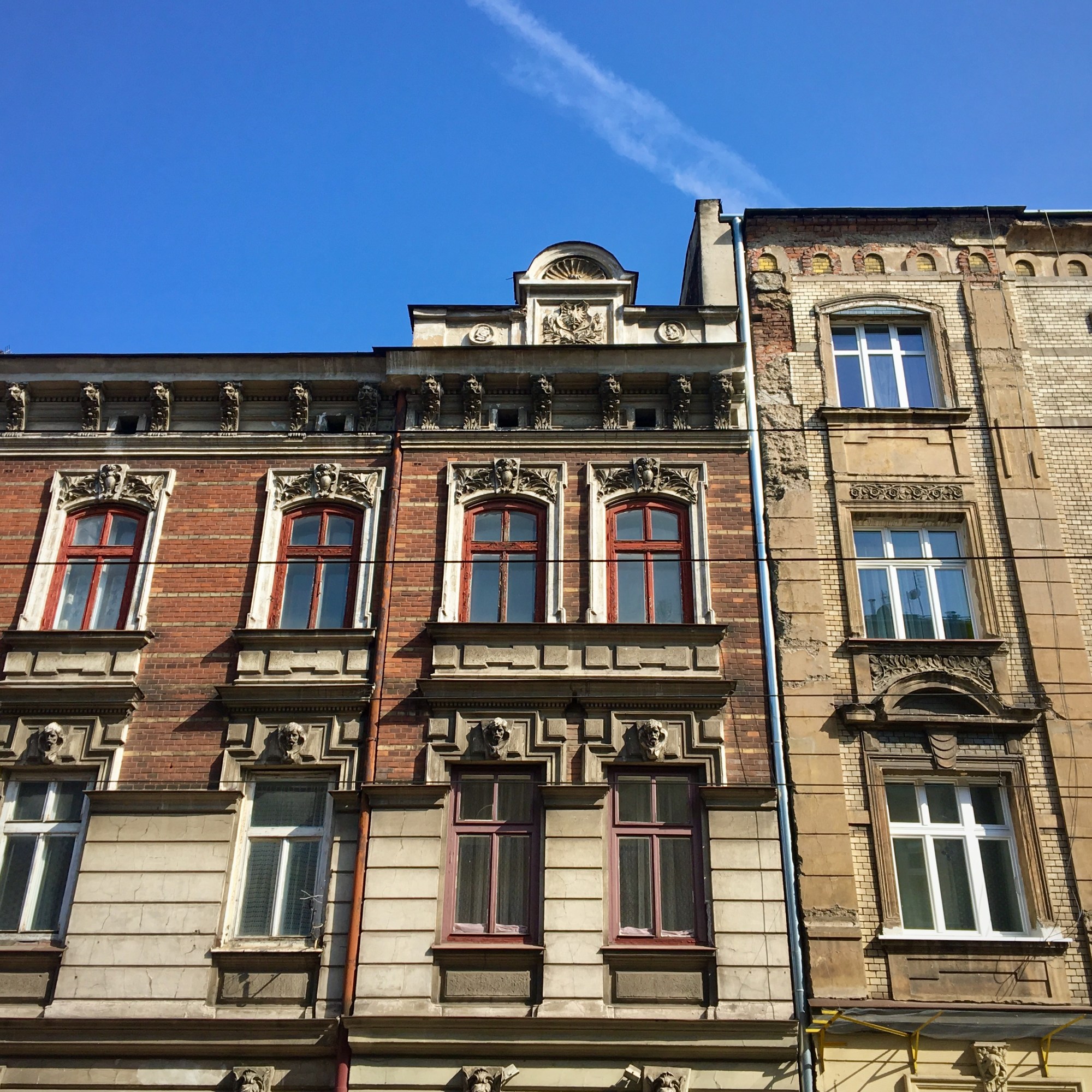
Continuing north, we pass by the house no. 45. Here, the tribute to Kosciuszko is a tad more difficult to spot, but a careful eye will discern his double portrait at the attic of the avant-corps on the right side of the facade. Kosciuszko’s two medallion portraits flank the Polish coat of arms – the White Eagle – nested on laurel branches. The decoration of the facade used to be richer, featuring portraits of national heroes above the first floor windows – but these were destroyed by the Nazi occupation forces in the 1940s. What remains, aside for the double portrait od Kosciuszko, is the head of king Casimir III the Great (1310–70), which crowns the portal. The house at 45 Długa Str. was commissioned by Wojciech Fusiecki and designed in 1891–92 by Leopold Tlachna (the same who authored the house at 15 Długa Str.).3
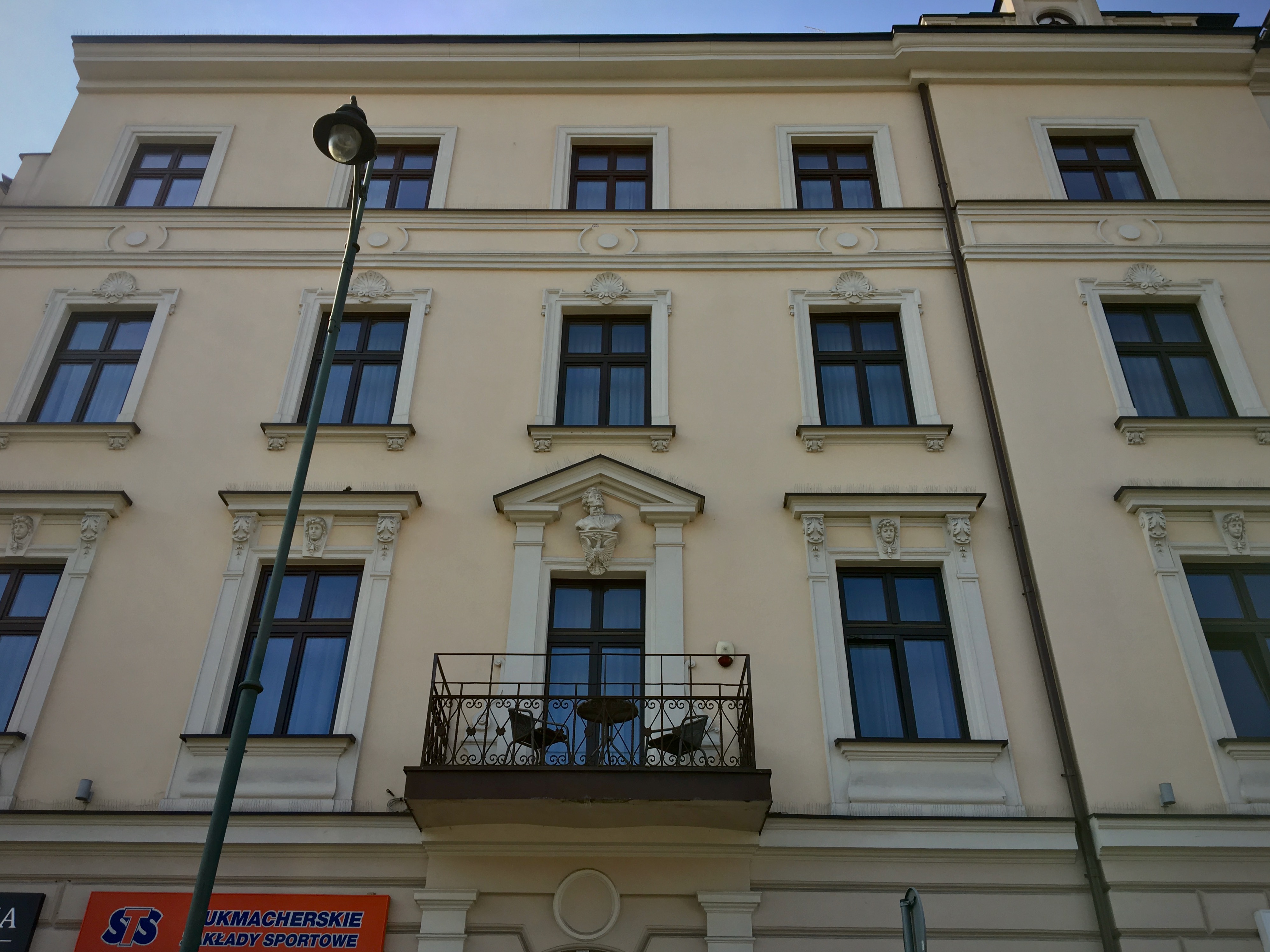
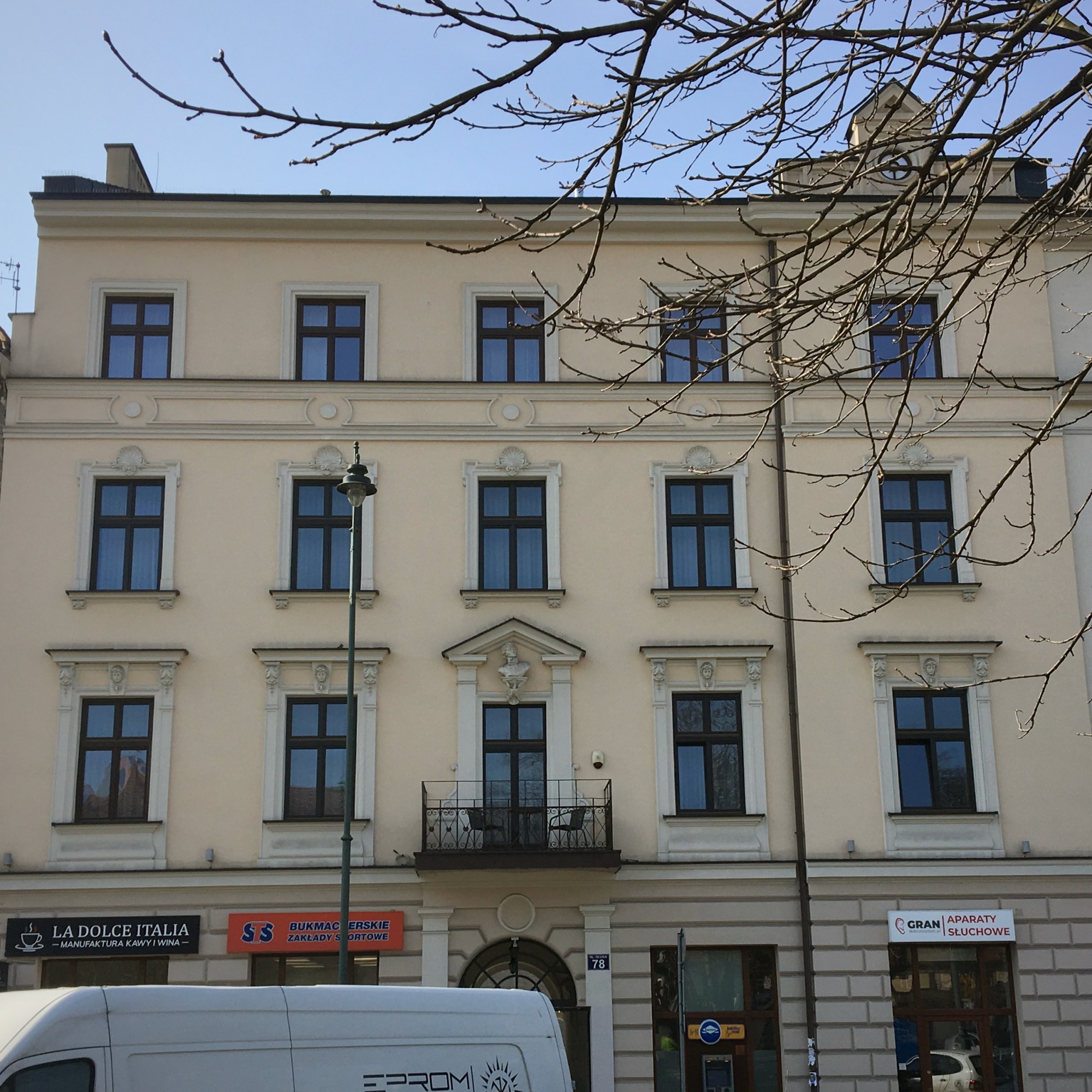
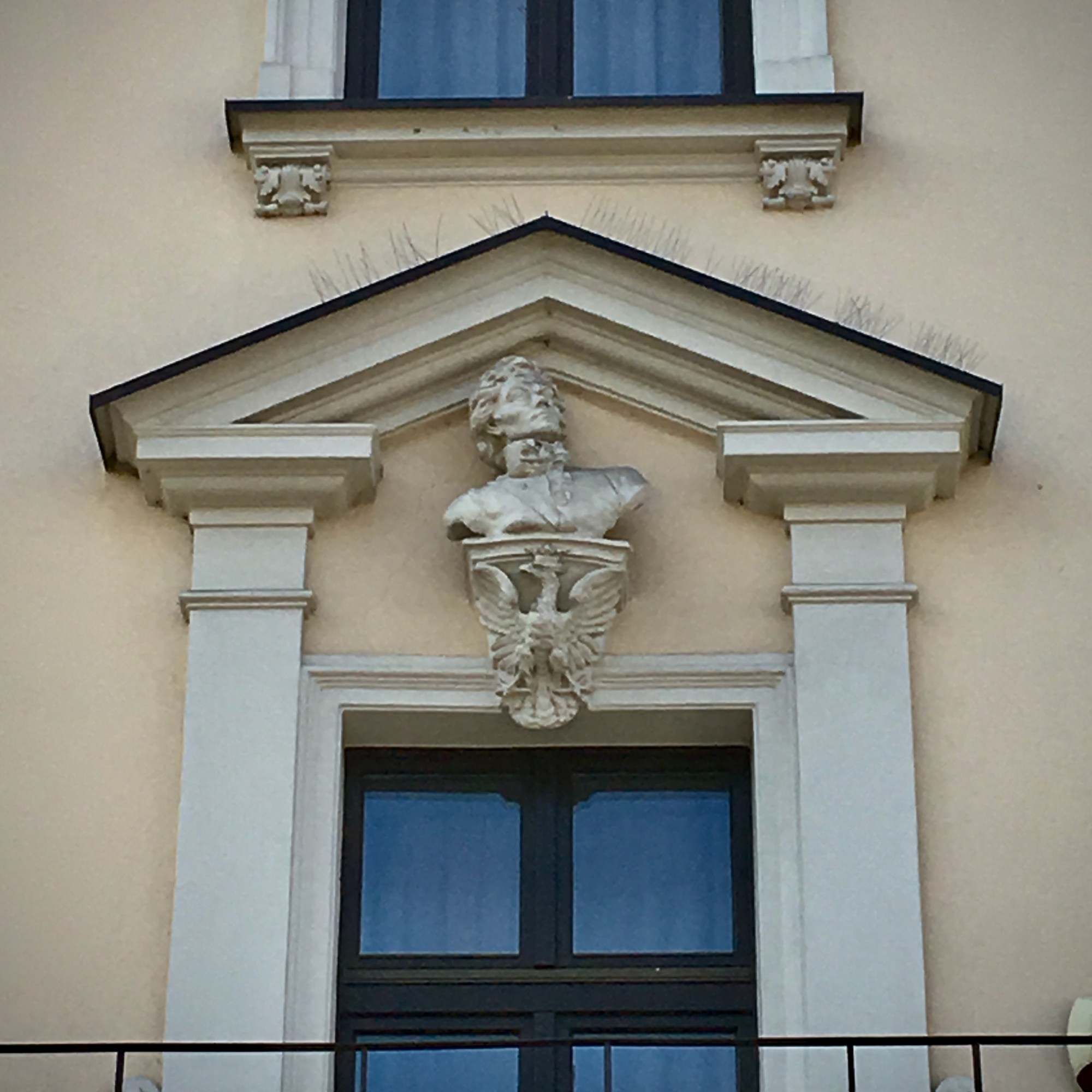
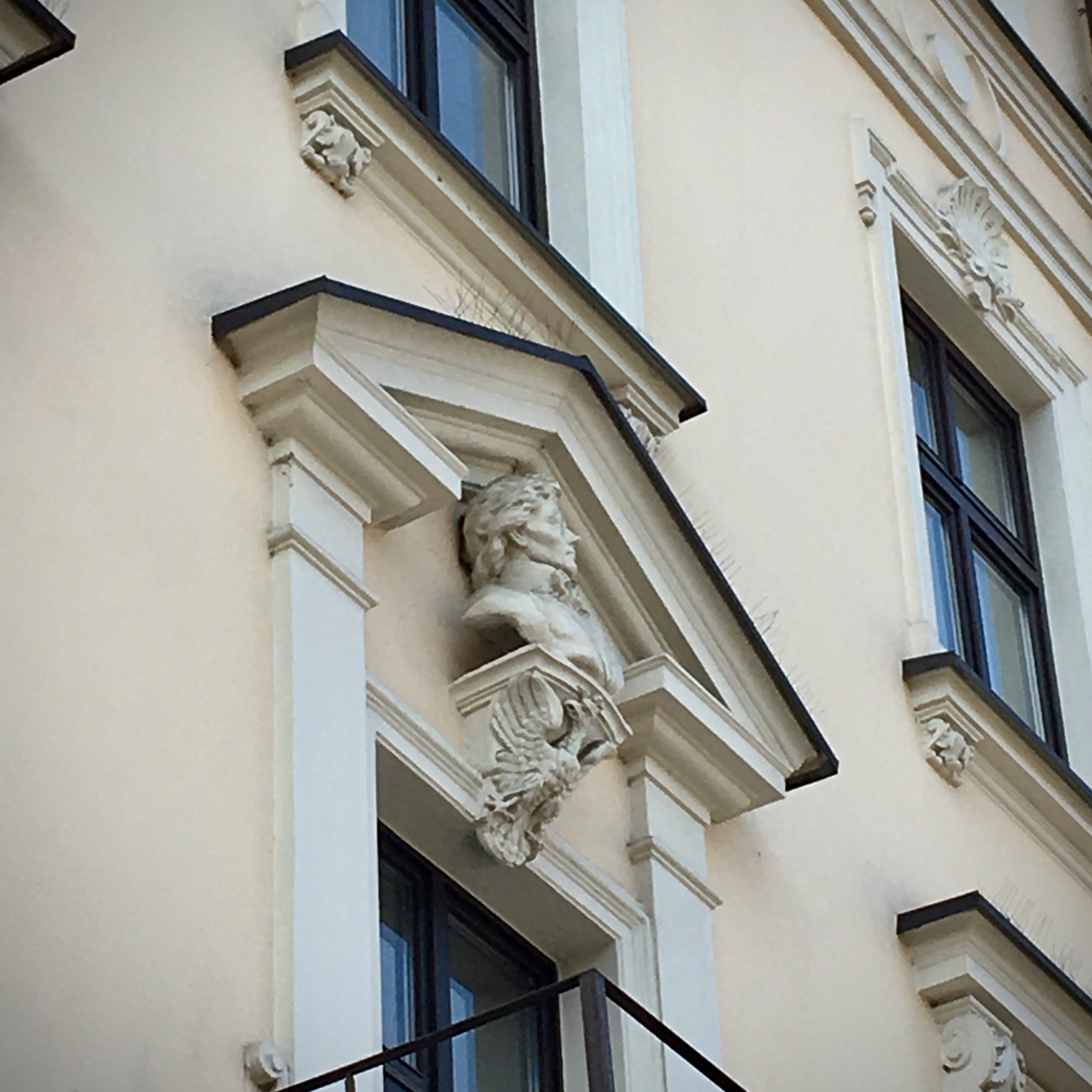
Our final stop at Długa Str. is the house no. 78, towering above the charming, busy market of Nowy Kleparz. The bust of Kosciuszko, placed on a pediment decorated with a representation of the White Eagle, is found on the central axis of the facade, in the pediment of the porte-fenêtre on the first floor. Here, however, he is the only heroic figure to be represented; the remaining ornaments are purely decorative. The house is yet another work by Leopold Tlachna, who designed it in 1895–96, and its first owner was Wincenty Kramarczyk.4
Sauntering on: Rakowicka, Felicjanek.
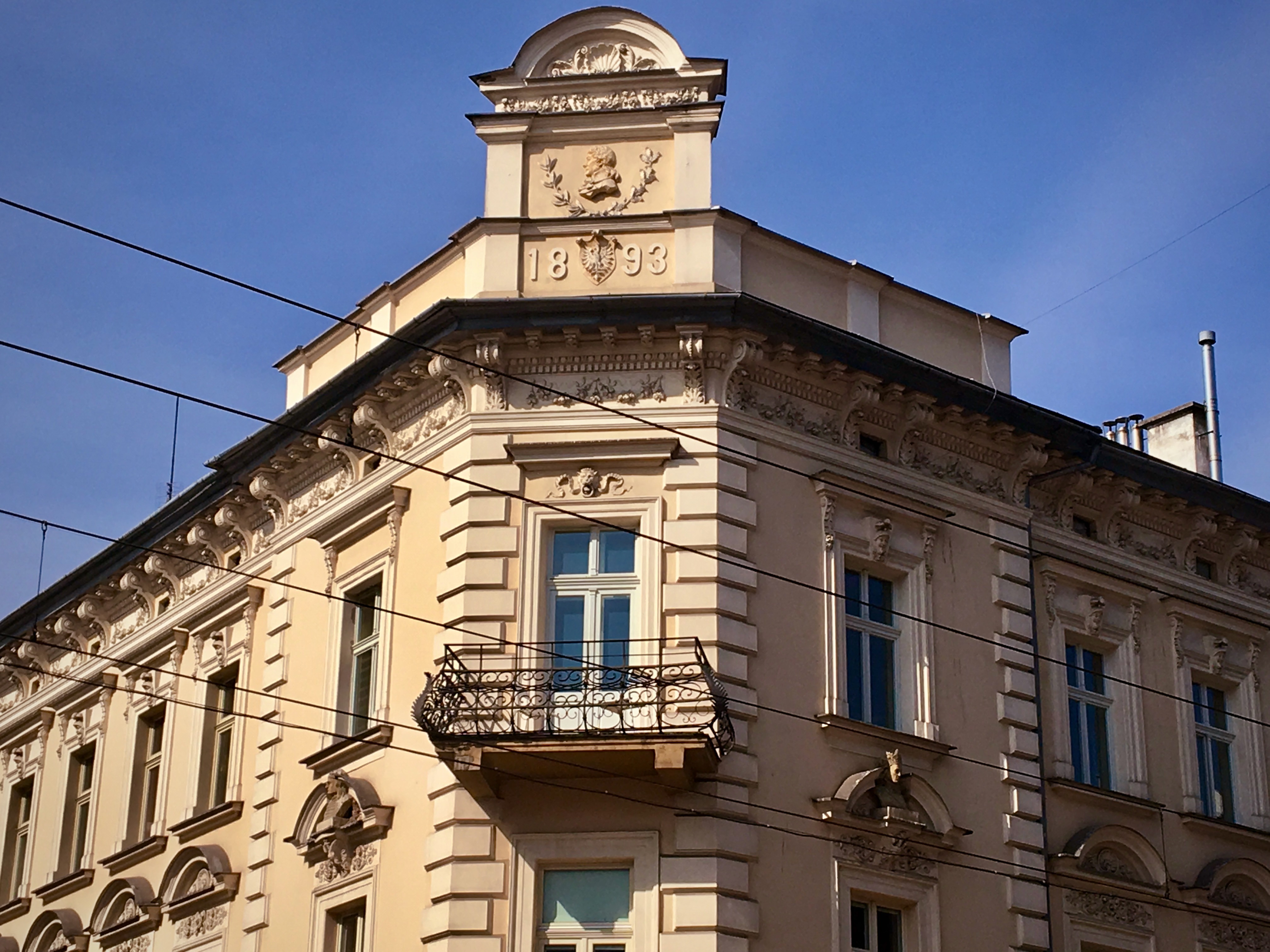
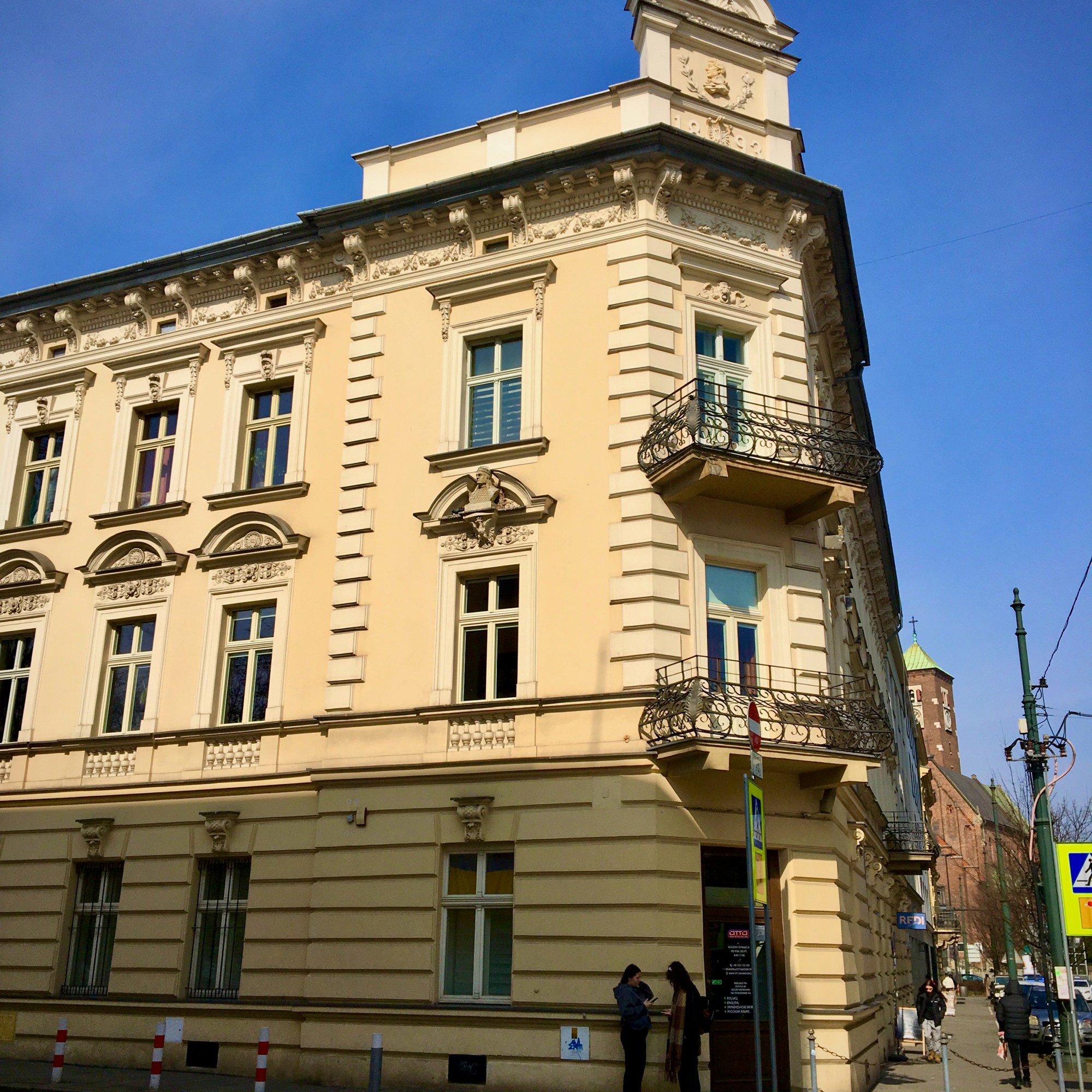
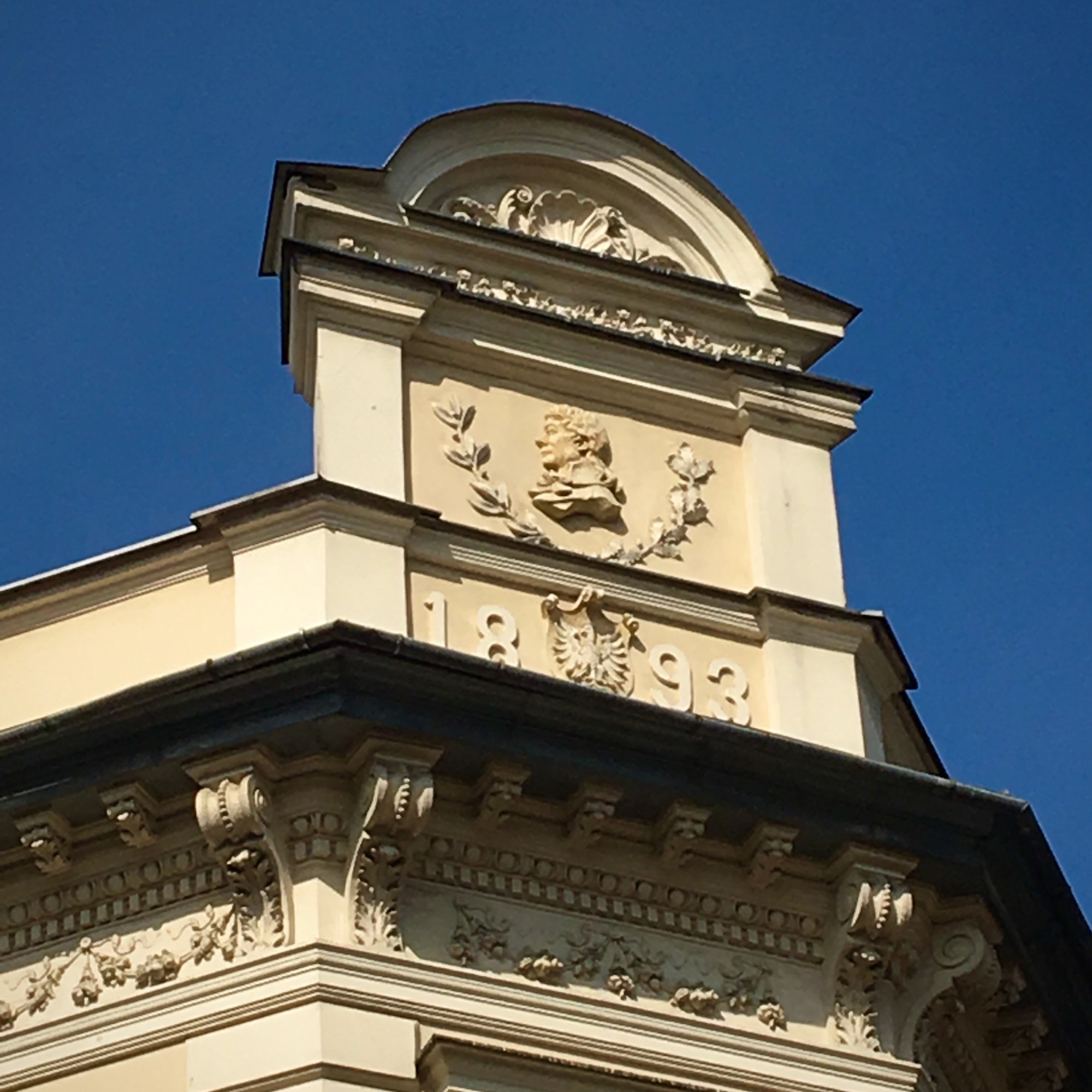
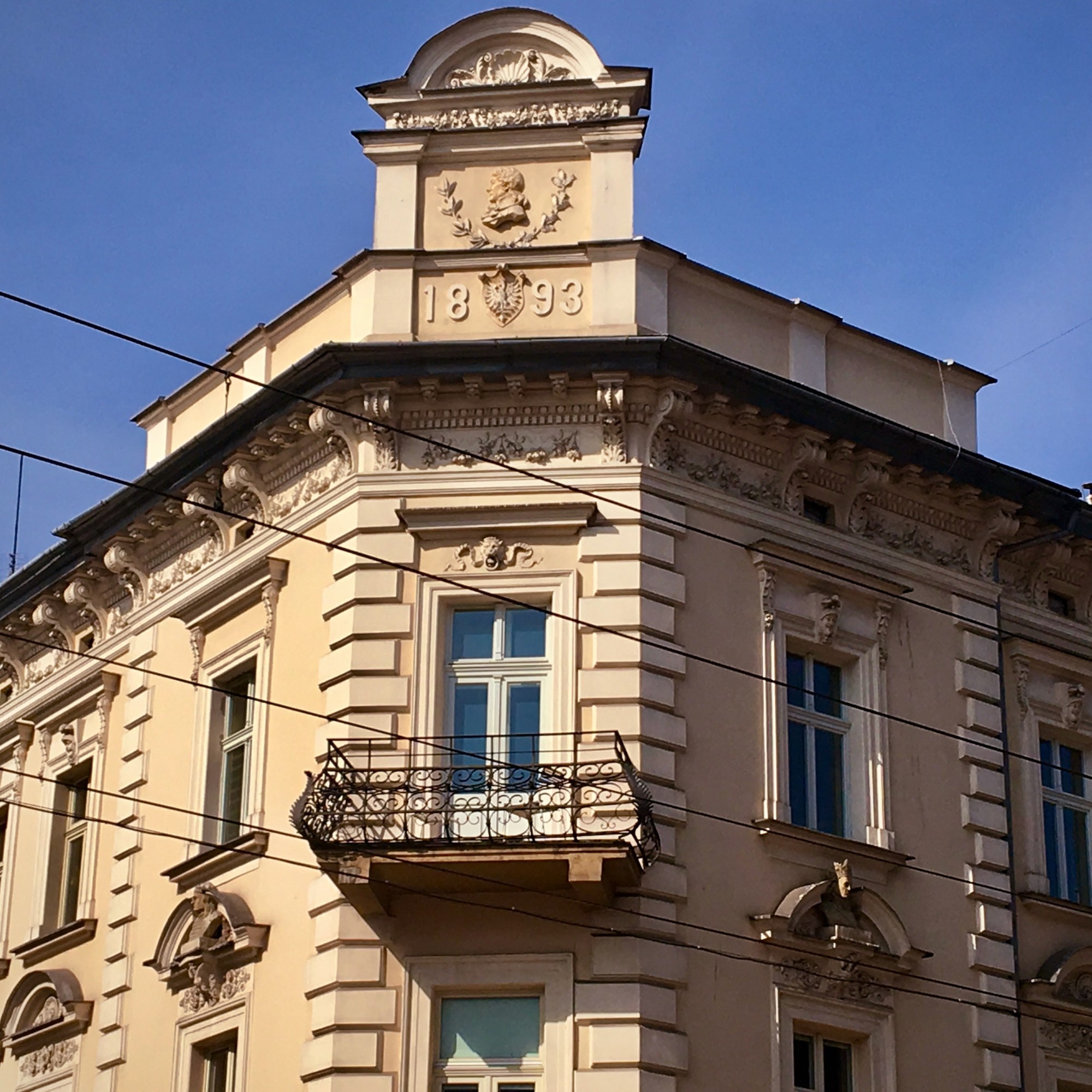
Leaving Długa Street and taking a 20-minute walk east, we arrive at yet another address featuring an impressive, architectural narrative: the corner of 12 Rakowicka Str. and 14 Topolowa Str. Here, Kosciuszko’s stucco portrait, flanked with laurel leaves, adorns the tall attic crowning the corner between the two facades. The wonderfully preserved decoration consists also of the busts of Casimir III the Great, Władysław Jagiełło (c. 1352/1362–1434), Sigismund I the Old and Jan III Sobieski – the eminent Polish and Lithuanian monarchs, three of which we’ve already encountered earlier. The kings’ portraits are displayed in segmental pediments on the first floor. Thus, yet again, Kosciuszko is featured amidst kings – but here, he’s more than equal. He’s indeed exalted above them: both metaphorically and literally, as it is his portrait that occupies the highest and most prominent place.
The house at the corner of Topolowa and Rakowicka was completed in 1893 (as indicated by the date inscribed below Kosciuszko’s portrait) and designed by Benjamin Torbe for Zygmunt Mikołajski (who also commissioned the house at 15 Długa Str.).5
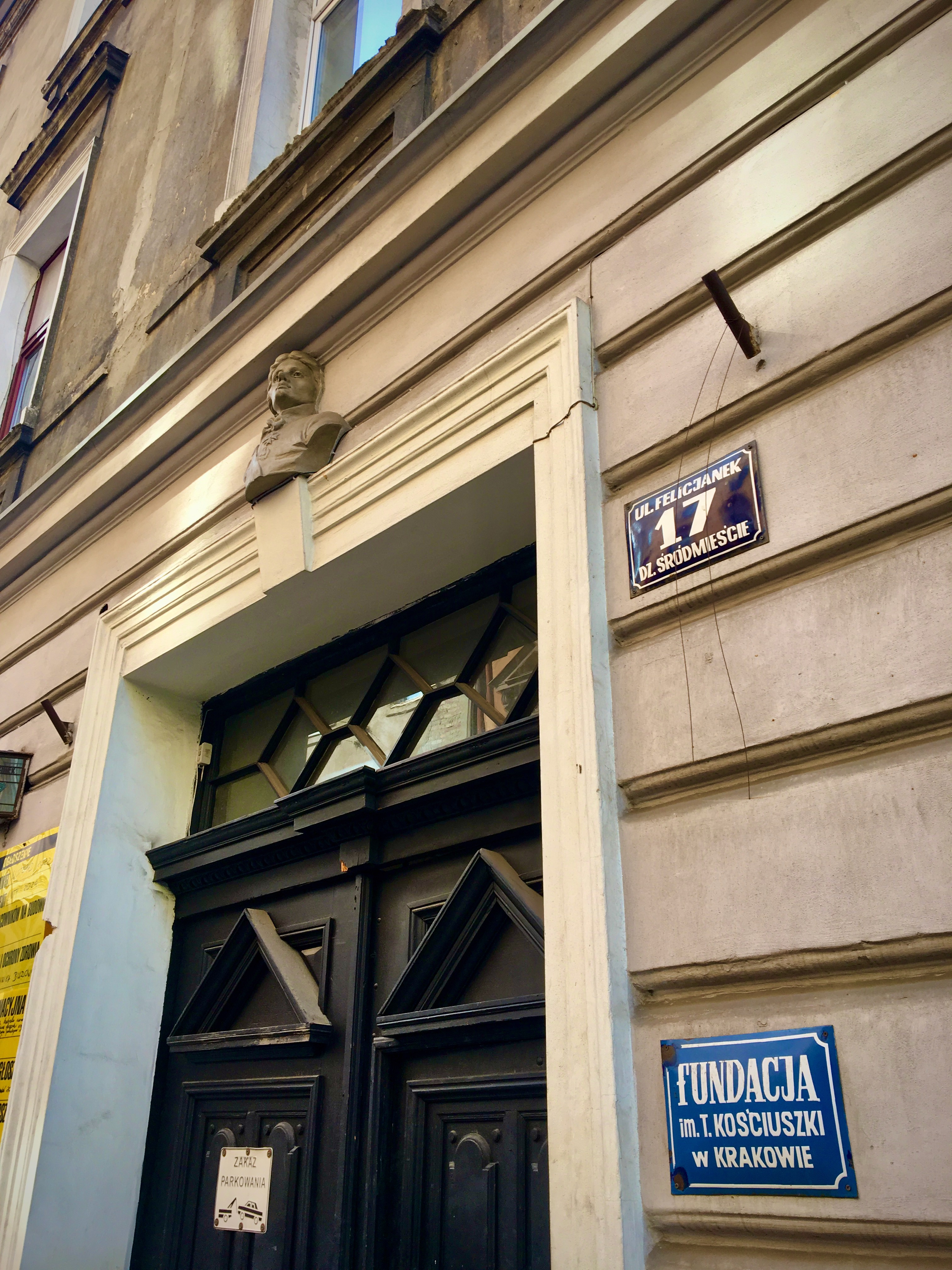
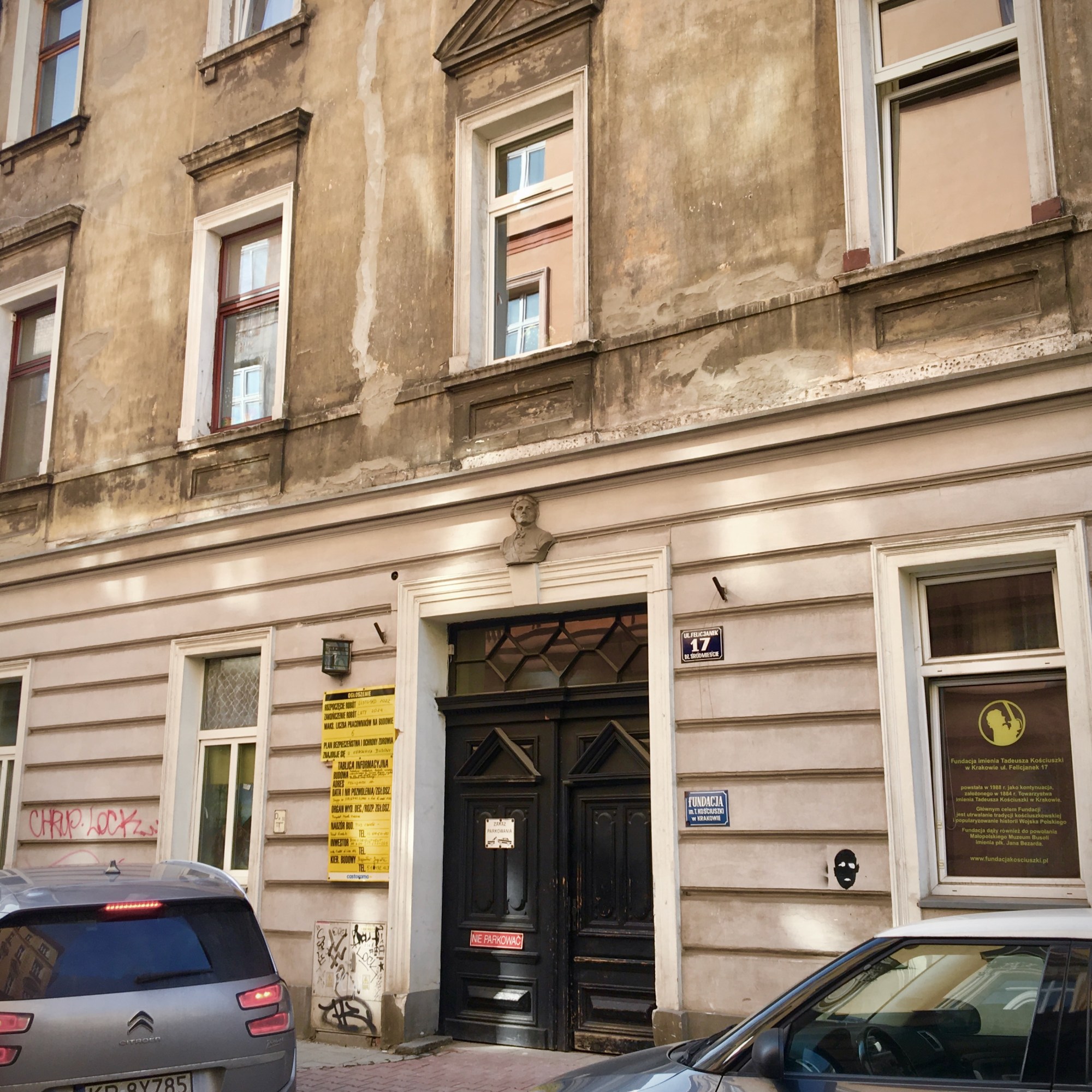
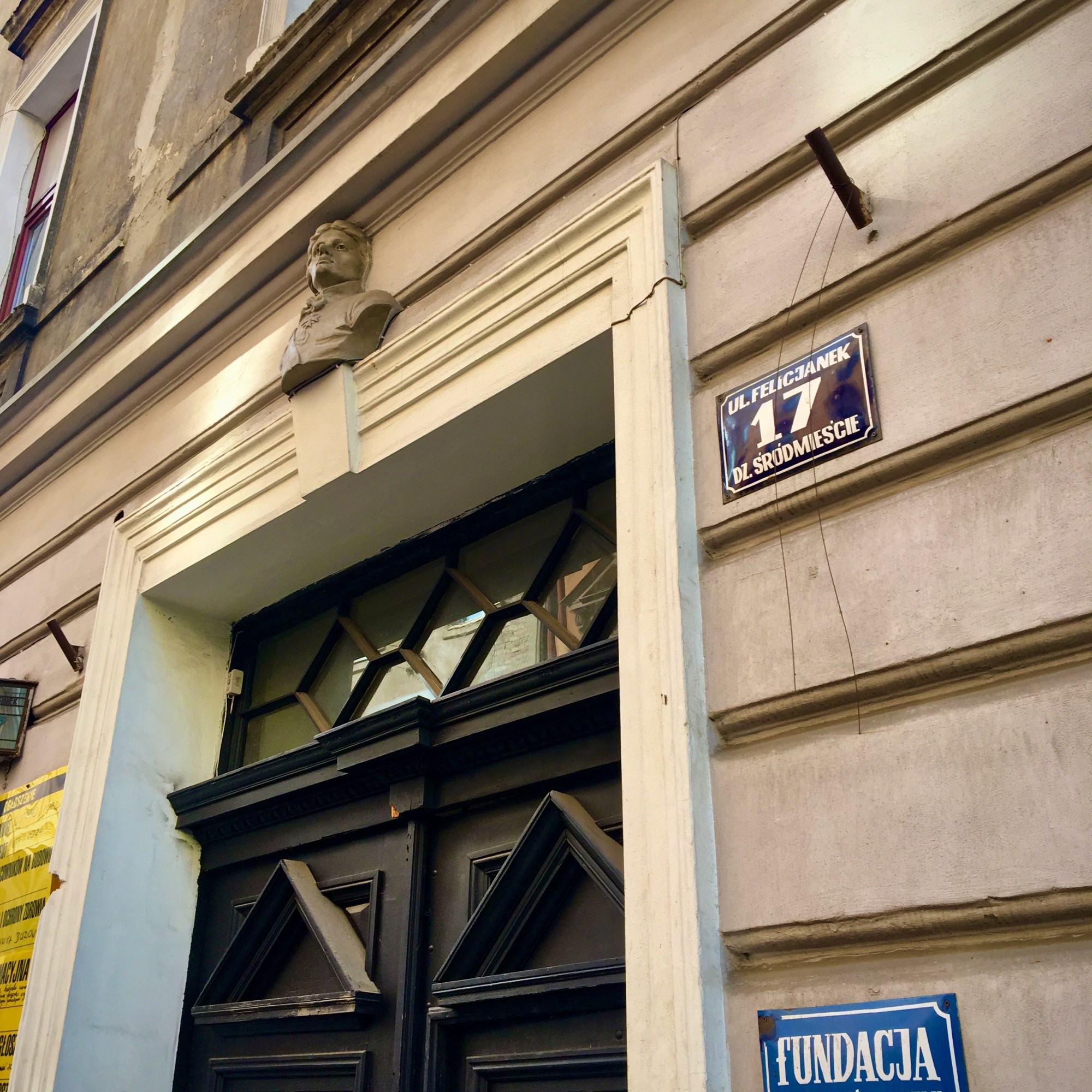
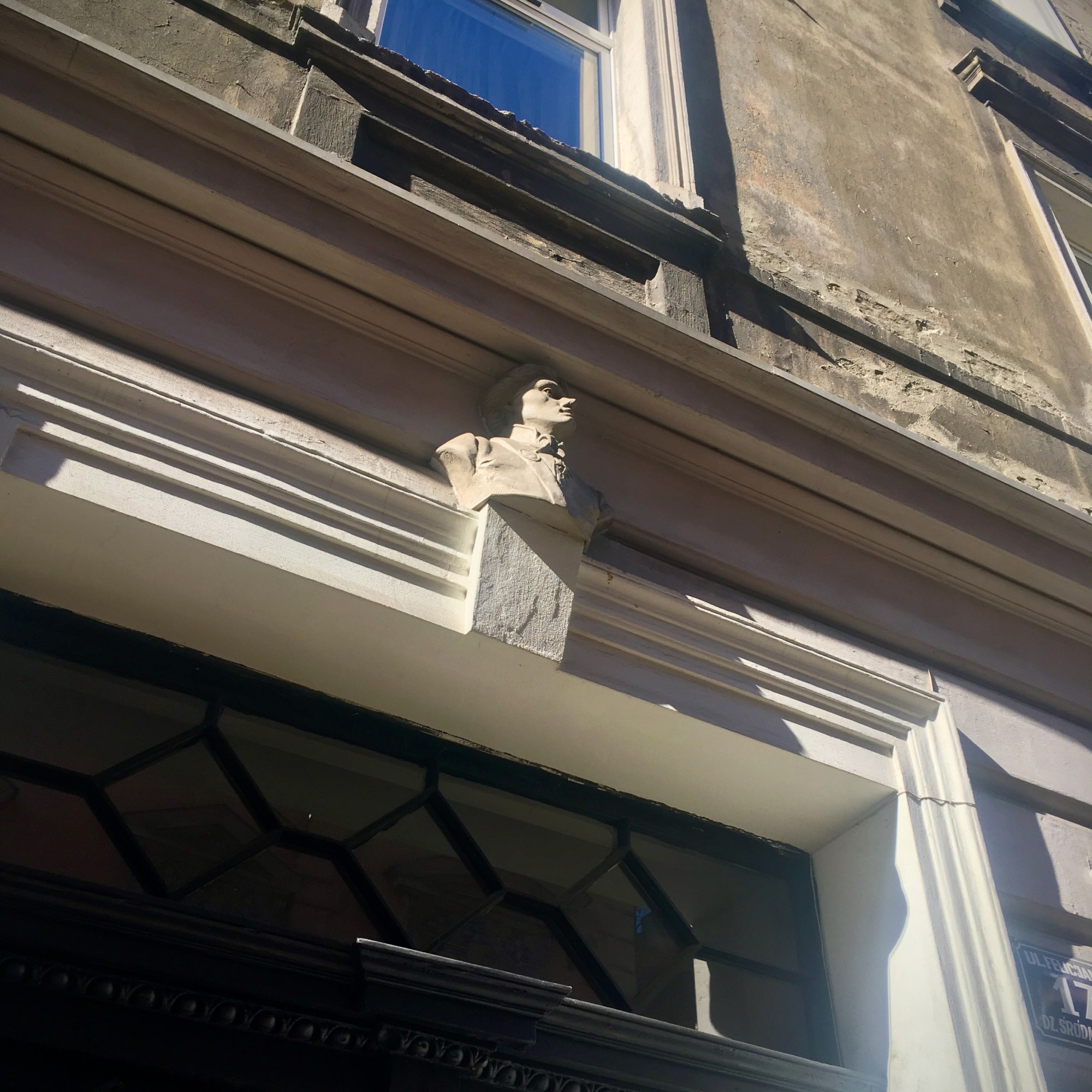
To reach our next destination, we need to take a longer walk either across the Market Square (to see the flagstone marking the place where Kosciuszko took his oath to the nation in March 1794 and the plaque indicating the house where he stayed in autumn 1775) or take a slightly longer route to pass by Loretańska Street and enter the monastery where he consecrated his sabre moments before the declaration of the Uprising. Crossing the majestic Piłsudski Street, the Kosciuszko Mound will reveal itself in the west, towering above the horizon. Continuing south, we soon reach the enchanting and ever sunny neighbourhood around the Felicjanek Street. After enjoying a croissant at Massolit Café (a personal favourite), we reach the house no. 17. Although not as richly ornamented as the others – with Kosciuszko’s bust adorning its simple portal – it guards a secret: a hidden museum dedicated to the General of the 1794 Uprising, curated by the Kraków Kosciuszko Foundation. Another bust of Kosciuszko is displayed in the window of the military antiques shop attached to the museum.
To be continued…
The stroll is about to resume soon: we are yet to visit Siemiradzkiego, Helclów and Rejtana streets (among others). As I will be returning to Kraków in mid-April 2023, this post and the accompanying gallery will be expanded correspondingly. Happy travels in the meantime!
References
- Beata Makowska, „Thaddeus Kosciusko’s image in decorations of town houses in Krakow, Poznan and Lodz” [in:] Żychowska M.J. (ed.), Tadeusz Kościuszko: Historia, Współczesność, Przyszłość, Relacje i Zależności’ (Kraków: Tadeusz Kościuszko Kraków University of Technology, 2017), p. 375. ↩︎
- Loc. cit. ↩︎
- Loc. cit., p. 375. ↩︎
- Loc. cit., p. 374. ↩︎
- Loc. cit., p. 375–376. ↩︎
Gallery
5 Długa Street
15 Długa Street
45 Długa Street
78 Długa Street
The corner of Rakowicka and Topolowa streets
17 Felicjanek street
 TADEUSZ KOŚCIUSZKO – nasz współczesny