🇬🇧
The question of the nationality of Thaddeus Kosciuszko has sparked an occasional bit of controversy. One can easily recall, for instance, the minor – and utterly superficial – diplomatic scandal of 20171 that surrounded the commission of Kosciuszko’s statue in Solothurn, Switzerland. Nevertheless, in spite of those rare nuisances, there is a consensus, not devoid of a sense of pride, that Kosciuszko is a supranational hero – a figure celebrated not only in his native Central and Eastern Europe, but also in the ever so hard-to-impress West.
He of himself. A Pole and a Lithuanian
As we begin to reflect on Kosciuszko’s identity, the first opinion to take into the account could not be other than that of the man himself – and what could be a better place to start that his own correspondence? Kosciuszko’s letters from different periods abound in numerous, both direct and indirect, testimonies to how he perceived his national affiliation. The post-exile correspondence, especially the collection of his letters to Thomas Jefferson, contain continuous references to Poland as his homeland,in particular in the context of Kosciuszko’s personal diplomatic efforts on behalf of the partitioned state, e.g. his unofficial conversations with Tsar Alexander. Je suis seul véritable Polonais en Europe (I am the only true Pole in Europe)2 – writes he to Jefferson in a letter dated 15th of September 1817, mere month before his death.
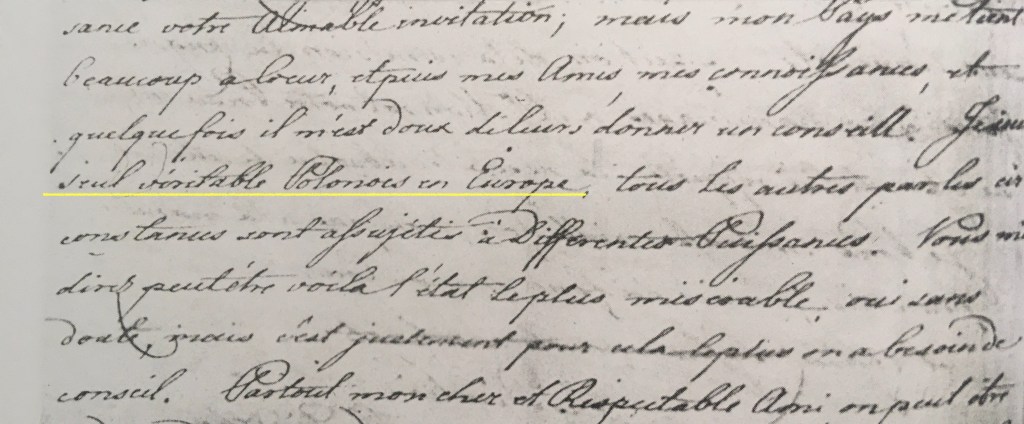
Simultaneously, in his diplomatic address to the Tsar from June 1815, Kosciuszko describes himself as a Lithuanian: Je suis né Litwanien, Sire (I was born a Lithuanian, Sir).3 It is also worth noting that although he never calls himself American, his love and attachment for the country where he spent his thirties are indisputable: Enfin la Vertu triomphe si ce n’est pas encore dans le vieux du moins dans le nouveau Monde (Finally, Virtue triumphs, if not yet in the old world, then at least in the New one)4 – he wrote to Jefferson in 1800. – J’yrais vous admirer et deposer apres mes cendres sur une terre de liberté (I shall come and admire you, and then lay my ashes to lie in a land of freedom).5
Belarus, on the contrary, isn’t directly mentioned anywhere his personal notes; and contrary to another legendary insurrectionist, Kastus’ Kalinoŭski, Kosciuszko’s original writings do not contain any passages in the Belarusian language (they are all in Polish, French, or English). This should come as no surprise, however, as back in the day, the Belarusian language was in the process of forming and crystallising from its Ruthenian roots. Chances are Kosciuszko knew or spoke some form of Ruthenian-Belarusian as a child and teenager – after all, he did grow up in a rural province of the Grand Duchy mainly inhabited by ethnic Ruthenians. Alas, there is no written evidence to conclude on that, as his earliest letters date back to his university years, when he would have already lived in Warsaw and undergone more than a decade of education with Polish as the main language of instruction.
Of his ancestors. A Belarusian.
The key argument in favour of Kosciuszko’s Belarusianness is, naturally, his birthplace and family history. He was born and spent the first twelve years of his life in a wooden manor in the estate of Myerachowshchyna (Мерачоўшчына) – currently at the outskirts of the town of Kosava (Кóсава) in the Brest region. It wasn’t the ancestral seat of the Kosciuszko family – they only spent there a few decades before returning to their true heirloom: Sekhnovichi (Сяхновічы), located about 100 km from Myerachowshchyna, within the same region of Brest.
Sekhnovichi had belonged to the Kosciuszko family at least since the beginning of the 16th century;6 it also played a paramount role in Thaddeus’ own life story: upon returning from his American military service, he spent several years (1784-1789) personally governing the estate. It was then that he developed a clearer understanding of the situation of the serf families living in the area and began experimenting with lifting the corvée for those ascribed to his estate – the very first steps on the path that would eventually lead him to the proclamation of the Połaniec Manifesto in May 1794 – an act granting unprecedented freedom to the peasants living in the Commonwealth.7
The geographical affiliation of the Kosciuszko family is not the only argument for Thaddeus’ proximity to the Belarusian nation avant la lettre. There is a consensus among his biographers that his family was ethnically Ruthenian, although polonised. The status of the Ruthenian gentry and nobility was regulated as a part of the 1439 Union of Grodno: the document issued by bishop Zbigniew Oleśnicki affirmed that the Ruthenians had the same rights as the Lithuanians when it came to the use of the Polish coats of arms and other symbols of nobility (based on this provision, the Kosciuszko family was later entitled to use the Roch III coat of arms).8
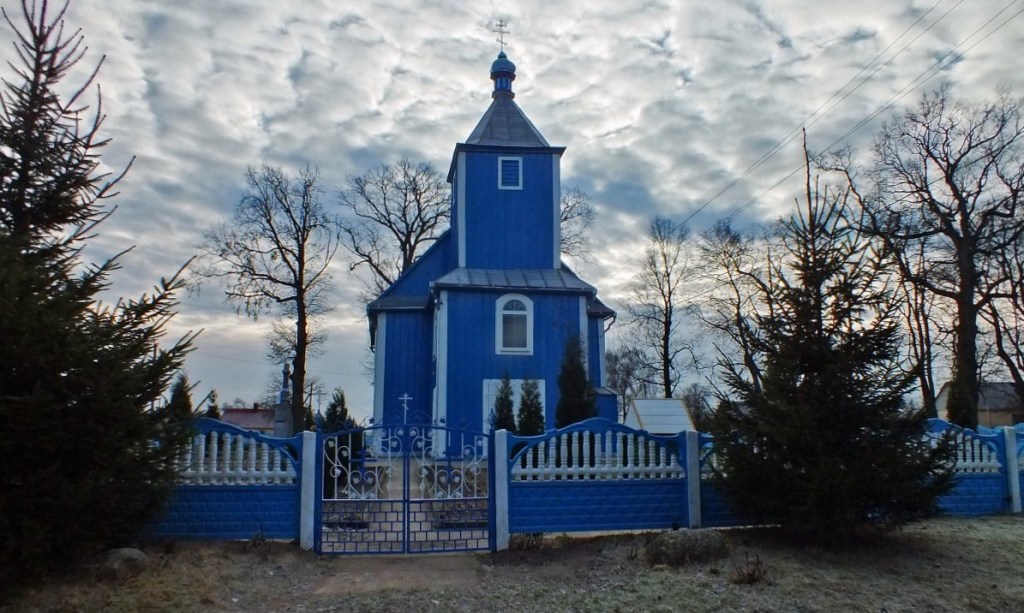
Furthermore, some scholars hypothesise that the family of Thaddeus’ mother, Tekla Ratomska, belonged in fact, to the Ruthenian Uniate Church (Руская Уніяцкая Царква) – a religious entity endemic to the Polish-Lithuanian Commonwealth: a form of the Orthodox faith, but formally subjected to the Holy See in the Vatican. Historian Oleg Łatyszonek9 recounts popular stories, according to which little Thaddeus was baptised twice: firstly in the Uniate rite of his mother, and then in the Catholic rite of his father. Though the surviving documents testify only to the Catholic baptism (which took place on February 12th 1746 in the parish of Kosava), the tradition that ascribes Orthodox roots to young Thaddeus has considerable backing in the history of his family. At least three Orthodox churches had been funded by Thaddeus’ ancestors on their land: one in the village of Vialikija Sekhnovichi, the others in Mateevichi and Stepanki – all of which survive to this day.10
The contradiction that is not. The fluid concept of nationality.
Kosciuszko’s identity is, therefore, comprehensive, to say the least. He openly calls himself a Lithuanian, but considers Poland to be his homeland; all this while having been born, raised, and spent many of his formative years on the land that is nowadays Western Belarus. Researchers, such as Timothy Snyder11 or Valdas Rakutis,12 observe, however, that there is no contradiction here, for Kosciuszko’s contemporaries understood the concept of Polishness as a polytonym, i.e. as referring to a political entity rather than to an ethnicity. Polishness, as such, provided a political blanket for the population characterised by a different division, presently inexistent, into Lithuania and the Crown. Yet, these also had little to do with ethnicity, as they primarily referred to the territory, and situations when two people from the same family would find themselves belonging one to the Crown and the other to Lithuania were far from rare.
History indeed knows numerous cases of such familial subdivisions, e.g. the Radziwiłł family had their estates both in Antonin in the Greater Poland region of the Crown and in Nyasvizh in the Grand Duchy of Lithuania, now a part of Belarus. The most striking example of this transnational fluidity is perhaps the case of the Narutowicz brothers:13 while Gabriel Narutowicz dedicated himself to Polish politics and set off to become Poland’s first president in 1922, his brother Stanisław, also known as Stanislovas Narutavičius, was a Lithuanian patriot, a member of the provisional Lithuanian parliament known as the Taryba, and one of the signatories of the 1918 Act of Independence of Lithuania.
Patron saint of wanderers
Thaddeus Kosciuszko was, therefore, a true patriot of his homeland: the Polish-Lithuanian Commonwealth – a vast, picturesque, mosaic of cultures, languages and traditions, which, over the course of the 19th century, morphed into Belarus, Lithuania, Poland and, partially, Ukraine. As such, he’s not just a „national” but a „supranational” hero, who’s uniquely cosmopolitan character is further expanded by his close relations with the United States, France and Switzerland.
It can’t be disputed that each nation needs its own heroes, ones that wouldn’t be shared with others. Still, the fact that there’s a place in the heroic pantheon for a supranational free bird, who could not be contained within a single category, feels rather reassuring. Especially today, when more and more people hit the road, live as expats or hail from more than one nationality – figures like Thaddeus are no less than profane patron saints for the restless wanderers.
🇵🇱
Sprawa narodowości Tadeusza Kościuszki bywała czasem przedmiotem kontrowersji. Dość łatwo przypomnieć sobie drobny – i zupełnie niepotrzebny – skandal dyplomatyczny z 20171 roku, który rozgorzał wokół figury Naczelnika ufundowanej przez białoruskie środowisko emigrancie w szwajcarskiej Solurze. Mimo tego i innych drobnych utrapień panuje jednak konsensus, nie pozbawiony dumy, że Kościuszko jest bohaterem ponadnarodowym – postacią celebrowaną nie tylko w jego ojczystej Europie Środkowo-Wschodniej, ale i na tak niewrażliwym na nasze zasługi Zachodzie.
Sam o sobie: Polak i Litwin.
Biorąc się za temat tożsamości Kościuszki, pierwszą sprawą, którą należy poddać uwadze jest opinia, którą miał na ten temat, sam zainteresowany. Co będzie zatem lepszym punktem wyjścia niż jego własna korespondencja? Listy Tadeusza z różnych okresów jego życia pełne są odniesień, tak pośrednich, jak i aluzyjnych do tego, jak postrzegał swą przynależność narodową. Jego korespondencja z okresu przymusowej emigracji po wyzwoleniu z niewoli rosyjskiej, szczególnie zbiór listów do Thomasa Jeffersona, pełna jest odniesień do Polski jako jego ojczyzny, przede wszystkim w kontekście jego prywatnych działań dyplomatycznych na rzecz kraju, jak choćby nieoficjalnych rozmów z carem Aleksandrem. Je suis seul véritable Polonais en Europe (Ja jeden jestem prawdziwym Polakiem w Europie)2 – pisał do Jeffersona w liście z 15 września 1817 roku, równo miesiąc przed śmiercią.
Jednocześnie, w dyplomatycznym piśmie z czerwca 1815 r. adresowanym do cara, pisze on: Je suis né Litwanien, Sire (Urodziłem się Litwinem, panie)3. Warto też dodać, że choć Kościuszko nigdy nie nazwał się Amerykaninem, jego przywiązanie i miłość do kraju, w którym spędził swoje lata trzydzieste, są głęboko odczuwalne w jego pismach. Enfin la Vertu triomphe si ce n’est pas encore dans le vieux du moins dans le nouveau Monde (Wreszcie przyzwoitość triumfuje – jeśli nie w starym, to przynajmniej w Nowym Świecie)4 – pisał do Jeffersona w 1800 r. – J’yrais vous admirer et deposer apres mes cendres sur une terre de liberté (Przyjadę do Was, by Was podziwiać, a potem złożę moje prochy w wolnej ziemi)5.
Kościuszko nie napomyka jednak nigdy bezpośrednio o Białorusi. W przeciwieństwie do innego legendarnego powstańca, Kastusia Kalinowskiego, nie używa on też w swych listach żadnej formy języka białoruskiego (korespondencję prowadził bowiem jedynie po polsku, francusku i angielsku). Trudno się jednak temu dziwić: w jego czasach język białoruski wyłaniał się dopiero ze swoich ruskich korzeni. Należy tu jednak od razu dodać, że wymarły obecnie język ruski to nie język rosyjski – wręcz przeciwnie, miał on bez porównania więcej wspólnego ze współczesnym ukraińskim i białoruskim; był także językiem urzędowym Wielkiego Księstwa Litewskiego do końca XVII wieku. Istnieje więc realna szansa, że Tadeusz znał lub przynajmniej słyszał wokół siebie jakąś formę rusko-białoruskiej mowy – dorastał wszakże na prowincji Wielkiego Księstwa Litewskiego, którą zamieszkiwali przede wszystkim Rusini, a więc lud, który sto lat później nazwie się Białorusinami. Niestety na razie musi pozostać to w sferze konfabulacji, gdyż pierwsze listy Tadeusza pochodzą dopiero z czasu jego studiów, gdy od paru lat mieszkał już w Warszawie i miał już za sobą kilkanaście lat nauki wyłącznie w języku polskim.
O jego przodkach: Białorusin.
Głównym argumentem przytaczanym na poczet białoruskości Kościuszki jest miejsce jego urodzenia. Przyszedł bowiem na świat w drewnianym dworku na uroczysku zwanym Mereczowszczyzną (Biał. Мерачоўшчына), które obecnie znajduje się na obrzeżach miasteczka Kosów Poleski (Biał. Кóсава) w obwodzie brzeskim w Białorusi. Mereczowszczyzna nie była jednak rodowym dworem Kościuszków – rodzina spędziła tam zaledwie kilka dziesięcioleci; wywodziła się natomiast z Siechnowicz (Biał. Сяхновічы) – posiadłości ziemskiej odległej o 100 km od Kosowa Poleskiego, również wchodzącej w obręb regionu brzeskiego.
Siechnowicze należały do Kościuszków co najmniej od początku XVI stulecia6. Majątek ten odegrał też znaczącą rolę w osobistej historii Tadeusza, gdyż to właśnie tam zamieszkał bezpośrednie po powrocie ze Stanów Zjednoczonych w roku 1784. Spędził na ojcowiźnie pięć lat, osobiście nią zarządzając – to wtedy mógł przyjrzeć się bliżej rzeczywistości chłopów zamieszkującym jego ziemie i zaczął eksperymentować z ograniczaniem i znoszeniem pańszczyzny. Były to pierwsze kroki na ścieżce, która po latach doprowadziła Tadeusza do ogłoszenia Uniwersału Połanieckiego 7 maja 1794 r. – aktu prawnego gwarantującego bezprecedensową wolność chłopom żyjącym w Rzeczpospolitej Obojga Narodów7.
Geograficzna przynależność rodziny Kościuszków to jednak nie jedyny argument za białoruskością Tadeusza. Wśród jego biografów panuje konsensus, że Kościuszkowie byli etnicznymi Rusinami, choć spolonizowanymi. Status rusińskiego rycerstwa i szlachty regulowała zaprowadzona w roku 1439 Unia Grodzieńska. W dokumencie wydanym przez biskupa Zbigniewa Oleśnickiego stwierdzano, że Rusini mieli identyczne prawa jak Litwini, np. w kwestii użytkowania polskich herbów i innych symboli szlachectwa (to dzięki temu dokumentowi ród Kościuszków mógł przyjąć swój herb – Roch III)8.
Co więcej, istnieje hipoteza, że matka Tadeusza, Tekla Ratomska, należała do Kościoła unickiego, nazywanego także czasem „ruskim Kościołem unickim”. Był to religijny odłam endemiczny dla Rzeczpospolitej Obojga Narodów, który zachował ryt charakterystyczny dla obrzędowości prawosławnej, jednocześnie uznając prymat papieża. Historyk Oleg Łatyszonek9 przytacza białoruskie opowieści ludowe, wedle których mały Tadeusz miał zostać ochrzczony dwukrotnie: najpierw w unickim rycie swojej matki, a następnie w katolickim rycie ojca. Choć zachowane dokumenty potwierdzają jedynie drugą uroczystość (miała ona miejsca 12 lutego 1946 r. w Kosowie Poleskim), istnieje kilka innych argumentów potwierdzających bliskość rodziny Kościuszków z obrzędowością prawosławną. Istnieją bowiem co najmniej trzy cerkwie, które przodkowie i rodzina Tadeusza ufundowali na swoich włościach. Znajdują się one w miejscowościach Siechnowicze Wielkie, Matwiejewicze i Ściepanki i zachowały się zresztą do dnia dzisiejszego10.
Sprzeczność, której nigdy nie było: o płynności tego, co nazywamy „narodowością”.
Tożsamość narodowa Kościuszki okazuje się więc sprawą dosyć zawiłą. Pisze o sobie wprost, że jest Polakiem i Litwinem, nazywa Polskę swoją ojczyzną, a do tego urodził się, wychował i spędził kilka formatywnych lat w miejscu, które obecnie jest Zachodnią Białorusią. Jednak badacze, między innymi Timothy Snyder11 i Valdas Rakutis12, zauważają, że nie ma w tym żadnej sprzeczności. Jak to? Otóż współcześni Tadeusza Kościuszki rozumieli pojęcie polskości w sposód odmienny od dzisiejszego: jako politonim – czyli termin oznaczający przynależność polityczną, a nie etniczną. Polskość określała zbiorczo populację, którą charakteryzował wówczas zupełnie inny podział, obecnie od dawna już nieistniejący, mianowicie na Koronę i Litwę. Jednak i tym określeniom bliżej było do politonimów niż etnonimów: odnosiły się bowiem przede wszystkim do podziału geograficznego.
Nierzadko więc zdarzało się, że w obrębie jednej rodziny niektórzy jej członkowie przynależeli do Korony, a inni do Litwy. Wystarczy przypomnieć ród Radziwiłłów, który miał swe posiadłości zarówno w Antoninie w Wielkopolsce, czyli w Koronie, jak i w Nieświeżu w Wielkim Księstwie Litewskim (obecnie w Białorusi). Jednak chyba najbardziej uderzający obraz tego, do jakiego stopnia płynne było pojęcie narodowości na terytorium dawnej Rzeczpospolitej Obojga Narodów, dali bracia Narutowicze13. Podczas gdy Gabriel Narutowicz poświęcił się polskiej polityce, co doprowadziło go do objęcia stanowiska prezydenta kraju w roku 1922, jego brat Stanisław, znany również jako Stanislovas Narutavičius, był patriotą litewskim oraz członkiem Taryby – tymczasowego parlamentu litewskiego. Jego podpis widnieje nawet na Akcie Niepodległości Litwy z roku 1918.
Patron wędrujących.
Tadeusz Kościuszko był więc prawdziwym patriotą swojej ojczyzny – a była nią Rzeczpospolita Obojga Narodów. To właśnie ta barwna, nieokiełznana i roziskrzona fuzja kultur, języków i tradycji przeistoczyła się w XIX stuleciu w Białoruś, Litwę, Polskę oraz w Zachodnią Ukrainę. Czyni to zatem Kościuszkę w równym stopniu bohaterem zarówno narodowym, jak i ponadnarodowym, a jego niezwykłą, kosmopolityczną naturę podkreślają jeszcze mocniej jego bliskie związki ze Stanami Zjednoczonymi, Francją i Szwajcarią.
Trudno zaprzeczyć, że każda nacja potrzebuje bohaterów „na wyłączność” – takich, których nie będzie musiała dzielić z nikim innym. Heroiczny panteon zdoła jednak pomieścić wszystkich – znajdzie się w nim także miejsce dla ponadnarodowych wolnych ptaków, których nie da się łatwo opisać za pomocą pojedynczych kategorii. Szczególnie dziś, gdy coraz więcej ludzi wybiera emigrację lub posiada dwie lub więcej narodowości – postaci pokroju Tadeusza Kościuszki to niemalże świeccy patroni dla wędrowców.
References / Bibliografia
- Kresy24.pl Editors, “Wybitnemu synowi Białorusi wdzięczni rodacy. Polsko – białoruski spór o pomnik Kościuszki”, Kresy24.pl, last updated October 10th 2017. Available at: https://kresy24.pl/wybitnemu-synowi-bialorusi-wdzieczni-rodacy-polsko-bialoruski-spor-o-pomnik-kosciuszki/ [Accessed: 12.05.2023]. ↩︎
- Tadeusz Kosciuszko, Lettres de Soleure de Tadeusz Kosciuszko 1815-1817, ed. J.A. Konopka (Genève: Imprimeries de Versoix SA, 2000), p. 67. ↩︎
- Tadeusz Kosciuszko, a handwritten copy of his letter to Tsar Alexander I, published in: Rocznik Towarzystwa Przyjaciół Nauk w Wilnie, vol. IV, Vilnius 1910, p. 66. Available digitally at: https://pbc.biaman.pl/dlibra/publication/3283/edition/3042, [Accessed: 10.05.2024]. ↩︎
- Tadeusz Kosciuszko, „Letter no. 13” [in:] Thomas Jefferson and Tadeusz Kościuszko, Korespondencja (1798-1817), ed. I. Rusinowa, (Warszawa: PIW, 1976), p. 51. ↩︎
- Tadeusz Kosciuszko, „Letter no. 14” [in:] loc. cit., p. 53. ↩︎
- Some researchers conclude that the estate had been in the hands of the family as early as in 1458, when it was granted to Fedor, Thaddeus’ ancestor, by Casimir IV Jagiellon; others argue (among them, one of Thaddeus’ lead biographers, Tadeusz Korzon) that the first reliable documents about the matter date back to 1509, when the estate was bestowed on Fedor’s son, Konstanty, by the king Sigismund I the Old. See: Tadeusz Korzon, Kościuszko, p. 10. ↩︎
- It is worth noting that following Thaddeus’ exile, the estate continued to be managed by his family: firstly, his sister and brother-in-law, Anna and Piotr Estko, and then by their daughter-in-law, Katarzyna Estko – all in accordance with Thaddeus’ personal instructions as to a partially lifted corvée. See: Tadeusz Kosciuszko, Lettres de Soleure, p. 60. ↩︎
- Tadeusz Korzon, Kościuszko, p. 3. ↩︎
- Fundacja Tutaka, “Tadeusz Kościuszko – bohater wielu narodów?”, published February 4th 2021, YouTube video, 35:58, https://youtu.be/iVkeaL7gh-o [Accessed: 08.04.2023]. ↩︎
- ТОК | TALK, “Рака лёсу. Фільм да 275-годдзя Тадэвуша Касцюшкі”, published February 4th 2021, YouTube video, 17:25, https://youtu.be/GIW3ypycxuY [Accessed: 08.04.2023]. ↩︎
- Timothy Snyder, The Reconstruction of Nations: Poland, Ukraine, Lithuania, Belarus, 1569-1999 (New Haven; London: Yale University Press, 2003), pp. 1, 4, 10. ↩︎
- БЕЛСАТ HISTORY, “Касцюшка – беларускі герой? | Костюшко – белорусский герой?”, published January 19th 2021, YouTube video, 45:16, https://youtu.be/kYzcayPKHW4 [Accessed: 10.04.2023]. ↩︎
- Timothy Snyder, The Reconstruction of Nations, p. 70. ↩︎
- Kresy24.pl Editors, “Wybitnemu synowi Białorusi wdzięczni rodacy. Polsko – białoruski spór o pomnik Kościuszki”, Kresy24.pl, last updated October 10th 2017. Available at: https://kresy24.pl/wybitnemu-synowi-bialorusi-wdzieczni-rodacy-polsko-bialoruski-spor-o-pomnik-kosciuszki/ [Accessed: 12.05.2023]. ↩︎
- Tadeusz Kosciuszko, Lettres de Soleure de Tadeusz Kosciuszko 1815-1817, ed. J.A. Konopka (Genève: Imprimeries de Versoix SA, 2000), p. 67. ↩︎
- Tadeusz Kosciuszko, a handwritten copy of his letter to Tsar Alexander I, published in: Rocznik Towarzystwa Przyjaciół Nauk w Wilnie, vol. IV, Vilnius 1910, p. 66. Available digitally at: https://pbc.biaman.pl/dlibra/publication/3283/edition/3042, [Accessed: 10.05.2024]. ↩︎
- Tadeusz Kosciuszko, „Letter no. 13” [in:] Thomas Jefferson and Tadeusz Kościuszko, Korespondencja (1798-1817), ed. I. Rusinowa, (Warszawa: PIW, 1976), p. 51. ↩︎
- Tadeusz Kosciuszko, „Letter no. 14” [in:] loc. cit., p. 53. ↩︎
- Some researchers conclude that the estate had been in the hands of the family as early as in 1458, when it was granted to Fedor, Thaddeus’ ancestor, by Casimir IV Jagiellon; others argue (among them, one of Thaddeus’ lead biographers, Tadeusz Korzon) that the first reliable documents about the matter date back to 1509, when the estate was bestowed on Fedor’s son, Konstanty, by the king Sigismund I the Old. See: Tadeusz Korzon, Kościuszko, p. 10. ↩︎
- It is worth noting that following Thaddeus’ exile, the estate continued to be managed by his family: firstly, his sister and brother-in-law, Anna and Piotr Estko, and then by their daughter-in-law, Katarzyna Estko – all in accordance with Thaddeus’ personal instructions as to a partially lifted corvée. See: Tadeusz Kosciuszko, Lettres de Soleure, p. 60. ↩︎
- Tadeusz Korzon, Kościuszko, p. 3. ↩︎
- Fundacja Tutaka, “Tadeusz Kościuszko – bohater wielu narodów?”, published February 4th 2021, YouTube video, 35:58, https://youtu.be/iVkeaL7gh-o [Accessed: 08.04.2023]. ↩︎
- ТОК | TALK, “Рака лёсу. Фільм да 275-годдзя Тадэвуша Касцюшкі”, published February 4th 2021, YouTube video, 17:25, https://youtu.be/GIW3ypycxuY [Accessed: 08.04.2023]. ↩︎
- Timothy Snyder, The Reconstruction of Nations: Poland, Ukraine, Lithuania, Belarus, 1569-1999 (New Haven; London: Yale University Press, 2003), pp. 1, 4, 10. ↩︎
- БЕЛСАТ HISTORY, “Касцюшка – беларускі герой? | Костюшко – белорусский герой?”, published January 19th 2021, YouTube video, 45:16, https://youtu.be/kYzcayPKHW4 [Accessed: 10.04.2023]. ↩︎
- Timothy Snyder, The Reconstruction of Nations, p. 70. ↩︎
 TADEUSZ KOŚCIUSZKO – nasz współczesny
Dodaj komentarz